A haunting rarely succeeds when its setting is treated as little more than background. The most common failure in modern horror lies in environments that feel inert — spaces that offer no resistance, no friction, no sense of agency. The result is a narrative that moves, but never presses back. What distinguishes the strongest atmospheric horror is a fundamental shift in approach: place is no longer passive. It is active, structured, and, at times, quietly predatory.
This is not a question of aesthetic detail, but of design. Geography becomes a system — one that isolates, constrains, and gradually destabilises the characters within it. The setting does not simply contain the story; it works against it, applying pressure with methodical precision until the psychological foundations begin to give way.
This analysis moves beyond surface-level genre conventions to examine how environment functions as mechanism in modern Gothic fiction. It explores a selection of works that prioritise structural dread over immediate shock, including The House. In Mulvein’s work, space is never neutral. It is shaped, controlled, and deliberately withholding — an approach informed, in part, by his background as Stage Manager on the 1978 original West End transfer of The Rocky Horror Show, where physical space and timing are central to the creation of tension.
That same sensibility extends into PREY, arriving on 25 May 2026, where a slow-burn structure allows environment and isolation to accumulate into something more immediate — a form of horror that develops weight, and ultimately, consequence.
Key Takeaways
- Understand how a deliberate, measured pace transforms geography into a predatory force, shifting the setting from a passive backdrop to an active protagonist.
- Discover how to utilize "thick" description and environmental catalysts-such as architecture and weather-to anchor the reader’s psyche within a structured, immersive nightmare.
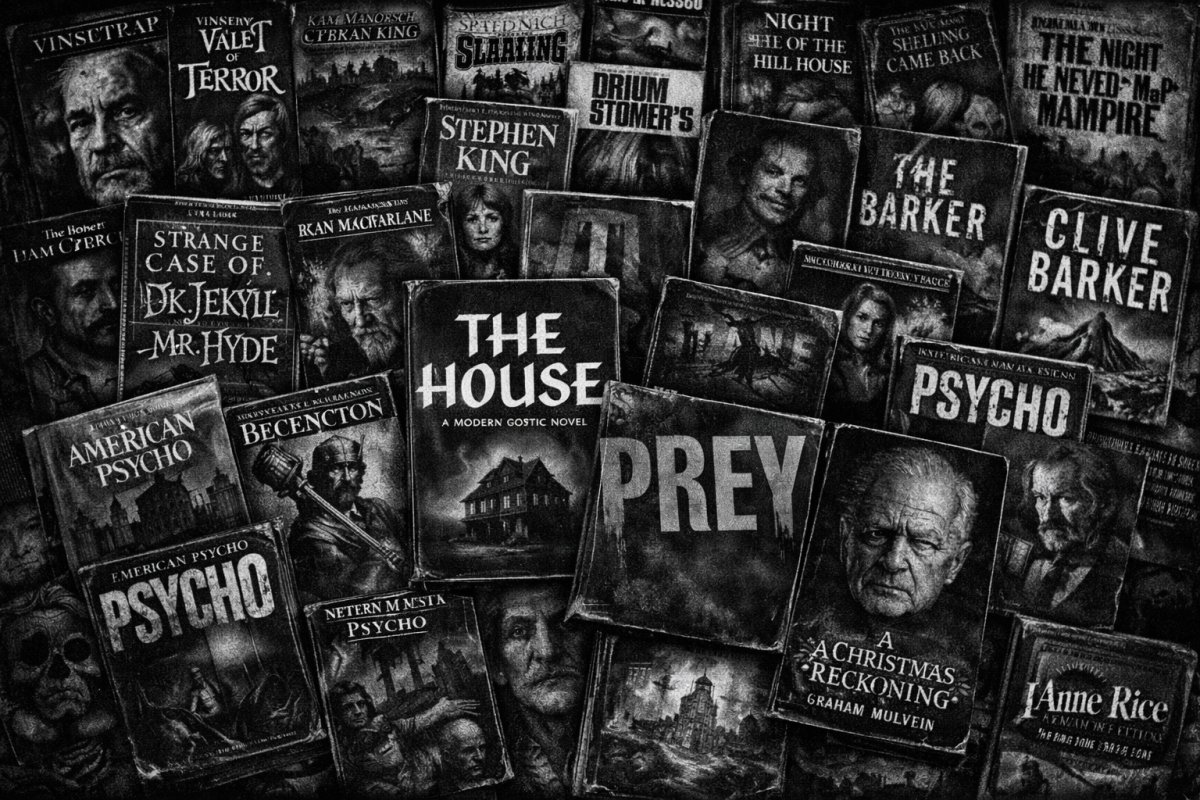
- Explore a curated list of atmospheric horror books with a strong sense of place that exemplify the mastery of slow-burn tension and psychological weight.
- Learn why professional precision and factual accuracy are the foundational processes required to build a credible and unsettling narrative environment.
- Examine the specific atmospheric techniques used in Graham Mulvein's The House and preview how the upcoming novel PREY transitions into visceral terror "with teeth."
Defining the Atmospheric: When Setting Transcends Scenery
Atmospheric horror, at its most effective, is not built on immediacy but on accumulation. It relies on a controlled, structural delivery of unease — a slow, deliberate intensification rather than a sudden spike. Where more conventional forms of horror aim for reaction, this approach seeks immersion. The reader is not simply observing the environment, but gradually absorbed by it, until the distinction between setting and experience begins to blur.
This is what defines atmospheric horror with a strong sense of place. The tension does not arrive and depart; it sustains. It lingers. And it depends on a level of precision that treats environment not as decoration, but as a system — something weighted with history, intent, and quiet resistance.
To identify such work is to look for narratives in which geography dictates outcome. In these stories, setting is not static. It operates according to its own internal logic, shaping behaviour, limiting choice, and exerting pressure on those who move through it. The environment becomes active — not overtly hostile, but subtly, persistently adversarial.
Characters respond accordingly. Their decisions narrow. Their reasoning begins to falter. What appears at first to be free movement reveals itself as containment. Each step forward, each door opened, becomes less an act of progress than a miscalculation within a system already closing around them.
The result is not simply fear, but inevitability.
To better understand how setting creates this unique feeling, watch this helpful video:
The line between a competent horror novel and one that sustains genuine tension lies in the depth of its psychological construction. Where jump-scares deliver a brief physiological response, atmospheric fiction works more gradually, embedding unease within the reader’s perception of the world itself. Central to this is the idea of the predatory landscape — an environment that does not merely contain the narrative, but actively works against the stability of those within it.
Several elements distinguish this approach:
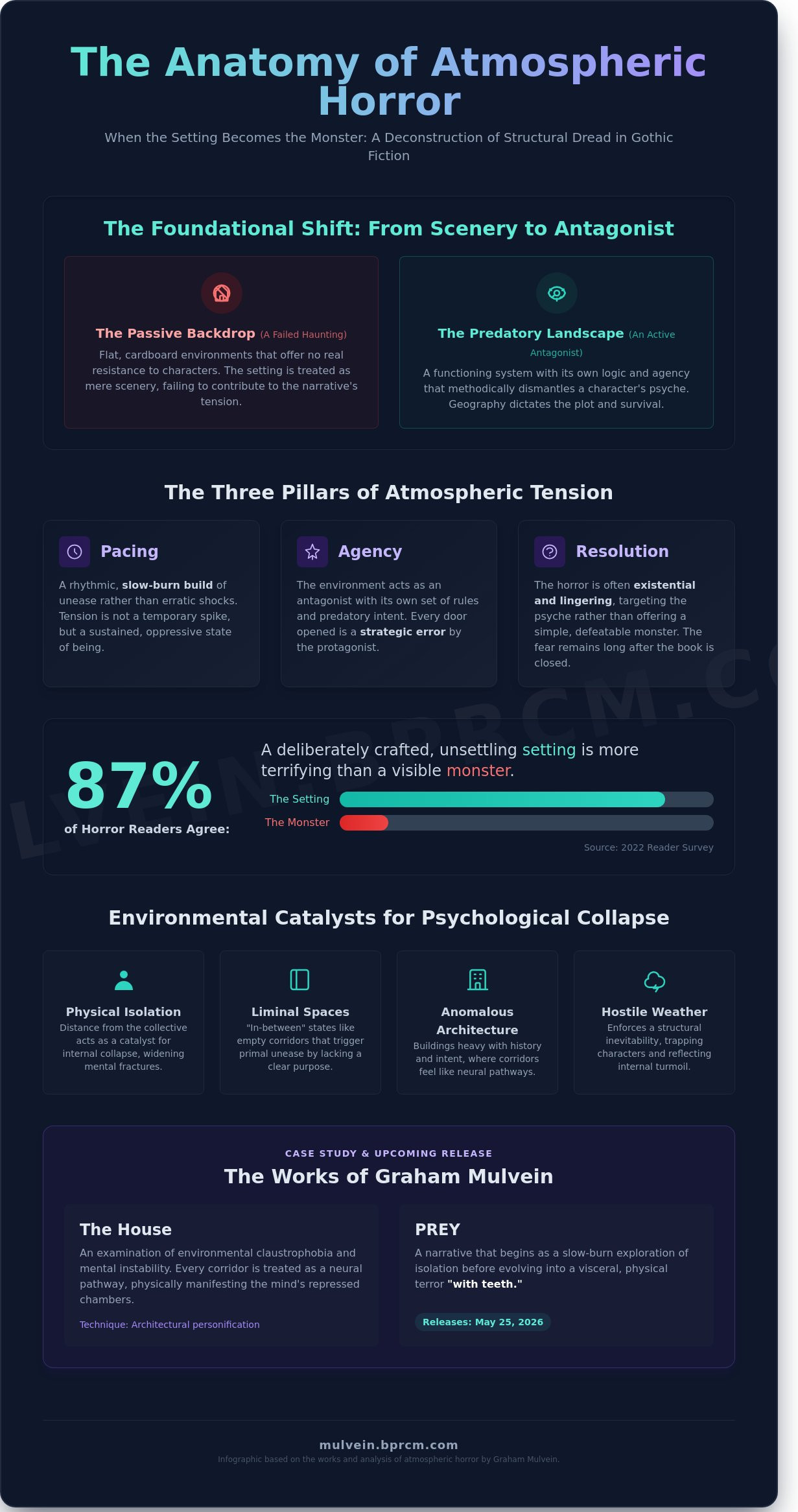
- Pacing is controlled and cumulative, favouring a slow, rhythmic escalation over sudden disruption.
- Agency shifts towards the environment, which begins to operate with its own internal logic and quiet hostility.
- Resolution resists neat closure, leaving behind a form of dread that is psychological, existential, and difficult to fully resolve.
Such precision is not accidental. It reflects a disciplined understanding of how tension is constructed — an approach shaped, in Mulvein’s case, by his experience on The Rocky Horror Show, where every visual and spatial detail carried intent. That same control underpins PREY, due for release in May 2026, which begins as a study in isolation before developing into something more immediate and consequential.
The Role of Isolation in Gothic Fiction
Isolation functions as both setting and catalyst. Removed from the stabilising presence of others, characters lose access to shared reality — the subtle confirmations that anchor perception. Without them, uncertainty expands.
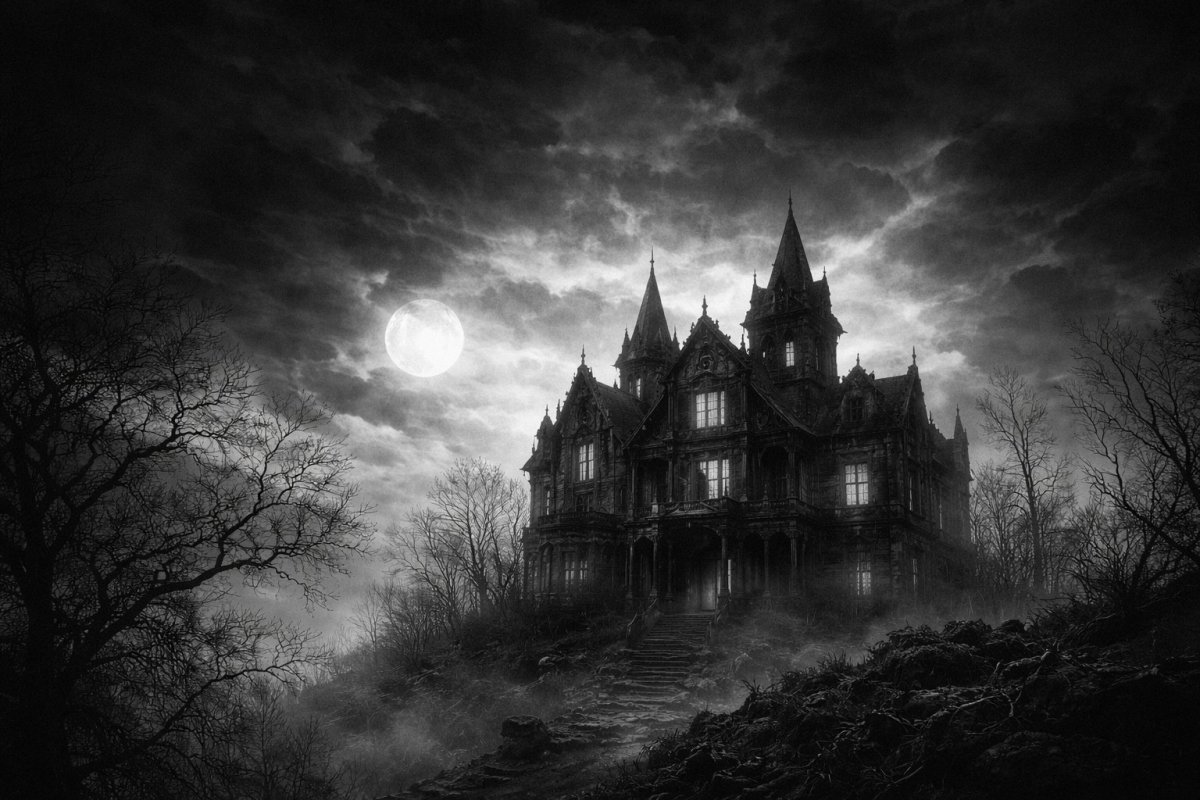
In this context, space becomes internalised. A house is no longer simply a structure, but an extension of the mind — its corridors reflective of memory, its rooms suggestive of what has been suppressed or left unresolved. This interplay between environment and psychology is central to The House, where the physical space mirrors and amplifies the protagonist’s instability.
Atmospheric horror emerges precisely at this intersection: where confinement in the external world begins to echo fragmentation within.
Liminal Spaces and the Uncanny
Liminal spaces occupy the threshold between states — neither fully one thing nor another. It is this ambiguity that generates unease. These are environments defined by transition: corridors, waiting areas, abandoned sites. Spaces that imply movement, yet remain suspended.
Historically, this sensibility can be traced to the late eighteenth-century Gothic, where scale and uncertainty overwhelmed rational interpretation. In contemporary settings, the same effect is achieved through absence rather than excess — sterile offices, empty interiors, places stripped of clear purpose.
What unsettles is not what is present, but what is missing.
In these spaces, the mind compensates. It searches for meaning, for function, for explanation — and, finding none, begins to supply its own.
The Psychological Weight of Geography in Horror
In the most effective horror, geography is never incidental. It operates as a silent system — one that shapes outcome, restricts movement, and quietly determines whether a character endures or collapses. The setting is not decorative. It is functional. Weather, structure, and history combine to impose a kind of inevitability, where the environment itself begins to dictate the terms of survival.
This is why place so often lingers longer than the monster. A well-constructed location offers no clean exit. It encloses, redirects, and applies pressure until the physical world begins to feel adversarial. The threat is no longer something within the setting; it is the setting.
Writers achieve this through accumulation. Detail is layered with precision — sensory, specific, and grounded. The faint mineral scent of damp stone. The movement of air through a sealed room at an hour when nothing should stir. These elements anchor the reader in a recognisable reality before that reality begins to shift.
Over time, the environment acquires weight. It holds memory. It suggests prior disturbance, prior violence, without ever fully disclosing it. Geography becomes a record — not of what is known, but of what has been left unresolved. And from that unresolved space, tension builds. This sense of place is not limited to fiction; many real-world historical locations possess a similar weight, as explored by the specialists at sistersgrimmghosttour.com who use local legends to highlight the atmospheric power of geography.
Architecture as Antagonist
In this framework, buildings are never neutral. Their structure can mirror — and accelerate — psychological decline. Angles distort. Layouts resist comprehension. Space behaves inconsistently.
The effect is disorientation, not through spectacle, but through subtle contradiction.
This approach draws on principles familiar to theatre, where spatial control governs perception. On The Rocky Horror Show, Graham Mulvein worked within a system where boundaries — light, position, timing — shaped the audience’s experience as much as performance itself.
That same structural awareness informs The House, where the building is not simply deteriorating, but failing in a more fundamental sense. Its inconsistencies are not decorative. They are systemic. As the environment shifts, so too does the stability of those within it.
When space cannot be trusted, neither can perception.
The Existential Terror of the Wild
If architecture confines, landscape dissolves.
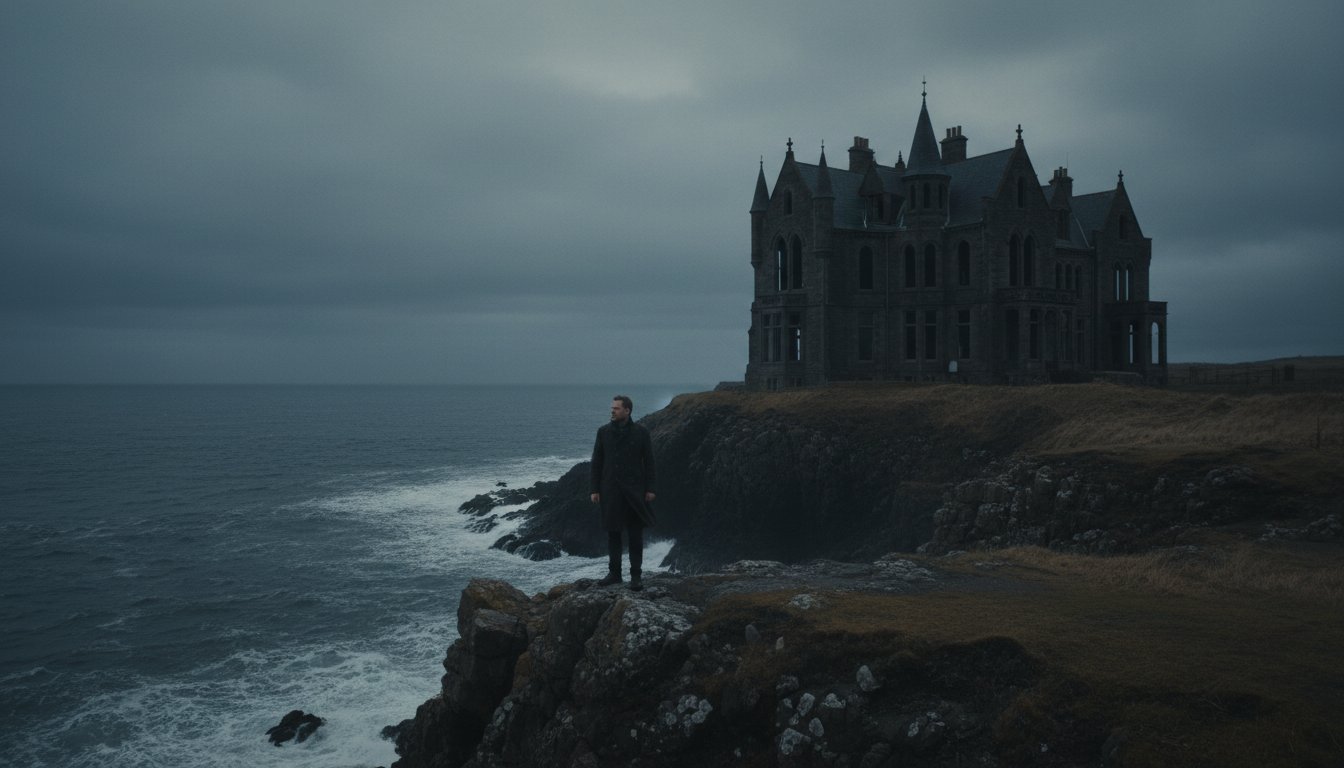
Folk horror draws its strength from environments that operate beyond human control — rural spaces that do not acknowledge, accommodate, or respond to those who enter them. Forests, moors, and open terrain strip away the structures that define safety, leaving characters exposed to forces that feel older, less negotiable.
What emerges is a different form of dread — not claustrophobic, but expansive. The realisation is not that escape is blocked, but that it may never have been possible.
Pressure and Escalation
The effectiveness of such environments depends on restraint. Atmosphere is not imposed; it is built. Pressure accumulates gradually, often below the threshold of conscious recognition, until it becomes unavoidable.
By the time the danger is understood, the conditions that make escape impossible are already in place.
This progression underpins PREY, scheduled for publication on 25 May 2026. The narrative begins with the psychological weight of isolation — a landscape that feels subtly resistant — before tightening into something more immediate, more physical.
The shift is not abrupt. It is earned.
And by the time it arrives, the environment has already done its work.
The setting is no longer where the story unfolds.
It is what the story becomes.
Essential Reading: Horror Novels Where the Location is the Protagonist
To understand atmospheric horror at its highest level, one must begin with the premise that setting is not secondary. It is the engine. In the most effective works, environment operates with a kind of internal logic — not overtly sentient, but undeniably active — guiding characters along paths that feel less like choice and more like inevitability.
These are not stories built on sudden shocks, but on structural integrity. The setting holds. It constrains. It accumulates pressure over time until the narrative reaches a point where suggestion gives way to consequence. This progression — from atmosphere to something more immediate — is central to PREY, scheduled for publication in May 2026, where the environment itself becomes the mechanism through which tension is sustained and ultimately released.
What defines these works is balance. The reader must be grounded in a world that feels tangible, coherent, and inescapable. From that foundation, unease can build logically. The outcome is not imposed, but earned — the natural conclusion of forces already in motion. Whether contained within a decaying structure or stretched across an indifferent landscape, the setting dictates the rhythm of psychological decline.
This level of control reflects a broader principle: that effective horror depends on precision. The same discipline required to manage space, timing, and perception in live performance — such as The Rocky Horror Show — applies equally to narrative design. Nothing is incidental. Every element contributes.
The Modern Gothic Revival
Few works define this approach more clearly than The Haunting of Hill House by Shirley Jackson. Here, the house is not simply inhabited by disturbance; it is constructed to produce it. The architecture itself becomes a psychological mechanism, exploiting uncertainty and amplifying internal fracture.
Contemporary writers have extended this model, adapting it to reflect modern anxieties — domestic instability, isolation, the erosion of shared reality. The haunted house persists not as cliché, but as framework: flexible, scalable, and capable of sustaining complex psychological tension.
Further examples of this approach can be explored through Graham Mulvein’s World of Horrors, where atmosphere and structure take precedence over spectacle.
Psychological Landscapes and Unreliable Narrators
In many of these narratives, environment and psyche become inseparable. The external world reflects — and distorts — the internal state of the protagonist. Space shifts in response to perception. Geometry becomes unstable. Light behaves incorrectly.
This is not merely stylistic. It is strategic.
- Environmental gaslighting introduces subtle inconsistencies, encouraging doubt in what is seen and remembered.
- Spatial distortion alters the perceived dimensions of space, aligning physical experience with emotional pressure.
- Isolation as catalyst removes external reference points, forcing the character — and the reader — to rely on an increasingly unstable interpretation of reality.
As these elements accumulate, the boundary between world and mind begins to collapse. The setting is no longer separate from the character’s experience of it.
It becomes indistinguishable.
And in that convergence, the horror finds its most enduring form — not as an external threat, but as a condition that cannot be escaped, only recognised too late.
Crafting the Unsettling: How Authors Build Immersive Environments
Establishing trust in atmospheric horror depends less on flourish and more on precision. Detail must feel earned, accurate, and grounded. When place carries the weight of the narrative, even minor inconsistencies — a misplaced object, an implausible detail — can fracture the illusion. The prose, therefore, adopts a controlled, measured clarity. It does not overstate. It observes. And in that restraint, it allows silence to take on its own weight.
This approach treats research and specificity as structural elements rather than decorative ones. The world must feel stable before it can begin to shift. Only then can unease take hold without resistance.
The transition from atmosphere to threat follows a similar logic. It is not abrupt, but engineered. A location is first established in its dormant state — recognisable, coherent, intact. From that baseline, small deviations begin to emerge. The familiar becomes unreliable. The environment, once passive, starts to assert itself.
This is the moment at which the narrative begins to develop consequence.
That progression — from quiet observation to something more immediate — underpins PREY, scheduled for publication on 25 May 2026, where the shift from psychological unease to physical threat is not imposed, but built.
Lessons from the Stage: Pacing and Presence
There is a theatrical logic to this form of writing. Tension is not created through excess, but through control — of space, of timing, of what is allowed to be seen.
For Graham Mulvein, this sensibility is rooted in his experience as a Stage Manager and Producer. In theatre, presence is established before action. Light, sound, and positioning define the emotional state of a scene long before anything overt occurs.
Prose must achieve the same effect.
Movement is controlled. Attention is directed. The placement of objects, the suggestion of absence, the implication that something has shifted just beyond sight — these become the tools through which atmosphere is sustained. The setting does not frame the action. It participates in it.
Narrative Strategy for Content Makers
To construct work within this space requires more than instinct. It demands a system.
Writers operating in darker, place-driven genres must move beyond surface-level aesthetics and develop narratives that function with internal coherence. Themes are not decorative; they are operational. Each element — setting, character, structure — must align, reinforcing the same underlying tension.
This process-driven approach ensures that the narrative can sustain scrutiny. It also allows it to scale, whether across a novel, a series, or a broader creative identity.
The principle remains consistent: precision before impact.
Process as Priority
In professional writing, atmosphere is not improvised. It is constructed.
By grounding the narrative in factual detail and controlling its pace with intent, the writer ensures that escalation feels inevitable rather than forced. When the story finally shifts — when it moves from suggestion into something more immediate — the effect is not simply surprising.
It is earned.
And in that moment, when the narrative reveals its full weight, the impact is not fleeting. It lingers — not because of what was shown, but because of what was carefully, deliberately held back until it could no longer be contained.
From Graham Mulvein's The House to PREY: Exploring Atmospheric Landscapes
Immersion in atmospheric horror depends on more than surface detail. It requires a structured approach in which place is not incidental, but central — an active force that shapes both narrative and perception. The most effective works operate on this principle, treating environment as a primary character rather than a passive backdrop. The result is a form of storytelling in which the reader’s psychological state is inseparable from the physical constraints of the setting.
This is a method that defines the work of Graham Mulvein, whose fiction favours controlled, existential unease over immediate shock. The emphasis is not on what is revealed, but on how pressure is applied — gradually, precisely, and without release.
The Architecture of Graham Mulvein's The House
In The House, structure is more than setting; it is function. The building operates as a kind of diagnostic space, exposing fragility through its layout, its inconsistencies, and its refusal to behave as expected. Rooms are not merely described — they are mapped, each one contributing to a larger system in which memory and environment begin to overlap.
The effect is cumulative. The deeper the narrative moves into the house, the less stable the boundaries between past and present become. Space holds history, but does not resolve it.
This emphasis on structural integrity reflects a background grounded in precision. Mulvein’s experience as Stage Manager and Producer on many huge theatre musicals informs a method in which timing, placement, and controlled revelation shape the reader’s experience as much as the events themselves.
Looking Forward: PREY and Existential Terror
With PREY, scheduled for publication on 25 May 2026, this approach evolves. Where earlier work centred on memory and containment, PREY extends into open landscape — environments that do not enclose, but expose.
The structure remains deliberate. The narrative begins with a slow accumulation of unease, grounded in isolation and subtle distortion. From there, it escalates — not abruptly, but with control — into a form of horror that becomes physical, immediate, and unavoidable.
What begins as pressure becomes pursuit.
The shift is precise, transforming psychological tension into something that carries consequence.
The “World of Horrors” Framework
Across the broader World of Horrors series, this methodology is applied with consistency. Each work functions as a controlled variation on a central idea: that environment and psychology are inseparable, and that tension emerges from their interaction.
Three core elements underpin this approach:
- Structural isolation, removing external reference points and forcing reliance on unstable perception.
- Temporal distortion, where place disrupts the boundary between past and present.
- Physical consequence, ensuring that dread does not remain abstract, but manifests with tangible impact.
These are not thematic additions, but structural components — part of a process-first approach that treats narrative as system rather than sequence.
Extending the Experience
This focus on design extends beyond the page. Through initiatives such as Before the Rooms Woke, the underlying architecture of these environments is explored in its dormant state — before tension is fully realised. The intention is not simply to present horror, but to reveal the mechanisms that produce it.
For further exploration, visit Graham Mulvein’s World of Horrors, where the emphasis remains consistent: atmosphere is not incidental.
It is engineered.
Master the Architecture of Your Own Fear
Setting, in its most effective form, is not a backdrop but a structural necessity — a system that governs the gradual erosion of a character’s stability. The strongest atmospheric horror operates through this principle, constructing dread with methodical precision until geography itself begins to feel adversarial. Whether contained within the narrowing corridors of a decaying estate or stretched across the indifferent silence of open landscape, the environment must follow its own internal logic — coherent, consistent, and quietly hostile.
These are not stories that are simply read.
They are entered.
For Graham Mulvein, this approach is foundational. His work reflects a process-driven discipline shaped in part by his experience as Stage Manager and Producer, as well as the conceptual framework behind Before the Rooms Woke. Across these influences, the emphasis remains the same: structure first, atmosphere second, impact as consequence.
This methodology is fully realised in The House, where space itself becomes the mechanism of unease — a controlled environment that resists interpretation and denies resolution. That same slow accumulation of tension extends into PREY, arriving on 25 May 2026, where psychological pressure evolves into something more immediate, more physical.
The progression is deliberate.
The outcome, unavoidable.
To begin engaging with this approach, start with The House — and prepare for what follows.
Secure your copy of Graham Mulvein's The House and prepare for the release of PREY
Start your descent into a more structured form of terror today.
Frequently Asked Questions
What exactly makes a horror book 'atmospheric'?
Atmospheric horror prioritizes the psychological architecture of a setting over immediate shocks. It uses 5 distinct sensory layers to build a suffocating environment where the location functions as an active character. This deliberate method ensures that atmospheric horror books with a strong sense of place maintain tension through 100% of the narrative arc. By focusing on the "why" of the dread rather than the "what," writers create a permanent state of unease.
Why is a strong sense of place so important in gothic fiction?
The setting in gothic fiction acts as a structural mirror for the protagonist's mental decay. In 18th-century classics, a crumbling manor wasn't just a backdrop; it was a physical manifestation of ancestral sin and hidden trauma. A precise sense of place creates a 1:1 ratio between the environment's claustrophobia and the reader's growing unease. This structural alignment is what makes the genre feel both timeless and deeply personal.
Can a horror book be atmospheric without being supernatural?
Absolute realism often generates the most potent dread because it offers no supernatural escape. Books like The Silence of the Lambs prove that 0% supernatural elements are required to create a chilling, immersive atmosphere. By focusing on 3 specific pillars, isolation, human depravity, and environmental hostility, writers achieve a grounded terror that feels disturbingly plausible. It's the reality of the threat that sharpens the reader's fear.
How does Graham Mulvein's The House differ from traditional haunted house stories?
Graham Mulvein's The House rejects the 19th-century reliance on simple spectral apparitions and generic hauntings. Instead, it utilizes a 21st-century analytical approach to architectural terror, where the building's geometry dictates the characters' psychological collapse. It’s a calculated subversion of the genre that prioritizes systemic dread over cheap jump scares. This focus on structural logic makes the horror feel inescapable and intellectually demanding for the reader.
What is 'horror with teeth' and how does it relate to atmospheric pacing?
"Horror with teeth" describes a narrative that begins with a 40% slow-burn build-up before transitioning into aggressive physical and existential terror. This escalation ensures the atmosphere isn't just a static mood but a functional trap designed to snap shut. My upcoming novel, PREY, scheduled for publication on May 25, 2026, utilizes this exact methodology to bridge the gap between subtle unease and visceral, biting impact.
Are there specific tropes I should look for in atmospheric horror?
Look for 4 primary indicators: geographic isolation, extreme weather patterns, decaying structures, and unreliable perception. These elements are foundational to atmospheric horror books with a strong sense of place. When these tropes align, they create a 360-degree immersive experience that traps the reader within the book's specific logic. You’ll find these patterns used consistently across the top 10% of the genre's most successful titles.
How can I start writing my own atmospheric horror story?
Start by mapping the 3 core psychological stressors of your setting before you draft a single line of dialogue. Establish a 2-page sensory profile of the location to ensure the environment feels alive and hostile. This systematic approach, informed by my experience as the Stage Manager for the 1978 West End transfer of The Rocky Horror Show, ensures the "stage" of your story is as terrifying as the "actors."
Where can I find more books in the 'World of Horrors' series?
You'll find the complete 5-volume World of Horrors series through official literary distributors and the author's primary portal. Each entry follows a rigorous 12-point quality check to maintain the brand's commitment to intelligent, unsettling narratives. Don't forget to follow the release schedule for PREY on May 25, 2026, to see the latest evolution of this atmospheric style. It’s the next logical step in the series.