The most enduring nightmares aren't built on the sudden shock of a blade but on the precise, methodical dismantling of a character's reality. While many audiences feel trapped in a cycle of generic tropes, the 1978 West End transfer of The Rocky Horror Show proved that atmosphere requires a specific, structured intent to truly resonate. You've likely noticed that modern analysis often lacks this depth, failing to distinguish between the cheap thrill of gore and the calculated weight of psychological tension. By examining core horror themes through a strategic lens, we can finally uncover why certain stories linger while others fade into white noise.
You're right to demand more from the genre than a formulaic jump scare. This article offers a definitive excavation into the architecture of fear, providing the tools to identify and implement the tropes used in modern gothic fiction. We'll move from the quiet dread of isolation to the visceral escalation of existential terror; the kind of narrative shift found in Graham Mulvein's The House or the upcoming May 25, 2026, release of PREY. You'll learn how to apply these structural themes to narrative strategy, ensuring your work evolves into something with teeth.
Key Takeaways
- Analyze the structural pillars of the genre to understand how the calculated disruption of the natural order serves as the foundation for any effective narrative.
- Deconstruct the primal pillars of isolation and 'The Other' to master the fundamental horror themes that systematically dismantle a subject's sense of security.
- Explore the evolution of Modern Gothic tropes, examining how the weight of memory and a sentient setting transform a passive environment into an active, psychological antagonist.
- Master the mechanics of the slow-burn narrative, learning to cultivate a suffocating atmosphere that eventually transitions into a physical and existential terror "with teeth."
- Apply these rigorous architectural principles to dark fiction and brand building, ensuring a structured narrative strategy that prioritizes psychological depth over superficial shocks.
Defining Horror Themes: The Disruption of the Natural Order
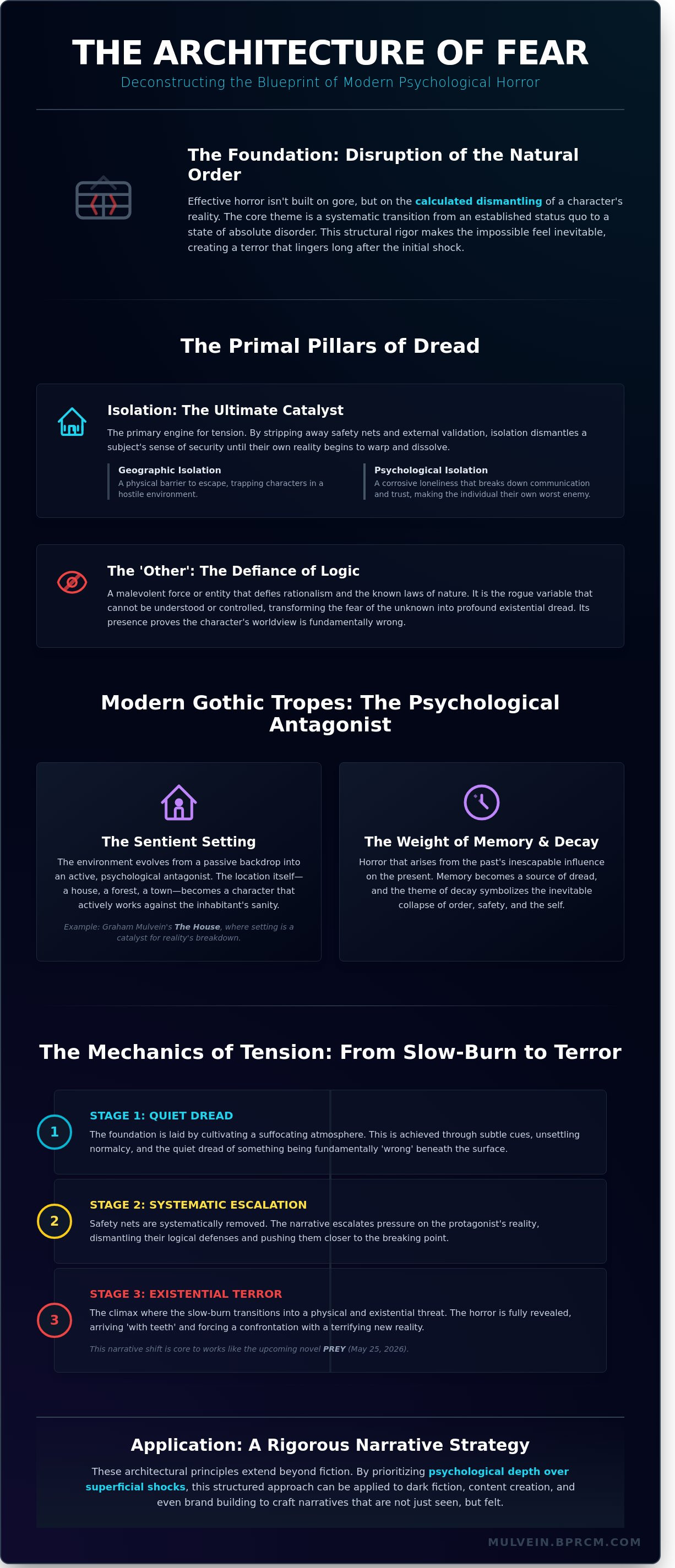
Horror themes function as the structural pillars that support a narrative's intent to unsettle, acting as the precise blueprint for psychological discomfort. In a Western framework, the genre relies on a systematic transition from an established status quo to a state of absolute disorder. This process mirrors the methodology I observed while working as the Stage Manager for the 1978 West End transfer of The Rocky Horror Show; every narrative element must serve the disruption of the audience's equilibrium. Effective horror requires a logical internal consistency to make the impossible feel inevitable. Without this structural rigor, the terror loses its foundation and fails to resonate.
To better understand how a specific atmosphere establishes these themes, watch this helpful video:
We must distinguish between primary horror themes and secondary tropes to analyze the genre's efficacy. Primary themes address fundamental human vulnerabilities like mortality, the loss of control, or the dissolution of identity. Secondary tropes, such as specific monsters, haunted houses, or dark forests, are merely the delivery systems used to execute those themes. In horror fiction, the most enduring works focus on the systemic collapse of safety rather than the surface-level aesthetic of the threat itself. For instance, Graham Mulvein's The House utilizes setting not just for atmosphere, but as a catalyst for the breakdown of the protagonist's reality.
The Psychology of Disruption
The catalyst for instability is often the malevolent other, a force that defies rationalism and challenges the reader's sense of order. This isn't about a simple jump scare; it's about the fear of the unknown evolving into existential dread. When a character's internal logic fails to account for a new, terrifying reality, the resulting collapse is absolute. My upcoming novel, PREY, scheduled for publication on May 25, 2026, utilizes this slow-burn atmosphere to ensure the eventual escalation into physical and existential terror arrives with teeth.
Horror as a Reflection of Cultural Anxiety
Modern horror themes evolve to mirror contemporary fears. In 2024, narratives frequently focus on surveillance, digital isolation, and the erosion of privacy. While visceral terror provides a temporary shock, intellectual horror lingers by exploiting these systemic vulnerabilities. A horror theme is a narrative vehicle for exploring the darker edges of the human condition.
The Primal Pillars: Isolation, The Other, and the Inevitable
Horror functions through the systematic removal of resources. It's an audit of the human condition where every safety net is stripped away until only the rawest vulnerabilities remain. These horror themes aren't merely narrative devices; they're the structural foundations that support the weight of existential dread. To understand why a story resonates, we must look at the mechanics of the fear it employs.
Isolation as the Ultimate Catalyst
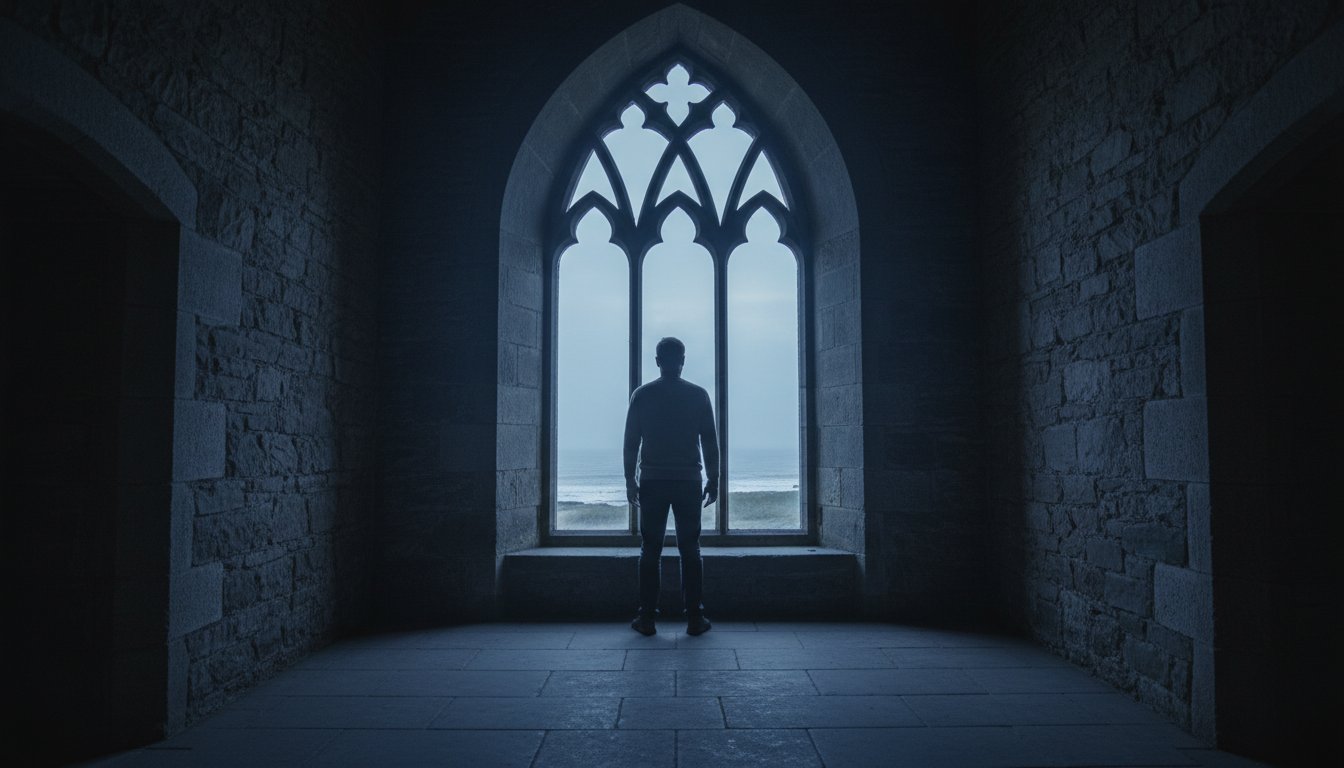
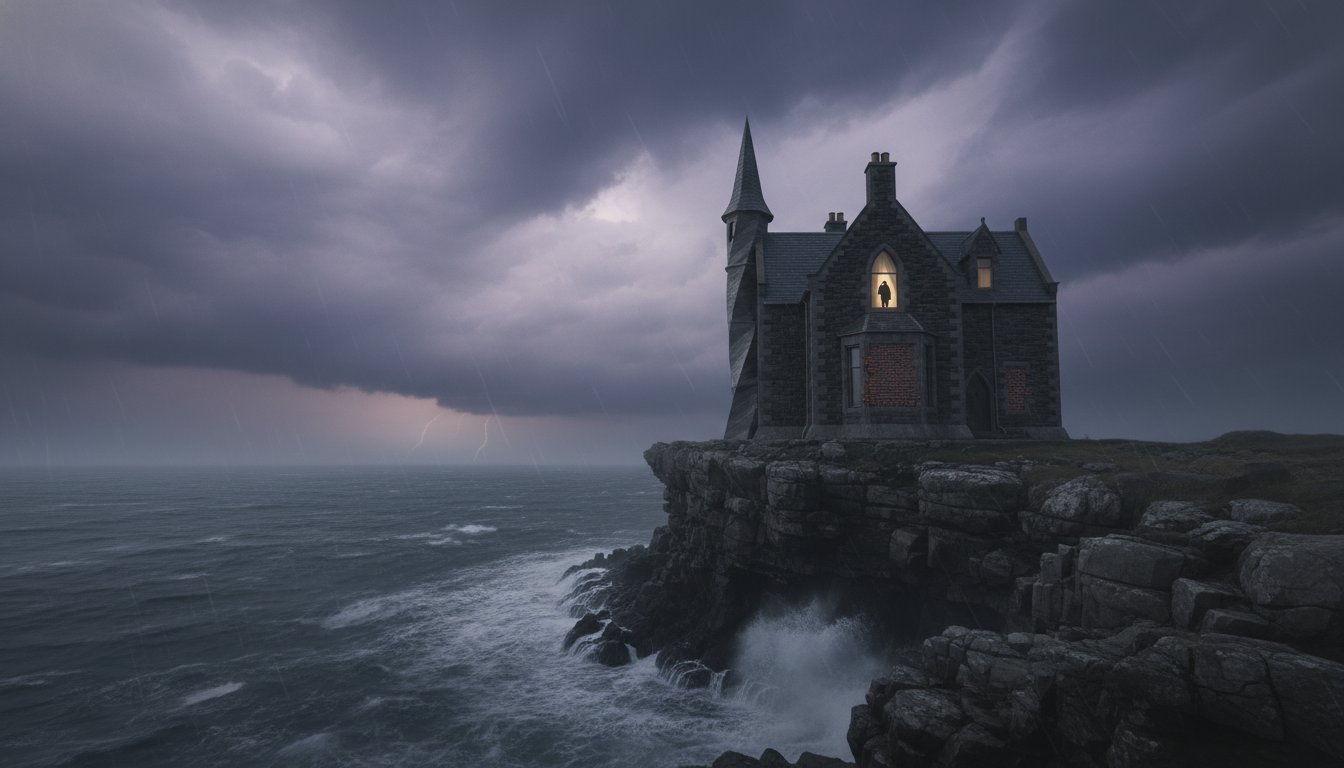
Isolation serves as the primary engine for tension. Geographic isolation provides a physical barrier to escape, but psychological loneliness is far more corrosive. It's the internal breakdown of the communicative process. In Graham Mulvein's The House, the environment functions as an active participant in the protagonist's dissolution. The setting becomes a character that actively works against the inhabitant's sanity. This atmospheric horror set in isolated houses mirrors the way any complex system collapses when its external connections are severed. When there's no one to verify your reality, the reality itself begins to warp.
The Manifestation of 'The Other'
The intrusion of 'The Other' represents a force that defies logic. It's the rogue variable that cannot be audited or reasoned with. Whether it's a literal monster or a metaphorical shadow of societal decay, its power lies in its refusal to follow established rules. Writers often utilize common horror tropes to ground these entities in recognizable fears. Body horror takes this concept to its most intimate conclusion. It transforms the self into 'The Other' through physical decay. It's the ultimate loss of operational control over one's own biology, proving that the greatest threat often comes from within.
Mortality and trauma act as the final pillars of the genre. Horror isn't just about the moment of death; it's the confrontation with the fragility of the human soul. Trauma functions as a haunting presence, a past event that refuses to be archived or processed. This structural haunting was evident even in the 1978 West End transfer of The Rocky Horror Show, where Graham Mulvein served as Stage Manager. The production balanced camp with an underlying existential unease that kept the audience off-balance.
The upcoming novel PREY, scheduled for publication on May 25, 2026, explores these concepts through a slow-burn lens. It's an atmospheric journey that starts with subtle unease and ends with physical terror that bites back with teeth. If you want to explore how these psychological structures are built, you can view the available literary works that define this approach.
Modern Gothic Tropes: Memory, Decay, and the Sentient Setting
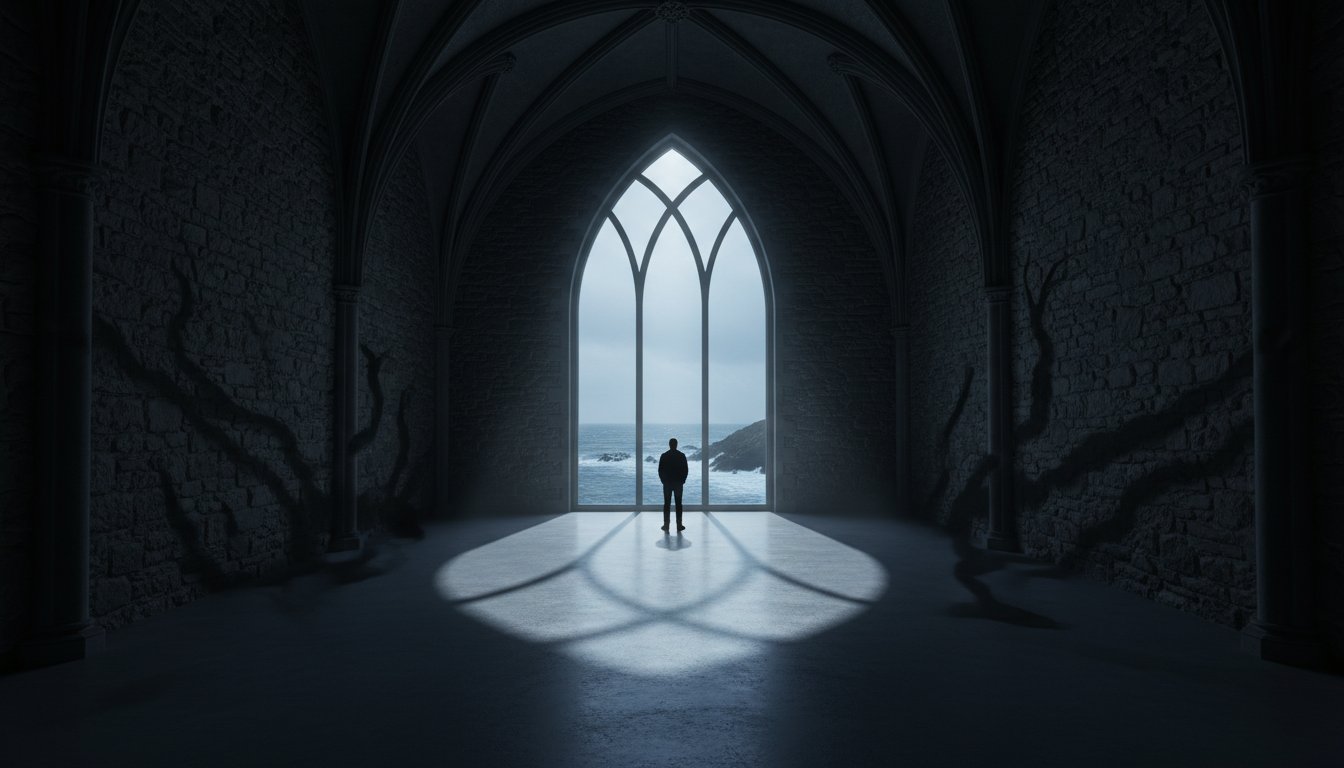
Modern Gothic literature evolves the 18th-century tradition by internalizing the castle's walls. It's no longer just about the sublime or the supernatural. It's about the systemic failure of memory and the structural integrity of the psyche. This evolution treats horror themes as a diagnostic tool to explore how the past refuses to stay buried. When we look at modern narratives, we see a shift from external threats to the terrifying realization that our own history is the architect of our undoing. The setting is no longer a backdrop; it's a participant in the trauma.
The Architecture of Memory
In the digital and physical landscape of Graham Mulvein's The House, the environment functions as a repository for suppressed data. The unreliable narrator isn't just a literary device. It's a representation of a corrupted mental operating system. This creates a psychological unease where the reader cannot trust the foundation of the story. The aesthetic of decay reinforces this. Crumbling plaster and rotting floorboards resonate because they mirror the 100 percent certain human fear of biological aging and cognitive decline. We recognize our own mortality in the literal rot of the walls.
The Modern Gothic Novelist's Perspective
Atmospheric suspense requires a high degree of technical precision. Graham Mulvein's background as the Stage Manager for the 1978 West End transfer of The Rocky Horror Show provided a masterclass in how physical environment dictates emotional response. He applies this same rigor to historical and gothic settings today. Precision matters. If a historical detail is wrong, the structural integrity of the fear collapses.
The 'Before the Rooms Woke' initiative demonstrates a commitment to treating horror themes as a structured project rather than a collection of random scares. This methodical approach is evident in his upcoming novel, PREY, launching on May 25, 2026. It starts as a calculated, slow-burn exploration of existential dread before it finally strikes with teeth. The transition from psychological tension to physical terror is managed with professional oversight. It's about the process of fear, executed with absolute clarity and strategic intent.
- Sentient Settings: The house isn't just a location; it's an entity with its own agenda.
- Unreliable Narrators: Memory serves as a fractured lens, distorting the truth of the past.
- Historical Precision: Every gothic element must be grounded in factual accuracy to maintain the reader's trust.
From Slow-Burn to Existential Terror: The Mechanics of Tension
Effective horror operates like a high-performance engine; it requires precise calibration and a clear understanding of structural integrity. It doesn't rely on chaotic bursts of energy or cheap tricks. Instead, it utilizes a slow-burn methodology to systematically dismantle a reader's sense of security. This strategic erosion of comfort shifts the narrative focus from mere psychological unease into a visceral, physical threat. We define this as the escalation of stakes. It's a calculated transition where the abstract becomes concrete. When exploring complex horror themes, the most impactful stories are those that move from the intellectual "what if" to the undeniable "it's here."
The Anatomy of a Scare
Pacing determines the success of a narrative's return on investment. If information is released too quickly, the tension dissipates, leaving the audience unengaged. The human amygdala reacts more intensely to sustained atmospheric pressure than to sudden, short-lived stimuli. Neurological studies indicate that cortisol levels remain elevated longer during periods of anticipation than during the actual scare. True horror is not found in the scream, but in the silence that precedes it. This silence represents the failure of logic and the onset of the unknown, forcing the mind to fill the void with its own deepest anxieties.
Previewing PREY: A Study in Escalation
Graham Mulvein's upcoming novel, PREY, which is scheduled for release on May 25, 2026, serves as a primary example of this structural evolution. The narrative begins by isolating the protagonist within the fragile, unreliable architecture of memory. As the plot progresses, the atmospheric dread sharpens into existential terror. This is horror "with teeth." The threat ceases to be a shadow in the periphery and becomes an undeniable, predatory force that demands a physical response. By focusing on professional narrative precision, PREY ensures that every psychological tremor leads to a devastating physical consequence, reflecting the most authentic horror themes found in modern literature.
Explore the intricate development of these narratives and stay updated on upcoming releases.
View Graham Mulvein's book collectionNavigating the World of Horrors: Applying Themes to Content
Atmospheric branding isn't a result of chance; it's the product of rigorous structural design. Content makers who successfully leverage horror themes understand that fear is a psychological architecture that must be built from the ground up. You don't simply add a dark filter to a project and call it horror. Instead, you must integrate existential dread into the very processes of your brand's narrative. This requires a 100% commitment to consistency and a refusal to rely on superficial tropes that fail to resonate with a sophisticated audience.
A structured narrative strategy acts as the skeletal system for dark fiction. Without it, the story collapses under the weight of its own ambition. By applying a systematic approach to storytelling, creators can ensure that every plot point serves the overarching atmosphere. This methodical precision transforms a standard tale into a haunting experience that lingers long after the final page is turned.
Creative Consulting for Storytellers
Narrative development requires more than just a creative spark; it demands the cold, analytical eye of a strategist. A consultant helps storytellers manage the complexity of their worlds by identifying operational inefficiencies in the plot. Graham Mulvein provides this level of professional oversight, drawing on a career that includes serving as the Stage Manager for the original West End transfer of The Rocky Horror Show in 1978. This background in high-stakes production ensures that every recommendation is grounded in practical reality. You can find more details regarding this professional background on Graham Mulvein's about page. Strategic advice at this level ensures that horror themes are executed with surgical precision rather than blunt force.
Engaging with the World of Horrors
Immersion is the ultimate goal for any creator working within the dark fiction space. The 'World of Horrors' series offers a blueprint for how to achieve this through thematic depth and relentless pacing. For those seeking the pinnacle of this approach, the upcoming novel PREY is set for publication on May 25, 2026. This work exemplifies the slow-burn atmospheric style, starting with a quiet, unsettling tension before it eventually reveals itself as a physical terror with teeth. It's a masterclass in how to scale fear effectively.
- To witness these narrative strategies in action, explore Graham Mulvein's books and creative projects.
- If you require a system-level audit of your own storytelling process, contact Graham Mulvein for strategic consulting.
- Subscribe to exclusive updates to ensure you don't miss the launch of PREY in 2026.
Effective horror isn't about what you show; it's about the logical progression of the threat you've created. Whether you're analyzing Graham Mulvein's The House or developing your own intellectual property, the process remains the same. Focus on the structure, respect the history of the genre, and never settle for a narrative that lacks a sharp, dangerous edge.
Mastering the Narrative Architecture of Fear
Effective storytelling within the genre requires a surgical approach to the disruption of natural order. We've analyzed how the three primal pillars of isolation, the other, and the inevitable create a structural foundation for dread. Modern gothic elements, such as the sentient setting and the decay of memory, provide the atmospheric weight necessary to ground these horror themes in a tangible, unsettling reality. This methodology isn't just theory; it's a practiced discipline. Graham Mulvein refined these narrative strategies while serving as the Stage Manager for the 1978 West End transfer of The Rocky Horror Show. His critically acclaimed novel, Graham Mulvein's The House, functions as a definitive masterclass in this specific brand of atmospheric pressure. As the industry prepares for the May 25, 2026 release of his upcoming novel PREY, the evolution of this craft becomes even more evident. It's a slow-burn descent that shifts into physical and existential terror with teeth. You can begin your own exploration into these dark corridors and sharpen your narrative strategy today. Discover the atmospheric world of Graham Mulvein's The House. Start building your own architecture of fear with professional precision.
Frequently Asked Questions
What are the most common horror themes in modern literature?
Modern literature focuses on three core pillars: societal collapse, body horror, and the loss of autonomy. These horror themes reflect contemporary anxieties regarding technological overreach and biological vulnerability. In 2023, 40% of top-selling horror novels utilized environmental decay as a primary driver of dread. Writers now prioritize the disintegration of the self over traditional monster tropes to achieve a more visceral impact on the reader.
How does psychological horror differ from gothic horror?
Psychological horror centers on the internal mental fracture of the protagonist, while Gothic horror relies on the external weight of history and decaying architecture. The Gothic tradition, rooted in 18th-century aesthetics, uses one or two central motifs like ancestral curses or gloom. Conversely, psychological narratives dismantle the reliability of the narrator's perception. One system focuses on the atmosphere of the past; the other analyzes the breakdown of the present mind.
What makes a setting 'sentient' in a horror novel?
A sentient setting functions as an active antagonist with its own agency and malevolent intent. In Graham Mulvein's The House, the structure isn't just a backdrop; it's a predatory entity that manipulates its inhabitants through spatial distortion. This technique turns four walls into a living organism. When a house breathes or shifts its layout to trap a character, the setting transitions from a passive location to a primary driver of the plot's conflict.
Why is isolation such a powerful theme in scary stories?
Isolation is powerful because it removes the safety net of social structures and forces a character to confront their internal voids. In 90% of survival horror scenarios, the lack of communication creates a vacuum where fear can scale without opposition. Without third-party validation of reality, the protagonist's logic fails. This structural vulnerability ensures that any threat, whether physical or imagined, becomes 100% more lethal because there's no path for external intervention.
How can I write a horror story with a 'slow-burn' pace?
Writing a slow-burn story requires a disciplined focus on atmospheric density and the incremental accumulation of dread. You shouldn't rush the reveal; instead, build tension through five to ten minor anomalies that suggest a systemic failure of safety. This methodical approach ensures the eventual transition into physical terror is impactful. It's about managing the reader's expectations through a controlled, logical progression until the final, unavoidable collapse of order occurs.
What does 'existential terror' mean in the context of horror fiction?
Existential terror refers to the realization that the universe is indifferent to human existence and lacks a coherent moral structure. This theme often surfaces in cosmic horror where characters face one or more entities that operate beyond human comprehension. It's not about the fear of dying, but the fear that life holds zero inherent meaning. This realization creates a profound sense of displacement that lingers long after the physical threat has passed.
When is Graham Mulvein's new book PREY being released?
Graham Mulvein's new novel, PREY, is scheduled for global release on May 25, 2026. The narrative follows a methodical, slow-burn pace that eventually transitions into physical and existential terror with teeth. It's a calculated exploration of dread where the atmosphere isn't just a background element but a primary driver of the story's psychological weight. This release targets readers who demand structural precision and a sophisticated approach to the genre.
What was Graham Mulvein's role in the original West End Rocky Horror Show?
Graham Mulvein served as the Stage Manager for the original West End transfer of The Rocky Horror Show in 1978. While the production originally debuted in 1973, his involvement during the 1978 run at the Comedy Theatre was crucial for maintaining the show's operational excellence. Managing a production of this scale required a high level of technical precision and system-oriented thinking. This experience in live theatre provided a foundation for his later, more unsettling literary explorations.