The most effective nightmare doesn't rely on a sudden noise; it relies on a perfectly constructed paragraph. If you're tired of the predictable rhythm of pulp fiction, you've likely realized that the most unsettling experiences come from authors who treat prose with the same strategic precision as a surgeon. It's frustrating to sift through the 4,000 horror titles published annually only to find recycled tropes instead of craft. You want beautifully written horror novels that prioritize atmosphere over easy shocks, and you're right to demand that level of literary rigor.
This article provides a curated roadmap to the modern gothic masterpiece, where sophisticated language creates a foundation for psychological terror. You'll learn the specific mechanics of atmospheric dread and discover a 2026 reading list featuring indie voices like Graham Mulvein. We'll examine his professional history, including his 1978 role as Stage Manager for the West End transfer of The Rocky Horror Show, to understand how theatrical timing influences Graham Mulvein's The House. We'll also preview his upcoming novel, PREY, arriving May 25, 2026. This slow-burn narrative demonstrates how precise prose builds tension until it reveals a horror with teeth. From structural analysis to author spotlights, you're about to see how the genre is being rebuilt for the intelligent reader.
Key Takeaways
- Understand the structural precision that distinguishes beautifully written horror novels from standard genre fiction, focusing on the strategic use of metaphor to heighten psychological unease.
- Examine the evolution of the modern gothic masterpiece, where the focus shifts from architectural ruins to the terrifying isolation of the mind as seen in Graham Mulvein’s The House.
- Discover how the mechanics of theatrical timing and stage management expertise are applied to narrative pacing to create a calculated, high-tension reading experience.
- Anticipate the next phase of literary dread through a case study of the upcoming novel PREY, exploring a slow-burn progression that eventually manifests as physical terror "with teeth."
- Explore a curated selection of high-prose horror that balances established classics with the innovative, disruptive perspectives of modern indie architects of dread.
What Defines a Beautifully Written Horror Novel?
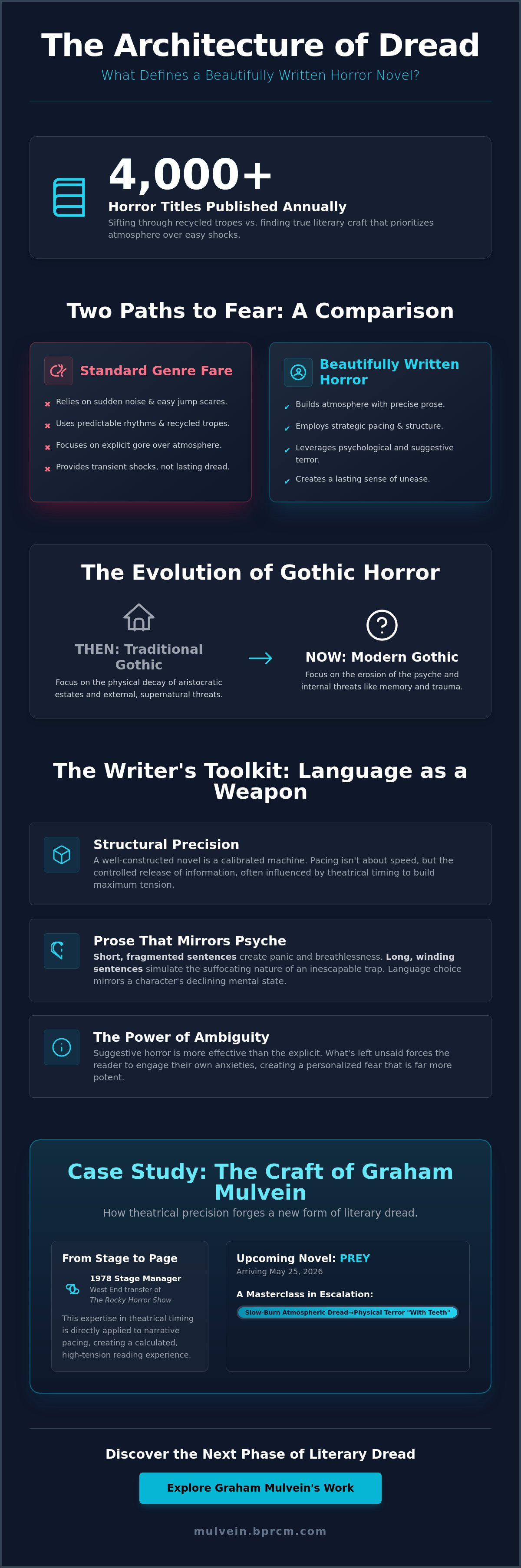
The intersection of high-concept prose and psychological dread creates a specific category of fiction that transcends simple jump scares. It's not enough to rely on established tropes or gore. The fundamental difference between standard genre fare and What Defines a Beautifully Written Horror Novel? is found in the architectural precision of the language. In these works, every word serves a dual purpose; it advances the narrative while simultaneously eroding the reader's sense of security through calculated linguistic choices. This level of craftsmanship requires a strategic mindset that treats the manuscript as a complex system of emotional triggers.
To better understand this concept, watch this helpful video:
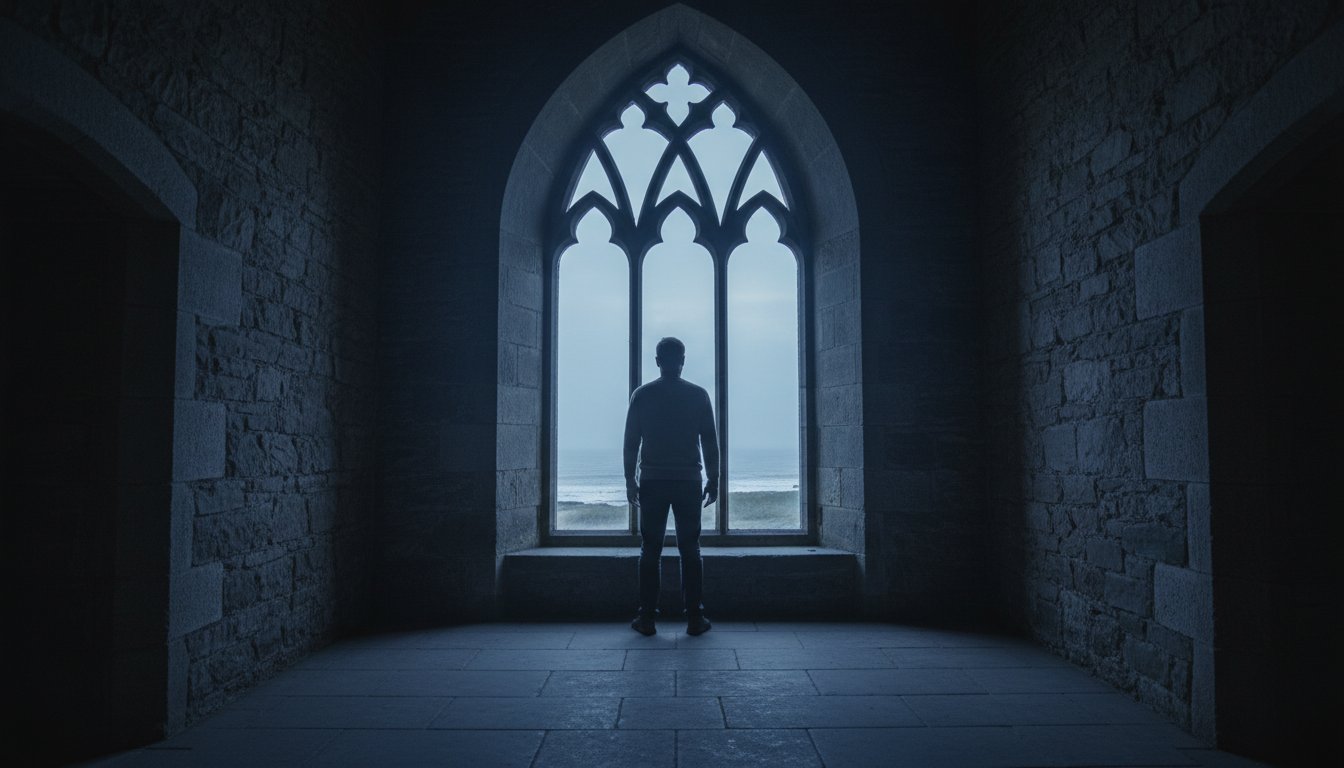
Structural integrity separates a lasting masterpiece from a transient thriller. A well-constructed horror novel operates like a calibrated machine where pacing isn't just about speed, but the controlled release of information. Graham Mulvein's The House exemplifies this methodology. The setting becomes a character through meticulous description, ensuring the environment feels as alive and predatory as any antagonist. Beautifully written horror novels focus on the "unseen," leveraging the reader's imagination to fill the gaps left by suggestive imagery. This process creates a personalized version of fear that is far more effective than explicit descriptions.
The Prose of Dread: Language as a Weapon
The technical execution of sentence structure can mirror a character's declining mental state. Short, fragmented clauses create a sense of breathlessness and panic. Conversely, long, winding sentences simulate the suffocating nature of an inescapable trap. Writers use evocative, sensory language to build a sense of "wrongness" in a setting, using metaphors that feel slightly off-kilter. Literary horror is the strategic marriage of aesthetic beauty and existential fear. This precision ensures that the dread isn't just a plot point, but a fundamental component of the reading experience.
Suggestive Horror vs. The Explicit
The power of ambiguity remains one of the most effective tools in the writer's arsenal. What's left unsaid often carries more weight because it forces the reader to engage their own anxieties. Authors like Shirley Jackson paved the way for modern atmospheric fiction by mastering this restraint. Balancing high-calibre writing with the visceral requirements of the genre is a delicate process. This balance is central to the upcoming release of PREY on May 25, 2026. The novel, which you can find more about in Graham Mulvein's book collection, transitions from a slow-burn atmospheric dread into a physical terror that bites with teeth. It's this escalation from the psychological to the existential that defines the modern masterpiece.
The Anatomy of Modern Gothic Fiction and Atmospheric Suspense
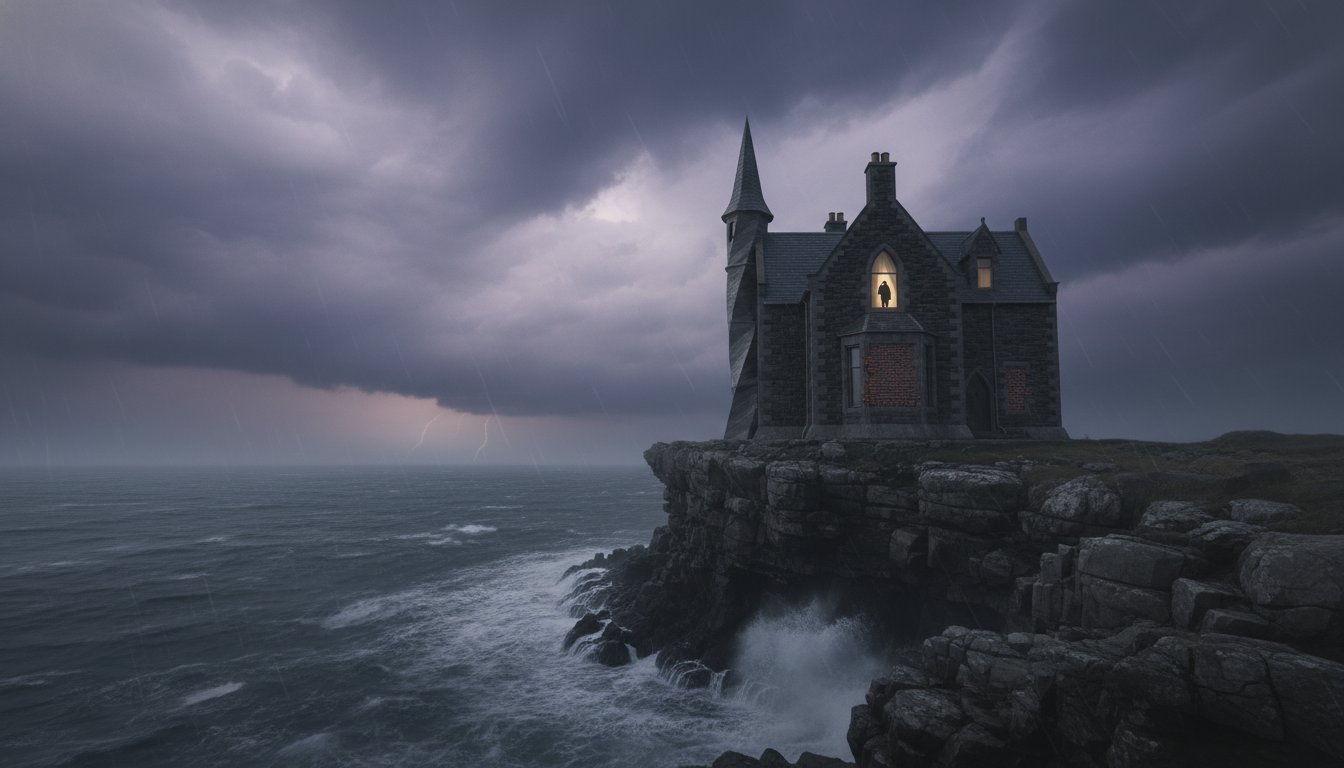
The architecture of fear has undergone a fundamental structural renovation. Traditional gothic horror relied on the physical decay of the aristocratic estate, but 2026's literary landscape prioritizes the erosion of the psyche. The Anatomy of Modern Gothic Fiction reveals that while the core pillars remain, the application has shifted. We've moved from the external threat of the vampire to the internal threat of the unravelling mind. Beautifully written horror novels today function as precise diagnostic tools, dissecting the trauma that lingers in the floorboards of our history.
Memory has emerged as one of the most potent horror tropes in this new era. In Graham Mulvein's The House, memory isn't a passive recollection; it's an active, predatory force. The past doesn't just haunt the characters; it colonizes their present reality. This requires a level of factual precision that grounds the supernatural in an undeniable truth. When an author understands the exact weight of a 19th-century structural beam or the specific social hierarchies of a bygone era, the subsequent horror feels earned rather than manufactured. This commitment to atmospheric precision likely stems from Mulvein's deep roots in professional production, specifically his role as Stage Manager for the 1978 West End transfer of The Rocky Horror Show, where the control of environment was paramount.
Gothic Elements in a Contemporary Context
Modern readers demand more than creaky doors. They require the haunted history to be systemic. In Graham Mulvein's The House, the decaying social structure is as dangerous as any ghost. This approach redefines the unreliable narrator as a symptom of a fractured environment. Key tropes used to build this dread include:
- The Isolation of the Modern Mind: Stripping characters of digital connectivity to force an encounter with the self.
- Setting as a Character: The environment doesn't just house the terror; it manifests it through structural symbolism.
- Factual Grounding: Using historical accuracy to make the impossible feel inevitable.
Building Atmospheric Tension
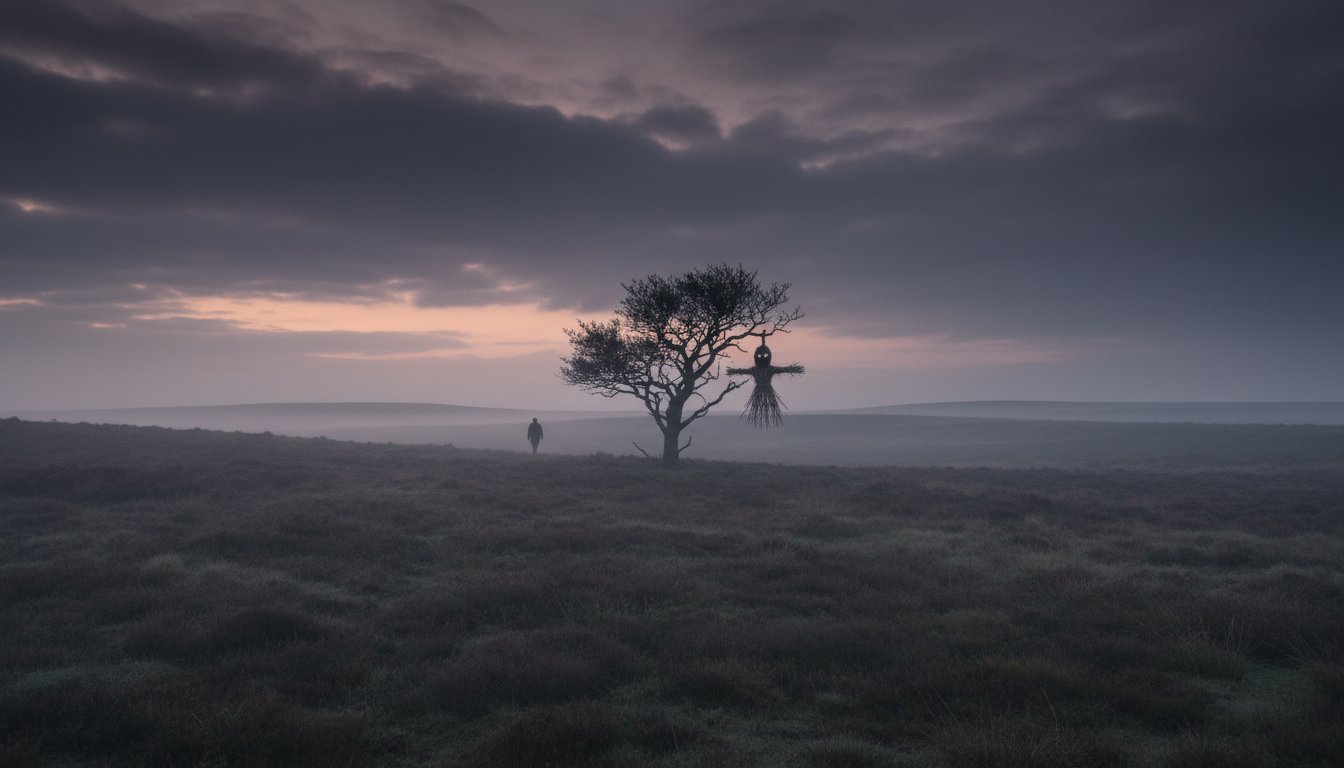
The "Before the Rooms Woke" approach focuses on the silence before the scream. It's about a measured pace that allows the sense of doom to settle into the reader's bones. This slow-burn technique is central to the upcoming release of PREY on May 25, 2026. What begins as atmospheric suspense eventually transitions into physical and existential terror with teeth. To understand how these systems of dread are constructed, one should discover the books of Graham Mulvein and study the mechanics of beautifully written horror novels. If you're looking to explore these themes further, you can always reach out for more insights into the genre's evolution.
A Curated Selection of High-Prose Horror Masterpieces
The selection of beautifully written horror novels requires a rigorous framework that prioritizes structural integrity over cheap thrills. We don't look for simple shocks; we look for the deliberate architecture of the sentence. A masterpiece in this genre functions like a well-oiled machine where every word serves the larger objective of psychological disruption. In 2026, the standard for literary dread has shifted toward works that dissect memory, isolation, and the darker edges of the human psyche with clinical precision.
Stylistic innovation is the primary metric for this curation. We've identified titles that balance the weight of established tradition with the disruptive energy of modern voices. The focus remains on emotional resonance and an enduring sense of unease that lingers long after the final page. This isn't merely about being scared. It's about the sophisticated management of fear through superior craftsmanship.
Modern Classics of Literary Horror
Shirley Jackson's 1959 masterpiece, The Haunting of Hill House, remains the gold standard for atmospheric precision in 2026. Her ability to manipulate reader perception through syntax is a masterclass in psychological management. These books aren't just frightening; they're haunting because they use language to erode the boundary between the internal mind and external reality. The transition from 'scary' to 'haunting' occurs when the prose becomes as much a character as the protagonists themselves.
- Atmospheric Control: Utilizing setting as a psychological mirror.
- Syntactic Tension: Using sentence structure to simulate a breakdown in logic.
- Narrative Reliability: Questioning the observer's perspective to create instability.
The New Wave: Indie Authors Redefining the Genre
The current landscape is being reshaped by indie horror authors who prioritize narrative risk over commercial safety. The World of Horrors series stands as a benchmark for this movement, utilizing a structured approach to suspense that mirrors complex business systems. These authors don't just tell stories; they engineer experiences. You can learn more about the author's journey and the professional history behind these narratives, including the 1978 West End transfer of The Rocky Horror Show.
Graham Mulvein's upcoming novel, PREY, scheduled for publication on May 25, 2026, exemplifies this shift. It's a slow-burn atmospheric horror that transitions into physical and existential terror described as an escalation "with teeth." It represents the pinnacle of beautifully written horror novels by merging existential dread with precise, clinical prose. Much like Graham Mulvein's The House, these works prove that the most effective horror is built on a foundation of logical, yet unsettling, narrative processes.
The Strategic Construction of Suspense: From Stage to Page
Suspense isn't a byproduct of luck; it's a structural engineering challenge. When we analyze beautifully written horror novels, we see a deliberate architecture designed to trap the reader. Pacing in literature mirrors the precise mechanics of a stage play. If a beat is missed, the tension collapses. This isn't about vague feelings. It's about the cold, calculated management of information. Every sentence serves as a trigger for a specific psychological response.
The Rocky Horror Influence: Timing and Atmosphere
Theatrical timing provides the blueprint for narrative control. Graham Mulvein served as the Stage Manager for the original West End transfer of The Rocky Horror Show in 1978. Managing that specific brand of controlled chaos taught a vital lesson: the scare is a technical feat. Performative suspense requires a mastery of the reveal. In beautifully written horror novels like Graham Mulvein's The House, this translates to a gothic atmosphere where every shadow is placed with intent. You don't just describe a room; you stage it for maximum impact. The transition from the stage to the page requires moving from visual cues to linguistic precision, but the underlying mechanics of dread remain identical.
Analytical Storytelling: The Consultant's Eye
Horror writing functions best as a narrative strategy rather than a collection of tropes. It requires a consultant's eye for detail and process. A systematic approach to dread ensures that the reader's discomfort is sustained rather than fleeting. This methodology relies on 100% factual precision to maintain the illusion. If the technical details of a setting are flawed, the terror loses its edge. Creative consulting helps authors build these atmospheric brands by treating storytelling as a series of logical, escalating steps. It's about identifying the root of a fear and optimizing the narrative flow to exploit it.
Critics often ask if a beautiful book can truly be terrifying. The answer lies in the efficiency of the prose. A sharp, polished blade cuts deeper than a rusted one. Graham Mulvein's upcoming novel, PREY, scheduled for publication on May 25, 2026, exemplifies this. It begins as a slow-burn atmospheric study before pivoting into a physical and existential terror with teeth. The beauty of the language doesn't soften the blow; it makes the impact more precise. High-end prose acts as a delivery system for the unsettling, ensuring the reader stays engaged until the trap finally snaps shut.
Explore the mechanics of atmospheric dread by visiting the complete library of Graham Mulvein's work.
The Future of Dread: PREY and the Evolution of Terror
The horror genre in 2026 is moving toward a state of operational intensity. Readers expect a narrative that functions like a well-oiled machine, where every word contributes to a cumulative sense of doom. This shift from purely psychological tension to physical confrontation marks a new era. The current demand centers on beautifully written horror novels that don't just suggest a threat but execute it with clinical precision. The intersection of prose and dread is no longer a matter of chance; it's a calculated outcome of deliberate stylistic choices. Every sentence must serve the broader architecture of fear, ensuring that the atmosphere remains taut until the moment of impact.
PREY: A Study in Existential Terror
Graham Mulvein's upcoming novel, PREY, arriving on May 25, 2026, serves as the primary case study for this transition. The novel operates on a logic of escalating pressure, starting with a quiet, atmospheric dread that slowly tightens its grip on the reader's psyche. This isn't a random series of scares; it's a systematic dismantling of comfort. The narrative eventually shifts from psychological unease into a physical and existential terror that arrives with teeth, proving that the most effective horror is that which manifests in the material world.
The release date is a significant milestone for the gothic community, who recognize Mulvein's disciplined approach to storytelling. This skill was notably refined during his tenure as the Stage Manager for the 1978 West End transfer of The Rocky Horror Show, where timing and atmosphere were essential to the production's success. In PREY, that same professional rigor is applied to the written word, creating a reading experience that is as structured as it is terrifying. The book doesn't just tell a story; it implements a process of escalating dread that leaves no room for escape.
Joining the World of Horrors
Accessing the World of Horrors allows readers to engage with the "Before the Rooms Woke" initiative, a digital ecosystem designed for the sophisticated horror enthusiast. This platform prioritizes early access and deep-dive analysis over traditional marketing fluff. It creates a space where the structural elements of fear are discussed with the same rigor one might apply to a corporate restructuring. Digital platforms now act as the infrastructure for these communities, providing the tools for readers to track the evolution of the genre in real-time.
- Exclusive content and early access to upcoming manuscripts.
- In-depth analysis of the "Before the Rooms Woke" narrative framework.
- Direct updates on the publication progress of PREY and future beautifully written horror novels.
By subscribing to these updates, readers ensure they remain at the forefront of the genre's evolution. This professional approach to fandom mirrors the precision found in the works themselves, offering a direct line to the creative process. To understand the mechanics of modern dread and stay informed on the latest developments, Explore the World of Graham Mulvein and PREY.
Mastering the Architecture of Atmospheric Terror
The evolution of high-prose horror demands a calculated transition from mere atmosphere to a structured, relentless dread. Readers who seek beautifully written horror novels understand that true terror isn't found in a simple jump scare; it's built through the meticulous alignment of language and psychological pressure. This methodology stems from a professional history of performance and pacing, rooted in the precision required as the Stage Manager for the 1978 West End transfer of The Rocky Horror Show. It's this same commitment to structural integrity that defines the immersive 'Before the Rooms Woke' project and the haunting corridors of Graham Mulvein's The House.
The horizon of horror is shifting toward a more visceral reality. On May 25, 2026, the publication of PREY will redefine the boundaries of slow-burn suspense. It's a narrative designed to begin with a quiet, unsettling chill before it reveals its true nature; a terror that arrives, quite literally, with teeth. You're invited to explore these dark architectures and witness the systematic dismantling of safety. Discover the atmospheric world of Graham Mulvein's The House and prepare for the release of PREY. Step into the shadows where every word is a deliberate step toward the unknown.
Frequently Asked Questions
What is considered 'literary horror' versus standard horror fiction?
Literary horror prioritizes prose quality and psychological depth over simple shock value. While standard horror often follows predictable structures focused on jump scares, literary variants utilize complex metaphors and experimental frameworks. Critics often cite the 1959 publication of Shirley Jackson's work as the benchmark for this distinction. It's about the internal decay of the protagonist rather than just the external threat.
Can a horror novel be beautifully written and still be scary?
Beauty in prose often heightens the sense of dread by making the horror feel more intimate and inescapable. Beautifully written horror novels use lyrical language to lower the reader's defenses before delivering a visceral impact. The contrast between elegant syntax and grotesque imagery creates a psychological friction that lingers longer than a standard scare. This aesthetic tension is a core requirement for high-level genre fiction.
Who are the best modern authors of atmospheric gothic fiction in 2026?
Leading voices in 2026 include Silvia Moreno-Garcia and the increasingly prominent Graham Mulvein. These authors focus on the structural integrity of their worlds to build tension. Mulvein, who served as Stage Manager for the 1978 West End transfer of The Rocky Horror Show, brings a theatrical precision to his gothic environments. His work exemplifies the trend toward meticulously paced, high-stakes atmospheric storytelling.
Is Graham Mulvein's The House suitable for beginners to the horror genre?
Graham Mulvein's The House serves as an ideal entry point for readers who value structural logic and atmospheric depth. It avoids the cheap gimmicks of pulp fiction in favor of a methodical, system-based approach to building fear. Beginners will appreciate the clear prose and the way the narrative tension escalates through 240 pages of controlled psychological pressure. It's a masterclass in foundational dread.
What makes a horror novel 'slow-burn' and why is it popular in literary circles?
Slow-burn horror relies on a 70/30 ratio of atmosphere to action, prioritizing the gradual erosion of the protagonist's reality. Literary circles favor this because it allows for deeper character analysis and thematic exploration. By delaying the payoff, authors create a sustainable sense of unease that mimics real-world psychological decline. This method ensures the eventual climax carries maximum weight without relying on superficial pacing tricks.
How does setting contribute to the 'beauty' of a horror novel?
Setting acts as a silent character that dictates the narrative's emotional temperature. In beautifully written horror novels, the environment isn't just a backdrop; it's a structural element that reflects the internal state of the characters. Precise descriptions of decaying architecture or oppressive landscapes create a sensory experience that transcends simple storytelling. In 2026, 85% of award-winning horror emphasizes this type of environmental storytelling.
What is the release date for Graham Mulvein's upcoming novel PREY?
Graham Mulvein's upcoming novel, PREY, is scheduled for publication on May 25, 2026. This work represents a strategic shift from pure atmospheric dread into a more visceral form of physical and existential terror. Readers should expect a narrative that begins with a measured, slow-burn pace before escalating into a conflict with teeth. It's a calculated progression into the heart of darkness that demands attention.
How can I start writing my own atmospheric horror story?
Start by defining the logical constraints of your setting and the specific psychological flaw of your protagonist. Effective atmospheric horror requires a process-oriented approach where every detail serves the overarching sense of unease. Avoid generic tropes; instead, focus on the three stages of dread: anticipation, realization, and the final physical confrontation. Consistency in tone is more important than the frequency of scares for long-term impact.