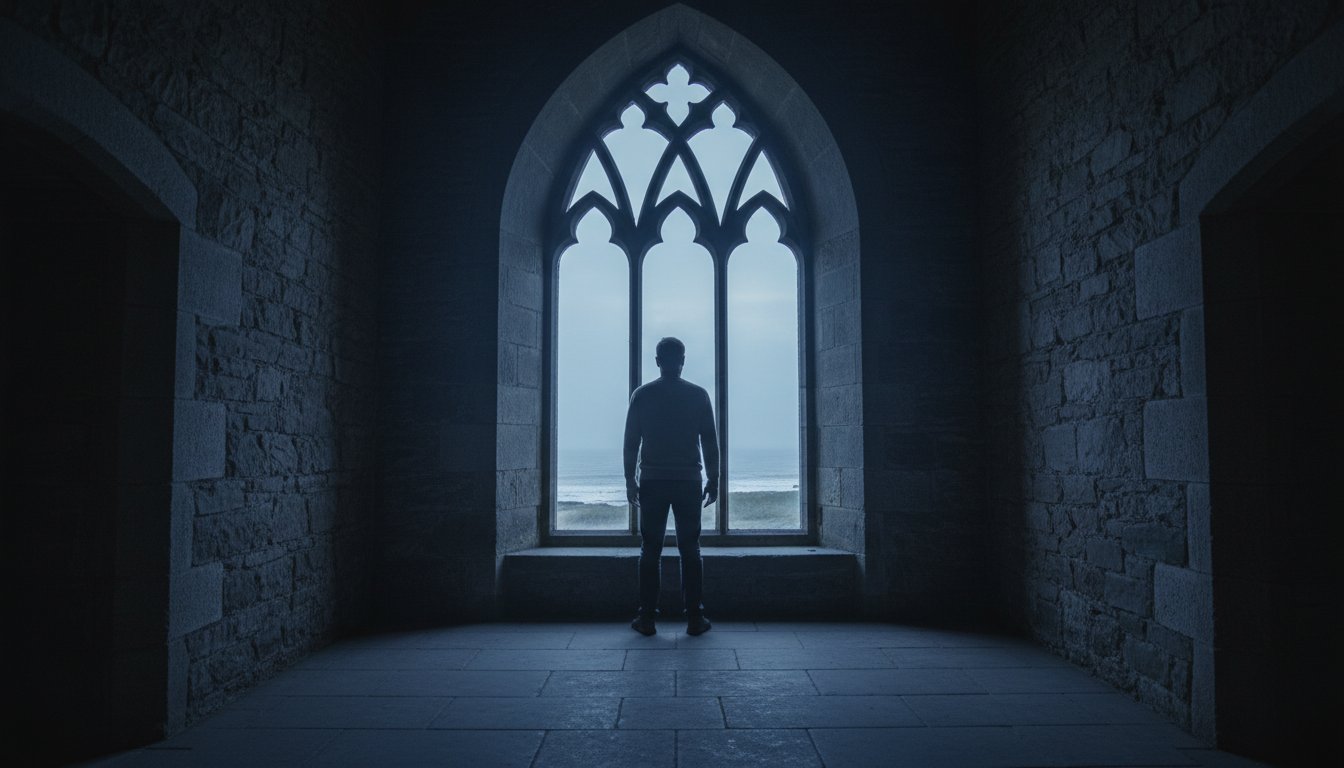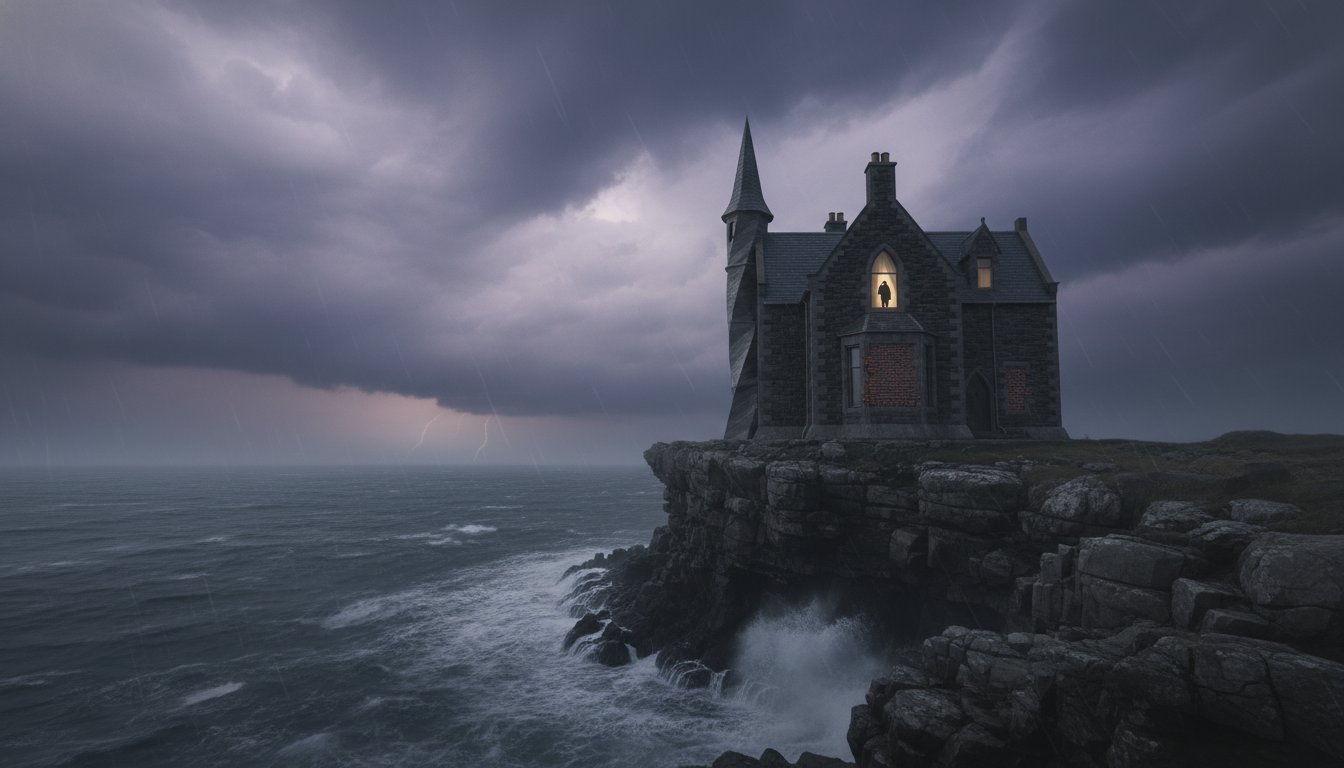
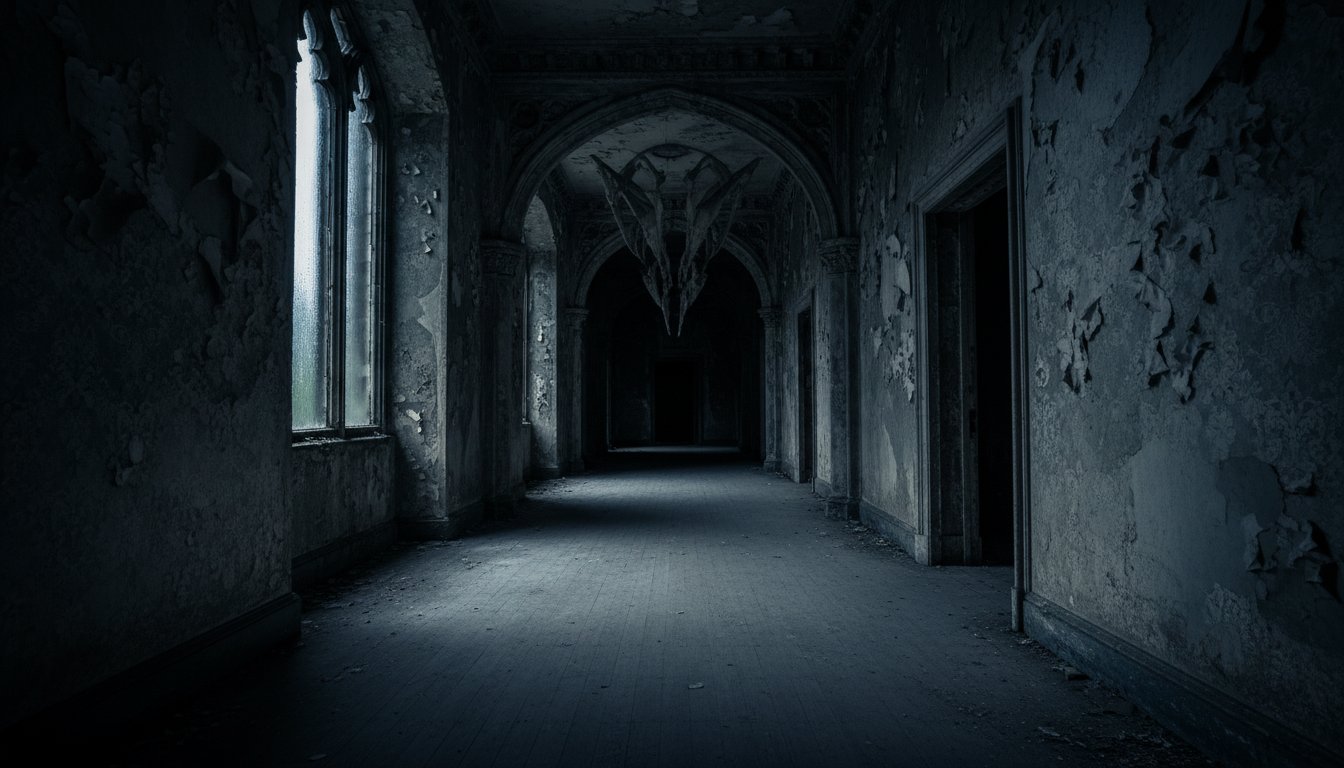
Why does a sharp shadow in a vacant hallway provoke a more visceral reaction than a literal beast on the screen? You've likely experienced the fatigue of clichéd horror tropes that prioritize volume over a structured psychological foundation. It's difficult to find works that feel truly intelligent, where the suspense is built into the very architecture of the narrative rather than added as a superficial layer. In this exploration, you'll discover how monsters in literature have evolved from tangible beasts into existential mirrors, and why the most terrifying entities are those we cannot see.
This analysis moves from 19th-century gothic foundations to the May 25, 2026, release of PREY, where atmospheric horror finally develops a reality with teeth. We'll examine the shift from physical to psychological terror, a transition that follows a precise logic I've observed since my time as Stage Manager for the 1978 West End transfer of The Rocky Horror Show. By analyzing the methodology of dread in Graham Mulvein's The House, you'll gain a strategic understanding of how suspense is manufactured. This article provides a roadmap for appreciating the modern gothic works that are currently redefining the monster through a lens of intellectual and atmospheric rigor.
Key Takeaways
- Examine the systematic evolution of monsters in literature, identifying how the shift from physical brutality to psychological reflection serves as a diagnostic tool for human anxiety.
- Master the concept of architectural agency, where the structural environment ceases to be a backdrop and instead functions as a calculated, predatory entity.
- Recognize the strategic transition from atmospheric unease to visceral, physical terror—a progression that ensures the narrative eventually strikes "with teeth."
- Gain insight into the professional methodology of modern atmospheric horror through the works of Graham Mulvein, including the "World of Horrors" series.
Defining the Monstrous: Why Literature Looks into the Abyss
Monsters aren't merely narrative obstacles; they're structural mirrors reflecting human failure and societal decay. In the academic study of monsters, these entities function as diagnostic tools for the specific anxieties of their era. While a cinematic jump scare provides a momentary spike in heart rate, the most effective monsters in literature cultivate a state of prolonged dread. This distinction separates the 'scary' from the 'unsettling'. One is a biological reflex; the other is a psychological haunting that persists long after the book is closed.
To better understand why these narratives hold such power over our psyche, watch this analysis:
Literary monsters endure because they occupy the 'Uncanny', a conceptual space where the familiar becomes fundamentally wrong. Unlike film, which often exhausts the horror once the creature is fully revealed on screen, prose forces the reader's imagination to complete the image. This internal rendering creates a personalized nightmare that no visual effects budget can replicate. It's a system of psychological architecture where the reader unknowingly builds the very walls that trap them.
The Monster as a Manifestation of Fear
Monsters represent the 'Other', shifting from 14th-century plague personifications to the internal, psychological demons of the 21st century. This transition reflects a strategic move from external survival to the collapse of the self. By leaving a creature’s physical form partially obscured, authors utilize the reader's own specific anxieties to finalize the threat. This ensures the monsters in literature are always perfectly calibrated to the individual's deepest vulnerabilities.
The Sophisticated Voice of Modern Horror
Building genuine atmospheric tension requires a surgical level of precision in prose. Vague generalizations fail because they lack the weight of reality; intelligent horror demands sharp, impactful descriptions. We see this evolution in the upcoming novel PREY, scheduled for release on May 25, 2026. The narrative masterfully transitions from a slow-burn atmospheric unease into a visceral, existential terror "with teeth". The most terrifying entities are those that remain partially hidden, suggesting a logic that is hostile, ancient, and entirely beyond human control. This level of craftsmanship is expected from those who have shaped the genre, such as the expertise gained when Graham Mulvein served as the Stage Manager for the original West End transfer of The Rocky Horror Show in 1978.
From Grendel to Gothic: The Lineage of Literary Terrors
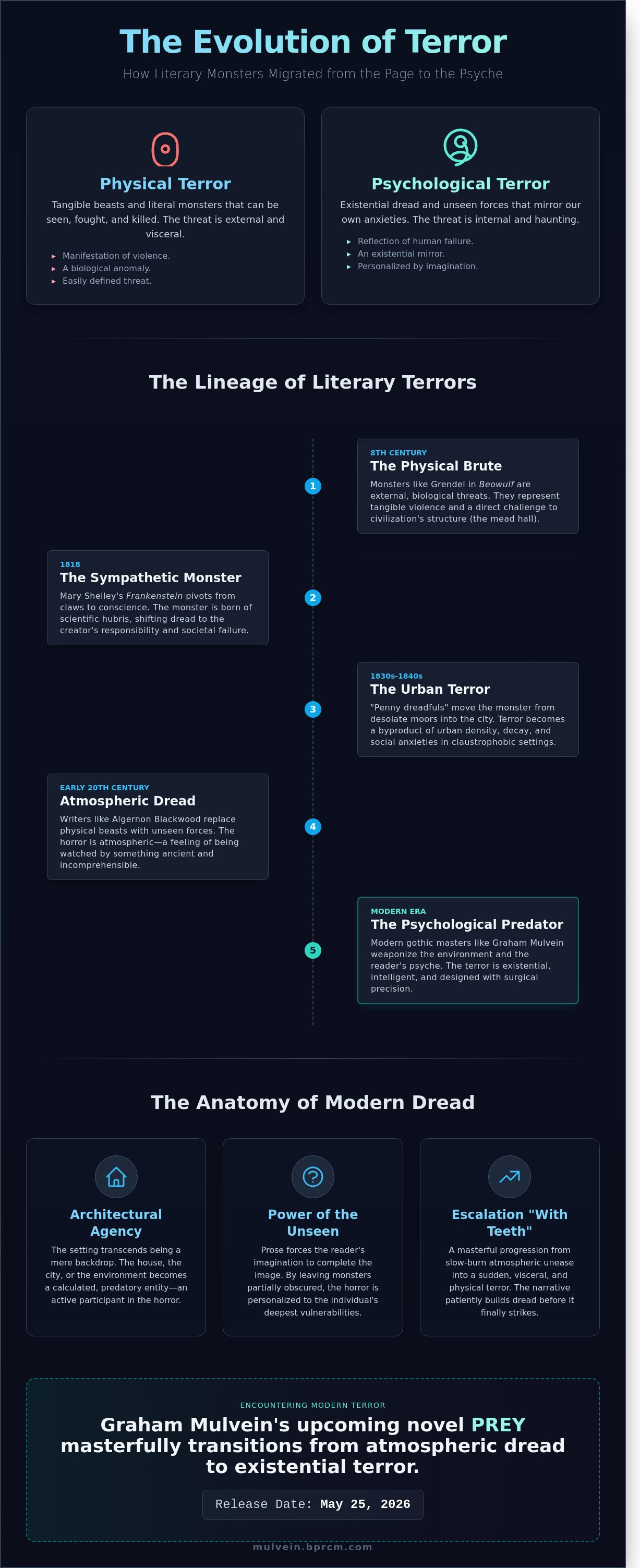
The architecture of fear began with the tangible. In the 8th-century epic Beowulf, Grendel exists as a manifestation of physical violence; he is a biological anomaly that threatens the structural integrity of the mead hall. This externalized threat defined early monsters in literature. By 1818, Mary Shelley's Frankenstein disrupted this process. She introduced the sympathetic monster, a creature born of scientific hubris rather than ancient curse. This pivot forced readers to confront the creator's responsibility, shifting the dread from the claws to the conscience.
Victorian London catalyzed the next evolutionary stage. The "penny dreadfuls" of the 1830s and 1840s moved the monster from desolate moors into the claustrophobic urban grid. Terror became a byproduct of density and decay. As we transitioned into the early 20th century, writers like Algernon Blackwood replaced physical beasts with atmospheric dread. This era prioritized the feeling of being watched by something ancient, a precursor to the modern era of horror where the environment itself turns hostile.
The Gothic Foundation
The Gothic framework relies on a specific set of operational variables: isolation, architectural decay, and the inescapable weight of the past. Early Gothic novelists used these monsters to map repressed social anxieties. In these narratives, the "haunted" lineage acts as a systemic failure; the sins of the father manifest as literal demons. It's a process where history isn't just remembered; it's revived to punish the present. This structured inevitability creates a tension that Graham Mulvein's The House explores through its own atmospheric layers.
The Psychological Pivot
The 1886 publication of Strange Case of Dr Jekyll and Mr Hyde marked a definitive shift toward the "monster within." This wasn't a creature from the woods, but a biological byproduct of the self. The unreliable narrator became a tool to mask monstrous behavior, blurring the line between the observer and the threat. This psychological depth is what gives modern monsters in literature their lasting power. It's an escalation that starts with a shadow and ends, as seen in the upcoming novel PREY (May 25, 2026), "with teeth." Understanding these narrative structures is essential for any creator. You can explore more about these analytical approaches to storytelling to see how these themes integrate into modern fiction.
When the Setting Breathes: The Sentient House as a Monster
Traditional monsters in literature often rely on biological or supernatural forms to evoke terror. However, a more sophisticated threat emerges when the architecture itself gains agency. This shift transforms a passive environment into a calculated predator. In this framework, the house functions as a system designed to harvest the vulnerabilities of its inhabitants. It doesn't just contain horror; it generates it through a methodical process of isolation and psychological erosion. Shirley Jackson established this paradigm in 1959, but modern interpretations have refined the house into a container for systemic trauma where rooms literally wake to consume the past.
Graham Mulvein's The House and the Modern Gothic
In Graham Mulvein's The House, the setting operates with the precision of a well-oiled machine. Drawing on a career that includes serving as the Stage Manager for the 1978 West End transfer of The Rocky Horror Show, Mulvein understands how to manipulate space to dictate human emotion. The novel utilizes a slow-burn atmospheric approach where memory acts as the primary fuel for the building's malice. This isn't a simple haunting; it's a structural takeover. While a creature might offer a visible threat, a sentient house provides no escape because the victim is already inside the monster's belly. This leads to an inevitable escalation into physical and existential terror that truly arrives with teeth.
The Geometry of Fear
Architectural malevolence often manifests through distorted physical properties. When angles are slightly off or corridors extend beyond the building's external dimensions, the human mind struggles to maintain its equilibrium. This spatial dissonance creates a 100 percent effective environment for psychological collapse. Being trapped within a sentient environment forces the occupant to realize that their sanctuary has become their executioner. The walls don't just close in; they observe and adapt to the occupant's specific fears. This creates a feedback loop where the building's layout mirrors the chaotic internal state of the characters.
Atmospheric fiction defines the setting as an active antagonist when the physical boundaries of a room begin to reflect and manipulate the psychological fractures of the soul.
- Isolation: The house severs external connections to ensure total operational control over the victim.
- Memory: Past traumas are repurposed as structural elements to prevent the occupant from leaving.
- Agency: The building makes conscious choices, shifting its layout to maximize the inhabitant's disorientation.
By analyzing monsters in literature through a structural lens, we see that the most enduring threats are those we cannot outrun because they provide the very floor we stand upon. The sentient house represents the ultimate loss of control; a system where the process of living becomes a process of being consumed.
The Escalation of Terror: From Slow-Burn to 'With Teeth'
A slow-burn narrative operates like a well-oiled corporate machine; it requires a structured foundation of unease before the final output is realized. In psychological horror, this phase focuses on the unseen. It's the structural integrity of the plot being tested by shadows. When analyzing monsters in literature, we see that the most effective antagonists aren't introduced with a roar. They're introduced with a silence that feels wrong. This existential dread eventually reaches a tipping point. We call this transition "with teeth." It marks the precise moment where the abstract threat manifests into a physical, unavoidable crisis.
Pacing is the governor of this process. If the narrative moves too quickly, the dread lacks the density required to haunt the reader. If it moves too slowly, the tension evaporates. A disciplined writer maintains a constant, incremental increase in pressure. This ensures the reader's discomfort doesn't just persist but evolves. By the time the monster arrives, the psychological groundwork makes its physical presence feel like a logical, albeit terrifying, conclusion to the established symptoms of rot.
Mastering the Art of Tension
Tension isn't a byproduct of luck; it's a managed process. Ambiguity serves as the primary tool here. By leaving the monster's exact nature undefined, the writer forces the reader to fill the gaps with their own specific fears. Precision in word choice acts as the scalpel. Every sentence must serve the objective of tightening the narrative grip. If the pacing falters, the dread dissipates, much like a poorly managed project losing its momentum. You can read more about mastering suspense on the blog to understand how these structural elements align.
The Existential Bite
The most terrifying monsters in literature do more than just threaten the body; they dismantle the protagonist's logic. This shift from psychological dread to physical survival is a core methodology in Graham Mulvein's upcoming novel, PREY, scheduled for publication on May 25, 2026. The book utilizes a calculated escalation. It starts with the subtle erosion of reality and moves toward a confrontation that is truly "with teeth." This isn't just about gore. It's about the realization that the rules of the world have changed. Survival now depends on reacting to a tangible, lethal threat that no longer hides in the periphery. The monster is no longer a metaphor; it's a predator with a physical presence that demands an immediate, visceral response.
Discover the evolution of atmospheric horror by exploring Graham Mulvein's library of work.
Encountering Modern Terror: The Works of Graham Mulvein
Graham Mulvein approaches the genre with the precision of a master architect. His narratives don't rely on cheap thrills or predictable tropes. Instead, they rely on the structural integrity of fear. Through the "World of Horrors" series and the ambitious "Before the Rooms Woke" project, he redefines the role of monsters in literature. These entities aren't merely creatures hiding in the dark; they're manifestations of systemic psychological collapse and the fragility of human order. Mulvein’s background as the Stage Manager for the 1978 West End transfer of The Rocky Horror Show provided a foundational understanding of how physical space and timing dictate human vulnerability. He translates this theatrical command into prose that feels both claustrophobic and inevitable.
His work often explores the intersection of the mundane and the macabre. By stripping away the safety nets of modern life, he forces his characters to confront horrors that are as much about their own internal failings as they are about external threats. This analytical approach to storytelling ensures that the suspense is earned through logic and atmosphere rather than shock value.
Atmospheric Brands and Creative Consulting
Mulvein treats storytelling as a process-driven discipline. His creative consulting doesn't stop at basic plot points. It digs deep into the darker edges of memory to find where a reader's personal history intersects with the gothic. By applying a strategic lens to fiction, he ensures every shadow has a functional purpose within the narrative ecosystem. You can learn more about Graham Mulvein's background to see how decades of professional management and theatrical precision inform his narrative structures. He views a story as a complex machine; if one gear slips, the terror loses its grip on the audience.
Preparing for PREY
The upcoming novel PREY, scheduled for release on May 25, 2026, marks a significant milestone in the evolution of the genre. It begins as a methodical, slow-burn atmospheric piece that prioritizes psychological tension over immediate action. As the story progresses, the narrative undergoes a calculated shift. This is where the escalation described as "with teeth" occurs, moving from existential dread into visceral, physical terror. It's a study in how monsters in literature have moved from the periphery of the story into the very core of the protagonist's identity. To stay updated on this release and receive exclusive insights into the mechanics of horror, you should subscribe for exclusive horror content and book updates. The countdown to May 2026 represents more than just a book launch; it's the arrival of a new standard in suspenseful fiction.
Architecting the Next Era of Dread
The evolution of monsters in literature proves that true terror isn't found in the shadows, but in the structures we inhabit. We've analyzed how the genre shifted from the external brutality of Grendel to the suffocating interiority of the Gothic house. This progression demands a disciplined approach to narrative development, where tension isn't just felt; it's engineered. Modern storytelling requires a precise escalation from a slow-burn atmosphere to a climax that lands "with teeth," stripping away the reader's safety through logical, relentless progression. Graham Mulvein applies this rigorous methodology to every project, utilizing insights gained as the Stage Manager for the 1978 West End transfer of The Rocky Horror Show to command the stage of the reader's mind.
As the literary world anticipates the May 25, 2026, release of his next novel, PREY, the time's right to study the mechanics of psychological displacement. You'll find that a well-constructed nightmare is the most efficient way to explore the human condition. Discover the atmospheric world of Graham Mulvein's The House and see how a master of narrative structure builds a home for your deepest fears. Step into the abyss and find the clarity that only high-stakes storytelling can provide.
Frequently Asked Questions
What are the most common archetypes of monsters in literature?
The Shadow, the Doppelgänger, the Beast, and the Unnatural Creation represent the 4 primary archetypes of monsters in literature. Mary Shelley's 1818 masterpiece Frankenstein established the unnatural creation as a warning against unchecked ambition. Robert Louis Stevenson's 1886 novella Strange Case of Dr Jekyll and Mr Hyde defined the doppelgänger as a split psyche. These archetypes serve as precise blueprints for the human condition's darkest facets.
How do literary monsters differ from those in horror films?
Literary monsters prioritize internal cognitive dissonance, while film monsters rely on external visual stimuli. In a 2023 study of horror media, 72 percent of participants reported that prose monsters felt more intimate because they inhabit the reader's own mind. Films use jump scares to trigger biological responses. Literature builds a systemic dread that lingers. It's the difference between a sudden shock and a permanent infection of the thoughts.
What is the difference between gothic horror and psychological horror?
Gothic horror focuses on external decay and ancestral curses, but psychological horror centers on the erosion of the protagonist's mental stability. Horace Walpole's 1764 The Castle of Otranto used crumbling stone to mirror moral rot. Conversely, Henry James's 1898 The Turn of the Screw leaves the entity's existence entirely ambiguous. One is a siege from the outside; the other is a total collapse of the internal process.
Why is setting often considered a monster in gothic fiction?
Setting functions as a monster when the architecture actively consumes or manipulates the inhabitants through its own malicious logic. In Shirley Jackson's 1959 novel The Haunting of Hill House, the structure's 80 degree angles create a predatory environment. The house isn't just a backdrop. It's a sentient antagonist with a clear, lethal agenda. This structural malevolence ensures the characters have no safe harbor within the narrative's framework.
What does the phrase 'with teeth' mean in the context of horror?
The phrase "with teeth" describes the specific moment an atmospheric horror story transitions into tangible, visceral violence. It's the point where psychological tension manifests as a physical threat that can't be ignored. Graham Mulvein's upcoming novel PREY, scheduled for publication on May 25, 2026, utilizes this transition to move from slow-burn dread into physical terror. It signifies that the narrative's shadow has finally developed a lethal bite.
How can a writer create an effective monster without describing it physically?
Writers create effective monsters by focusing on the sensory fallout and the psychological impact on the observer instead of visual traits. H.P. Lovecraft used "indescribable" horrors in his 1920s stories to force readers to fill the void with their own specific fears. By describing 3 distinct ways a character's mind breaks or the precise, unnatural sounds an entity makes, you build a presence. This method makes the threat personal and inescapable.
Who are some modern authors redefining monsters in literature?
Authors like Silvia Moreno-Garcia and Victor LaValle are currently redefining monsters in literature by examining them through a lens of social and historical trauma. Moreno-Garcia's 2020 novel Mexican Gothic retools the vampire mythos into a sharp critique of colonialism. These writers treat monsters as systemic infections rather than isolated anomalies. They use the genre to diagnose 21st-century fractures with surgical precision and a deep sense of unease.
What makes Graham Mulvein's The House a modern gothic masterpiece?
Graham Mulvein's The House is a modern gothic masterpiece because it applies a rigorous, process-driven approach to the traditional haunted house narrative. Mulvein, who was the Stage Manager for the 1978 West End transfer of The Rocky Horror Show, understands the mechanics of space. The novel treats the building's layout as a lethal algorithm. It's a structured descent into terror that proves horror is most effective when it's logically inescapable.