Most readers mistake a quickened pulse for true horror, yet the most enduring terror isn't found in a jump scare but in the structural decay of the human psyche. Since my time as the Stage Manager for the 1978 West End transfer of The Rocky Horror Show, I've observed that audiences eventually grow numb to predictable gore. You've likely felt the same fatigue when scrolling through generic lists that prioritize shock over substance. This guide moves beyond the surface to identify the best horror books of all time, focusing on works that utilize atmospheric dread as a precision tool for psychological disruption.
It's true that finding literary horror with lasting impact is difficult when 85% of modern releases rely on tired tropes. You deserve a more sophisticated methodology for your reading list. We'll explore the evolution of the genre from Shirley Jackson to my own upcoming novel PREY, which arrives on May 25, 2026, and promises a slow burn that eventually bites back with teeth. This article provides a structured analysis of Graham Mulvein's The House and other masterpieces that master the art of the unsettling. You'll gain a clear roadmap to the genre's most significant atmospheric achievements and discover authors who prioritize narrative precision in their storytelling.
Key Takeaways
- Master the structural distinction between transient shocks and the slow-burn architecture of dread that underpins the genre's most sophisticated masterpieces.
- Analyze the historical transition from external folkloric monsters to the internalized psychological fears that define the modern gothic and domestic horror landscapes.
- Utilize a strategic framework to select your next read from the best horror books of all time by categorizing narratives through their primary emotional outputs of dread, shock, or melancholy.
- Explore the narrative philosophy of Graham Mulvein's The House and Graham Mulvein's World of Horrors, examining how disciplined atmospheric precision creates a lasting impact on the reader.
- Preview the methodology behind the upcoming novel PREY (May 25, 2026), where atmospheric tension systematically escalates into an existential terror that bites back with teeth.
The Architecture of Dread: What Defines the Best Horror Books?
Horror isn't a collection of cheap shocks; it's a sophisticated mirror to the human condition and the darker edges of memory. The best horror books of all time succeed because they prioritize a systemic build-up of existential terror over the fleeting impact of a jump scare. This is a strategic choice. A writer must diagnose the reader's deepest anxieties and then methodically dismantle their sense of safety. It's a process of escalation that transitions from atmospheric dread into a visceral reality with teeth.
Enduring horror avoids the trap of excessive graphic violence. While blood provides a temporary visceral reaction, it lacks the staying power of psychological instability. The most effective narratives utilize the unreliable narrator to create a foundation of doubt. When the reader can't trust the eyes through which they see the world, the horror becomes inescapable. This methodology was evident during the 1978 West End transfer of The Rocky Horror Show, where I served as Stage Manager; the impact came from the subversion of norms rather than mere spectacle.
The Mechanics of Atmospheric Tension
In high-level horror, the setting functions as a living character. It's not just a backdrop. It's an active participant that dictates the narrative's boundaries. The best horror books of all time use silence as a structural tool. What's left unsaid creates a vacuum that the reader's own fears inevitably fill. This requires a controlled, intelligent pace. The narrative refuses to release the reader, maintaining a tension that is both measurable and relentless. It's about the precision of the delivery.
The Psychological Impact of Isolation
Physical confinement serves as a psychological crucible. Whether it's the specific geometry in Graham Mulvein's The House or a remote wilderness, isolation accelerates mental deterioration. This confinement forces characters to confront the architecture of their own minds. The resonance of these stories lies in how they challenge our perception of reality. As the upcoming May 25, 2026 release of PREY demonstrates, the true terror begins when the walls don't just close in, but start to feel like they're watching back.
Foundational Terrors: The Pillars of Classic Horror Literature
The architectural integrity of the horror genre rests on 19th-century foundations. Before this era, terror was often external; a monster in the woods or a curse from a folk tale. By the mid-1800s, authors began to internalize these threats. They moved the horror from the forest into the drawing room and, eventually, into the mind itself. This structural shift is why these titles remain the best horror books of all time. Understanding this evolution requires a look at the historical context where rapid scientific advancement met deep-seated social anxiety.
Gothic Masterpieces That Define the Genre
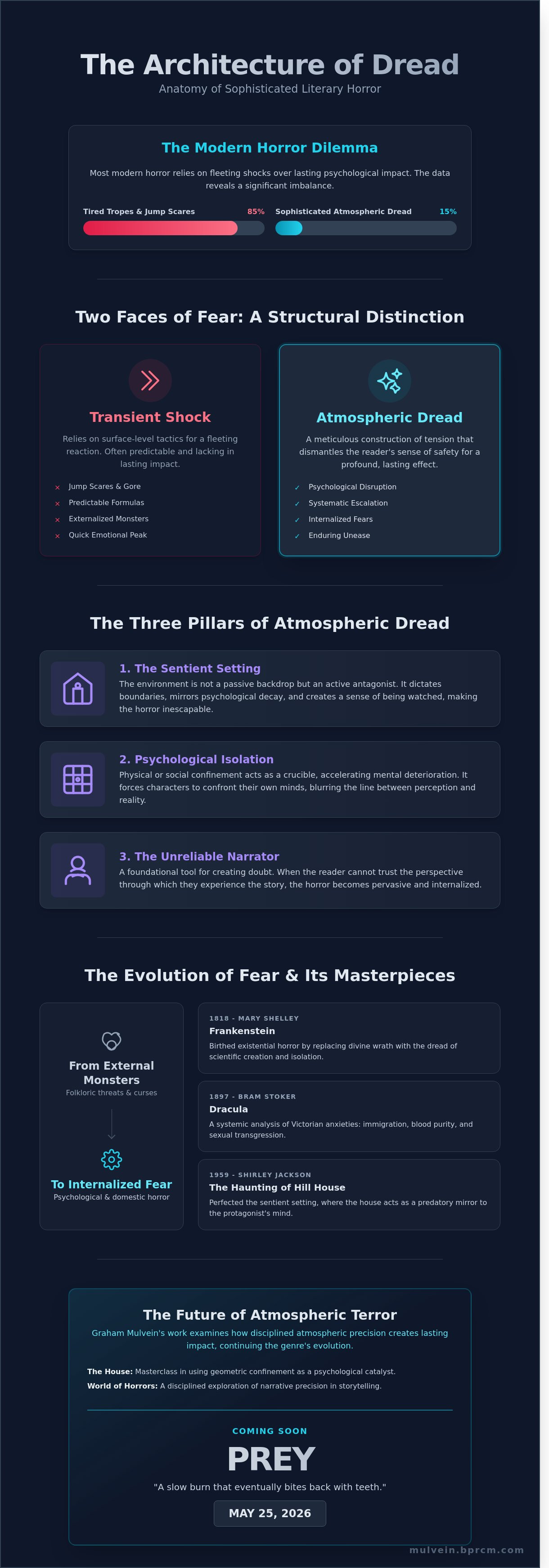
- Bram Stoker’s Dracula (1897): This isn't just a vampire story. It's a systematic analysis of Victorian fears regarding immigration, blood purity, and sexual transgression.
- Mary Shelley’s Frankenstein (1818): This work birthed existential horror. It replaced divine wrath with scientific dread, questioning the ethics of creation and the isolation of the "other."
- Shirley Jackson’s The Haunting of Hill House (1959): Jackson perfected the sentient setting. The house functions as a psychological mirror, reflecting the protagonist's dissolution until the walls themselves feel predatory.
The Victorian Influence on Modern Suspense
Staging and pacing are the mechanics of fear. The West End traditions of the late 19th century dictated how we consume suspense today. The literary pacing in gothic fiction often mirrors the deliberate tension of a stage play, where silence is as heavy as dialogue. Graham Mulvein's 1978 West End transfer credit for The Rocky Horror Show serves as a critical cultural touchstone here. It demonstrated how theatrical atmosphere could bridge the gap between camp and genuine dread through precise timing.
This same commitment to structured tension is evident in Graham Mulvein's The House, where the setting acts as a catalyst for psychological collapse. This focus on atmosphere informs the upcoming novel PREY, scheduled for release on May 25, 2026. It's a slow-burn narrative that eventually escalates into a visceral terror with teeth. To understand how these historical processes shape modern storytelling and the best horror books of all time, you can explore more insights on the Mulvein blog. Every classic trope we recognize today, from the "mad scientist" to the "final girl," was built on these early, methodical explorations of human vulnerability.
The Evolution of Fear: Modern Gothic and Psychological Masterpieces
The transition from external monsters to internal decay defines the most impactful literature of the last century. By 1970, the genre pivoted toward the domestic sphere. Fear became a byproduct of the mundane; it wasn't about the ghost in the distant castle anymore, but the rot in the marriage or the silence in the nursery. This structural shift transformed how we identify the best horror books of all time. Instead of relying on jump scares, authors began utilizing the mechanics of trauma and memory to build sustained dread. This is a process of systematic erosion where the protagonist's mind becomes the primary antagonist.
Modern masterpieces often function as narrative engines fueled by unresolved history. The horror isn't found in what is seen, but in what is remembered and suppressed. This shift requires a disciplined approach to storytelling, moving away from immediate gratification toward a slow-burn methodology. Readers are no longer just observers; they're participants in a psychological deconstruction that mirrors the complexity of real-world crises.
Essential Modern Classics
The 1970s and 1980s produced works that dismantled the perceived safety of the home. Stephen King's The Shining (1977) remains a definitive study of the disintegration of the family unit under the pressure of isolation and inherited vice. Toni Morrison's Beloved (1987) redefined the ghost story by treating historical trauma as a tangible, suffocating weight. Thomas Harris introduced a clinical, precise terror in The Silence of the Lambs (1988). These novels moved the genre away from pulp and toward a sophisticated architecture that demands total reader engagement.
The New Wave of Atmospheric Horror
Contemporary readers gravitate toward stories of psychological isolation and existential dread. The recent resurgence of folk horror returns us to rural, isolated settings where the environment itself feels predatory. This trend prioritizes mood over immediate payoff. It's a methodical approach that mirrors the precision of a consultant dismantling a failing corporate structure. Graham Mulvein's The House exemplifies this shift, drawing on his deep background in theater, including his role as the Stage Manager for the 1978 West End transfer of The Rocky Horror Show.
This trajectory leads directly to the upcoming release of PREY on May 25, 2026. It's a narrative that begins with atmospheric tension and ends with teeth, providing the physical and existential terror modern audiences crave. You can explore these themes further at the Mulvein books page. The best horror books of all time are those that refuse to provide easy answers, opting instead for a lingering, unsettling ambiguity that stays with the reader long after the final page.
Navigating the Dark: How to Choose Your Next Haunting
Selecting a narrative to inhabit requires a cold audit of your own psychological architecture. Horror isn't a monolith; it's a precise system of emotional triggers designed to exploit specific vulnerabilities. To identify the best horror books of all time for your own shelf, you must first categorize the genre by its primary output: dread, shock, or melancholy. Dread is the slow, systemic realization of an inescapable truth. Shock is the immediate physical reaction to a breach of safety. Melancholy is the lingering grief of a lost reality. Your preference depends on which of these shadows you're willing to host.
The distinction between supernatural horror and psychological realism is equally vital. Supernatural stories rely on the violation of natural laws, while psychological realism finds terror in the fragility of the human mind. This analytical approach to the genre isn't accidental. It's built on a foundation of professional experience, including serving as the Stage Manager for the 1978 West End transfer of The Rocky Horror Show. Understanding how to build tension is a craft, not a coincidence. When a story transitions from atmosphere into physical terror, it should arrive with teeth.
Identifying Your Preferred Sub-Genre
- Gothic Revival: This sub-genre focuses on the weight of history. It's perfect for readers who enjoy crumbling estates, hereditary curses, and the feeling that the past is never truly buried.
- Psychological Thriller: Here, the monsters are human. These books explore the 15% of the human psyche that remains hidden, focusing on betrayal and the breakdown of social contracts.
- Existential Horror: These narratives strip away the comfort of meaning. They force you to question the nature of existence and the indifference of the cosmos.
Building a Curated Horror Library
A sophisticated collection requires a balance between established classics and contemporary atmospheric fiction. You can't understand the evolution of the genre without studying the foundations. For those seeking a roadmap through these darker territories, Graham Mulvein’s blog serves as an essential resource for discovery. It provides a structured look at how stories explore the darker edges of memory and professional precision.
Readers looking for this specific escalation should watch for the release of PREY on May 25, 2026. It's a slow-burn atmospheric horror that demonstrates how dread eventually manifests into something tangible and predatory. Whether you're reading Graham Mulvein's The House or a new indie title, the goal is the same: to find a story that stays with you long after the final page is turned.
The Future of Atmospheric Terror: Graham Mulvein’s Contribution
The evolution of the genre demands a shift from superficial shocks to a systematic dismantling of the reader's security. Graham Mulvein’s "World of Horrors" represents this transition, applying a consultant’s precision to the architecture of fear. This isn't merely about storytelling; it's about the strategic deployment of dread. By analyzing the mechanics of the gothic through a modern lens, Mulvein ensures that the atmosphere isn't just a backdrop but a primary antagonist. This methodology treats horror as a process, where each layer of tension is built upon a foundation of logical, yet unsettling, narrative steps.
Graham Mulvein's The House: A Study in Modern Gothic Isolation
Graham Mulvein's The House stands as a definitive example of how setting functions as a psychological trap. It utilizes memory not as a nostalgic tool, but as a corrosive force that dissolves the boundaries of reality. This work is frequently analyzed alongside the best horror books of all time because it prioritizes structural tension over sudden reveals. The narrative reflects a deep understanding of production and pacing, a skill honed since Mulvein served as the Stage Manager for the 1978 West End transfer of The Rocky Horror Show. Readers can explore the full range of books and creative projects to see how these theories manifest in modern prose.
- The setting acts as a sentient participant in the character's mental decline.
- Memory is treated as a failing internal architecture.
- The prose maintains a clinical, precise distance that heightens the reader's unease.
PREY and the Escalation of Terror
The upcoming release of PREY on May 25, 2026, signals a pivot toward a more visceral type of engagement. While it maintains the slow-burn pacing characteristic of Mulvein’s earlier work, the narrative eventually transitions into terror "with teeth." This shift from existential unease to physical threat is calculated to disrupt the reader's expectations. It's a study in how psychological dread can bridge the gap into tangible, high-stakes horror. This book aims to secure its place among the best horror books of all time by mastering the transition between the seen and the unseen.
Beyond the page, this rigorous methodology informs a broader approach to dark storytelling. Creators who are looking to refine their own narrative structures can contact Graham Mulvein for professional consulting and narrative strategy. This service applies a process-first mentality to the chaotic nature of creative development, ensuring that every element of a story serves the ultimate goal of atmospheric immersion. Whether through prose or professional consultation, the focus remains on the precision of the scare.
Master the Architecture of Atmospheric Terror
The evolution of fear isn't accidental; it's a calculated progression from 18th-century Gothic foundations to the intricate psychological structures we see today. Identifying the best horror books of all time requires looking past surface-level jumpscares to find the atmospheric dread that lingers. This mastery of tension is a hallmark of Graham Mulvein's work. He translated the technical precision of his 1978 tenure as Stage Manager for the West End transfer of The Rocky Horror Show into a sophisticated literary voice. Through his "Before the Rooms Woke" creative initiative, Mulvein continues to explore the systematic construction of unease.
His critically recognized novel, Graham Mulvein's The House, stands as a testament to this disciplined approach to the genre. As the May 25, 2026, release of his next book, PREY, approaches, readers should prepare for a slow-burn narrative that transitions into a physical and existential terror with teeth. It's time to refine your understanding of what makes a story truly haunting. Explore Graham Mulvein’s World of Horrors and purchase Graham Mulvein's The House today.
Frequently Asked Questions
What makes a book the 'best' horror book of all time?
A book earns its place among the best horror books of all time through its ability to dismantle a reader's sense of security using precise structural mechanics. It isn't just about cheap scares; it's about a 100% commitment to atmospheric dread that lingers for decades. Works like Shirley Jackson's 1959 masterpiece have maintained this psychological grip for 67 years because they prioritize internal collapse over external shocks.
Is psychological horror scarier than supernatural horror?
Psychological horror is objectively more invasive because it weaponizes the reader's own cognitive biases and internal vulnerabilities. While supernatural threats rely on external forces that are 100% impossible, psychological terror focuses on the 1 in 4 people who experience significant anxiety. It turns the mind into a trap. The fear becomes inescapable because the source of the threat is the protagonist's own perception, making the danger feel mathematically certain.
What are some good horror books for beginners who are easily frightened?
Beginners should start with 19th-century classics or modern "quiet" horror that builds tension without graphic violence. Ray Bradbury's 1962 novel, Something Wicked This Way Comes, offers a 200-page masterclass in atmospheric unease that remains accessible. These stories use 90% atmosphere and 10% explicit threat. This allows new readers to acclimate to the genre's rhythms without feeling overwhelmed by visceral imagery or excessive gore.
Why is Shirley Jackson considered a master of the gothic genre?
Shirley Jackson is a master because she applied a 100% rigorous, analytical lens to the crumbling of social and architectural structures. Her clinical precision in mapping the breakdown of the domestic sphere redefined the gothic for the 20th century. She moved the genre away from 18th-century melodrama toward a more calculated form of existential dread. Her work demonstrates that the most terrifying ghosts are the ones we carry within our own family histories.
How does Graham Mulvein's The House compare to classic gothic novels?
Graham Mulvein's The House functions as a 21st-century evolution of the gothic, maintaining the traditional focus on architectural malevolence while stripping away romanticism. It shares the DNA of works by Poe but operates with a more clinical, strategic approach to terror. The narrative doesn't just describe a haunting; it maps the systematic eradication of the occupant's agency through a process-driven descent into madness that feels both inevitable and terrifyingly modern.
What is the significance of the 'isolated house' trope in horror literature?
The isolated house trope serves as a laboratory for 100% controlled psychological experiments by removing 360-degree access to the outside world. This 250-year-old literary device remains effective because it mirrors the claustrophobia of the human condition. When external variables are eliminated, the author forces the characters to confront internal rot. Escape becomes mathematically impossible once the structural and mental doors are locked, ensuring a high-tension environment for the reader.
When is Graham Mulvein’s new book PREY being published?
Graham Mulvein's new novel, PREY, is scheduled for publication on May 25, 2026. This work represents a calculated shift from slow-burn atmospheric horror into a visceral physical and existential terror with teeth. Readers can expect a narrative that escalates with 100% precision. The author's background as the Stage Manager for the 1978 West End transfer of The Rocky Horror Show informs the book's impeccable sense of timing and dramatic tension.
Can horror books be considered 'high literature'?
Horror books are frequently recognized as high literature when they achieve a 100% synthesis of theme, structure, and prose. The best horror books of all time, such as Toni Morrison's Beloved, have won 1 Pulitzer Prize by using the supernatural to dissect historical trauma. These works prove that fear is a sophisticated tool for analyzing the human experience. They approach complex social issues with an intellectual rigor that matches any other literary genre.