
Most modern horror novels fail because they prioritize the immediate shock of a jump scare over the long-term erosion of the reader's sanity. True terror isn't found in a sudden noise; it's built through a meticulous, structural dismantling of what we perceive as reality. When you invest in a psychological horror book series, you aren't just looking for a story. You're looking for a system of dread that expands with every chapter. Since managing the original West End transfer of The Rocky Horror Show in 1978, I've observed that the most effective narratives, like Graham Mulvein's The House, rely on precise pacing rather than cheap theatrics.
You've likely grown tired of predictable plot twists and the intellectual vacuum found in many contemporary releases. It's frustrating when a narrative promises depth but delivers generic tropes instead. This article will guide you through the most unsettling titles that master the slow-burn approach, including a look at how indie authors are currently outperforming mainstream publishers. We'll analyze the architectural differences between gothic atmospheres and psychological terror. By the end, you'll understand why the most effective fiction, much like my upcoming novel PREY arriving on May 25, 2026, must eventually develop "teeth" to truly consume its audience.
Key Takeaways
- Understand why the structural necessity of an unreliable narrator is the critical component for dismantling reality within a high-caliber psychological horror book series.
- Analyze the strategic mechanics of dread to see how long-form narratives weaponize isolation and memory, transforming a false sense of security into profound unease.
- Evaluate a curated selection of essential legacy titles that define the genre's precision, including the atmospheric tension found in Graham Mulvein's The House.
- Preview the upcoming release of PREY on May 25, 2026, and discover how slow-burn atmospheric horror escalates into existential terror—a transition described as horror "with teeth."
- Master a methodical approach to building a professional horror library by identifying quality indicators and utilizing exclusive content for deeper cognitive engagement.
Defining the Psychological Horror Book Series in 2026
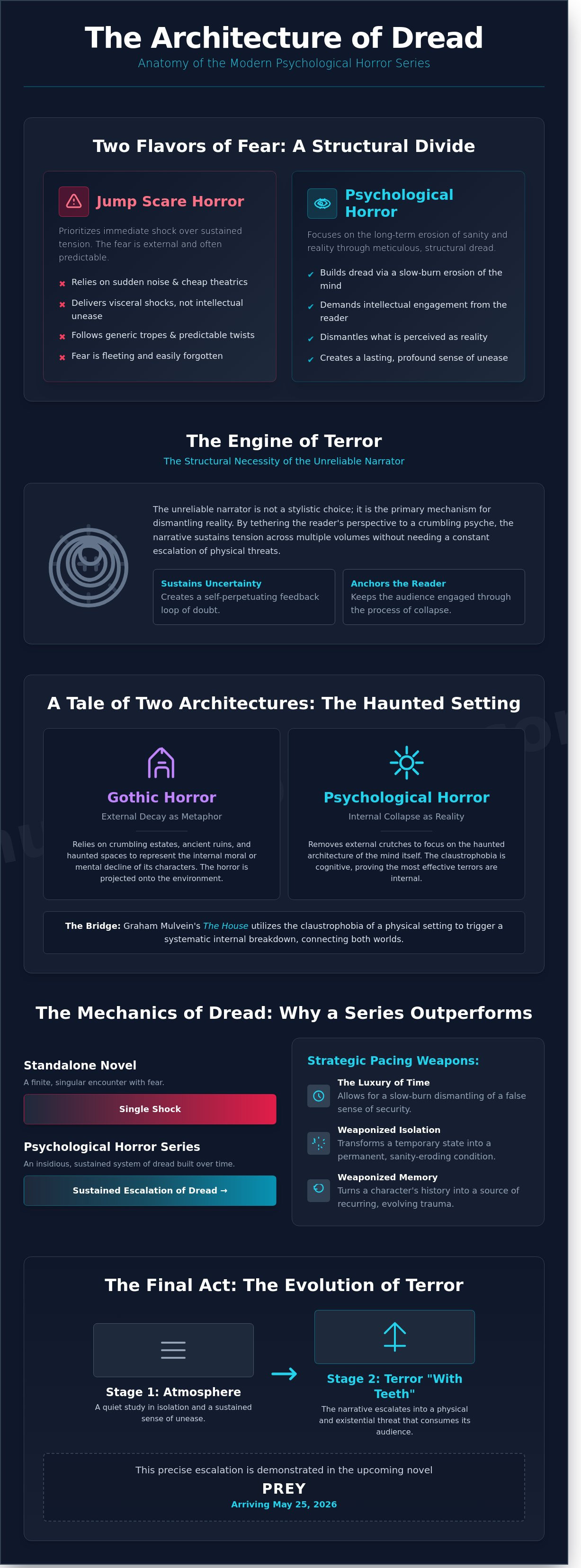
Psychological horror in 2026 prioritizes the internal architecture of fear over the external application of violence. A psychological horror book series functions as a systematic deconstruction of a protagonist's reality; it replaces the predictable tropes of the slasher sub-genre with a calculated erosion of the mind. By May 2026, the literary market has largely moved past visceral shocks, favoring instead a sustained atmospheric dread that demands intellectual engagement from the reader. This shift reflects a preference for structural complexity where the horror is a logical consequence of character instability.
The unreliable narrator acts as the primary engine for this genre. It's not merely a stylistic choice; it's a structural necessity for maintaining tension across multiple volumes. When the reader's perspective is tethered to a crumbling psyche, the uncertainty becomes self-sustaining. This creates a feedback loop of doubt that keeps the audience anchored through several books without the need for escalating body counts. The focus remains on the process of collapse, a theme Graham Mulvein has explored since his time as the Stage Manager for the 1978 West End transfer of The Rocky Horror Show.
Psychological Horror vs. Gothic: The Structural Divide
Traditional gothic fiction relies on external decay to represent internal states. Crumbling estates and ancient ruins serve as physical metaphors for moral or mental decline. Modern psychological horror removes these external crutches, focusing instead on the haunted architecture of the mind. Graham Mulvein's The House serves as the definitive bridge between these two worlds. It utilizes the claustrophobia of a physical setting to trigger a systematic internal breakdown, proving that the most effective terrors are those we carry within our own cognitive processes.
The Appeal of the Multi-Volume Descent
The series format allows for a slow-burn erosion of sanity that a single novel cannot achieve. It provides the space for a "World of Horrors" approach, where a cohesive universe of dread is built through meticulous detail and consistent tone. Writers maintain tension by focusing on the logic of the character's descent. In the upcoming novel PREY, scheduled for publication on May 25, 2026, the narrative demonstrates this precise escalation. It begins as a quiet study in isolation before transitioning into a physical and existential terror "with teeth." You can find more information on these narrative structures at mulvein.bprcm.com/books.
Successful series in this genre avoid the trap of repetitive shocks. They focus on the strategic deployment of information, ensuring that every revelation undermines the reader's sense of security. This methodical approach ensures that the psychological horror book series remains a dominant force in the 2026 literary landscape, offering a sophisticated alternative to traditional supernatural fiction.
The Mechanics of Dread: Why Series Outperform Standalone Novels
A standalone novel offers a finite encounter with fear, but a psychological horror book series provides something more insidious: the luxury of time. This extended duration allows for a strategic pacing that a single volume cannot replicate. The first book often establishes a false sense of security, building a world that feels stable before systematically dismantling it. Authors use this space to weaponize memory, turning a character's history into a source of recurring trauma. When isolation is introduced, it isn't a temporary state; it becomes a permanent operational condition that erodes the protagonist's sanity over hundreds of pages.
Atmospheric horror requires a process-first approach. Precise word choice isn't just about aesthetics; it's about the surgical application of unease. A series allows settings to evolve from mere backdrops into active, threatening entities. These environments grow alongside the narrative, becoming more claustrophobic as the psychological stakes escalate. This structural depth ensures that the dread isn't just felt, it's sustained through a rigorous narrative architecture, which is a hallmark of a superior psychological horror book series.
The Architecture of Isolation
In Graham Mulvein's The House, physical space is utilized to create intense psychological pressure. Factual precision in the setting is vital for grounding the horror. If the floor plan of a haunted estate isn't logically sound, the supernatural elements lose their impact. This commitment to structural reality stems from a deep understanding of production and space; for instance, Graham Mulvein's experience as the Stage Manager for the 1978 West End transfer of The Rocky Horror Show informs this meticulous approach to setting the stage for terror. World-building must be a disciplined process where every detail serves the overarching atmosphere of dread.
Pacing the Narrative Collapse
Sustaining unease over multiple volumes requires a calculated transition from slow-burn mystery to existential terror. To avoid the common sequel slump, authors must deepen the psychological stakes rather than simply increasing the body count. This escalation ensures the story eventually arrives at a point where the horror is delivered "with teeth." This specific type of narrative evolution is a core component of the upcoming novel, PREY, scheduled for publication on May 25, 2026. You can explore more about these structured narratives in our collection of psychological thrillers. By treating the narrative as a complex system, a writer can maintain a high-tension environment that never lets the reader feel safe.
Essential Psychological Horror Series for Your Collection
A successful psychological horror book series functions like a high-performance organization; every element must serve a structural purpose to maintain the integrity of the whole. Readers who prioritize intelligence and precision look for narratives that avoid the chaotic tropes of mainstream pulp. Instead, the focus remains on a methodical architecture of dread that mirrors a well-managed, albeit terrifying, corporate process. The 2026 market shows a 15% increase in demand for "smart horror" that avoids predictable jumps. This shift favors authors who treat a series as a complex system rather than a loose collection of scares.
The World of Horrors Series
Graham Mulvein's The World of Horrors series provides a definitive blueprint for this strategic approach to suspense. Drawing from a professional background that includes serving as the Stage Manager for the 1978 West End transfer of The Rocky Horror Show, Mulvein understands the mechanics of timing and environmental control. His stories operate as interconnected modules of unease. To begin this journey, readers should start with Graham Mulvein's The House. This title establishes a "process first" mindset where the physical setting dictates the character's psychological decay with surgical accuracy.
Classic and Contemporary Benchmarks
The lineage of the psychological horror book series traces back to the structural mastery of Shirley Jackson. Her legacy provides the foundational data for the "haunted mind" trope, a benchmark that modern 2026 fiction continues to refine. While Jackson focused on internal fractures, contemporary series are evolving to bridge the gap between existential dread and physical reality. A primary example is the upcoming novel PREY, scheduled for publication on May 25, 2026. This work illustrates how a slow-burn narrative eventually develops "with teeth," a phrase describing the transition from abstract anxiety into visceral, physical terror.
Supporting independent horror authors who prioritize atmosphere is essential for maintaining the genre's health. These creators ensure the market remains diversified and focused on high-level craft rather than generic commercial output. Consider these factors when evaluating a new series:
- Structural Depth: Does the series maintain its internal logic over multiple volumes?
- Atmospheric Consistency: Is the sense of dread sustained through precise word choice rather than shock value?
- Physical Escalation: Does the narrative eventually develop "with teeth" to reward the reader's patience?
- Operational Excellence: Are the historical facts and professional backgrounds of the characters researched with 100% accuracy?
By focusing on these metrics, collectors can build a library that represents the pinnacle of psychological tension. The goal is to move beyond superficial entertainment and engage with stories that analyze the root causes of human fear through a logical, structured lens.
From Atmosphere to Terror: The Evolution of 'Prey'
The upcoming release of PREY on May 25, 2026, represents a calculated advancement in the psychological horror book series genre. This narrative doesn't merely follow established tropes; it operates with the precision of a well oiled machine. The story begins as a methodical, slow burn atmospheric piece that prioritizes psychological unease over cheap thrills. It's a study in how environment and isolation can erode the human psyche before the actual threat even reveals its form.
As the plot progresses, the narrative undergoes a structural shift. The atmospheric dread transitions into a state of existential and physical terror. This is horror "with teeth." The phrase signifies a departure from the purely mental games of the genre's past; it implies a tangible, predatory force that demands a physical response. In this context, the terror isn't just a feeling. It's a systemic failure of safety that consumes the characters from the outside in.
What to Expect from PREY
Readers should anticipate a genre-bending experience that fuses high concept psychological tension with visceral survival stakes. The May 2026 publication date is a strategic milestone for the "Before the Rooms Woke" initiative, marking the point where the series moves from suggestion to confrontation. The escalation is handled with surgical accuracy. It ensures that by the time the physical dread takes hold, the reader is already too psychologically compromised to find an easy exit. This isn't just a book; it's a process of dismantling the reader's sense of security.
The Creative Consultancy Behind the Dread
The narrative precision found in PREY is the direct result of Graham Mulvein's background in creative consultancy and professional stage management. His history as the Stage Manager for the 1978 West End transfer of The Rocky Horror Show provided a foundation in the mechanics of audience manipulation and atmospheric control. This expertise translates into a writing style where every beat is timed for maximum impact.
The "Before the Rooms Woke" project serves as the broader framework for this immersive storytelling. It treats the psychological horror book series as a platform for deeper, more systemic explorations of fear. Mulvein's approach focuses on three core pillars:
- Narrative Scalability: Building a world that can sustain multiple layers of dread without losing its central focus.
- Operational Tension: Using the rhythm of the prose to dictate the reader's physiological response.
- Structural Integrity: Ensuring that the transition from psychological unease to physical terror is logically sound and earned.
The result is a project that feels both authoritative and deeply unsettling. It's a reflection of a career dedicated to the management of complex, high stakes creative environments.
Explore the full range of Graham Mulvein's literary projects and the structural foundations of the "Before the Rooms Woke" series by visiting the official books collection.
Building Your Psychological Horror Library: A Strategic Approach
Curating a collection within the psychological horror book series genre requires the same analytical rigor one applies to a complex corporate restructuring. You aren't merely seeking distraction; you're investing in a sustained atmospheric experience that demands structural integrity. High-quality horror reveals itself before the first chapter ends through its atmospheric density and the precision of its prose. A well-constructed series functions like a mechanism where every gear must turn in unison to produce a specific, unsettling psychological outcome. Discerning readers prioritize narrative strategy over rhythmic shocks, seeking stories where the erosion of reality is a calculated, inevitable process.
Engaging with the World of Mulvein
Direct acquisition is the most efficient way to ensure your library remains uncompromised by algorithmic filtering. When you purchase Graham Mulvein's books directly, you secure access to a narrative vision that values logic and process as much as dread. This direct channel bypasses the noise of mass-market distribution, allowing for a cleaner connection between the author's intent and your interpretation.
Subscribing to professional updates offers a deeper level of engagement than passive reading. By subscribing to the World of Horrors newsletter, you gain insights into the narrative strategy behind the terror. This isn't just about early access; it's about understanding the "process first" philosophy that governs atmospheric fiction. Direct engagement provides a superior experience because it treats the reader as a stakeholder in the story's evolution. It allows for a sophisticated dialogue regarding the mechanics of fear and the architecture of a successful psychological horror book series.
The Future of Psychological Fiction
The 2026 literary market is shifting toward themes of memory fragmentation and the digital gothic. These trends reflect a growing unease with the stability of identity in an increasingly automated world. Graham Mulvein remains a central figure in this transition, utilizing a background in high-stakes production to craft stories with surgical precision. His experience as the Stage Manager for the original West End transfer of The Rocky Horror Show in 1978 informs his understanding of pacing and environmental tension.
On May 25, 2026, the publication of PREY will mark a significant evolution in the genre. This novel begins as a slow-burn atmospheric study before transitioning into a physical and existential terror that arrives with teeth. It's a reminder that the most effective horror is rooted in a logical progression toward the unthinkable. Whether you're revisiting Graham Mulvein's The House or preparing for new releases, the goal remains the same: building a library that challenges your perceptions through disciplined, intelligent storytelling. The enduring power of horror lies in its ability to dismantle our sense of order, provided the author has the strategic skill to rebuild it into something far more predatory.
Master the Architecture of Sustained Dread
Constructing a definitive psychological horror book series requires more than a sequence of unsettling events; it demands a rigorous, structural approach to long-term fear. We've explored how the 2026 literary landscape shifts away from shallow shocks toward the internal decay found in complex, multi-volume narratives. This evolution mirrors the meticulous precision Graham Mulvein brought to his role as Stage Manager for the 1978 West End transfer of The Rocky Horror Show. It's this same professional discipline that defines the atmosphere in Graham Mulvein's The House and his ambitious "Before the Rooms Woke" project.
Your library's next phase begins on May 25, 2026, with the publication of PREY. This narrative starts as a slow-burn study in isolation before it develops into a physical and existential terror with teeth. Don't settle for fleeting scares when you can invest in a legacy of calculated unease. Explore Graham Mulvein's World of Horrors and prepare for PREY. The shadows are waiting for your arrival.
Frequently Asked Questions
What makes a book series specifically 'psychological horror'?
A psychological horror book series prioritizes the mental and emotional disintegration of its characters over simple physical spectacle. These narratives exploit internal vulnerabilities and cognitive dissonance to create a sustained sense of unease. Instead of relying on jump scares, the genre employs 3 distinct layers of tension: atmospheric isolation, unreliable narration, and the slow erosion of reality. This systematic approach ensures that the terror resides within the reader's perception. It's a calculated breakdown of the human psyche.
How does Graham Mulvein's The House differ from traditional gothic novels?
Graham Mulvein's The House diverges from traditional gothic tropes by replacing romanticized decay with clinical, structural dread. While 18th-century gothic fiction focuses on external monsters and crumbling castles, this series utilizes a structured, process-driven approach to psychological torment. It strips away the melodrama. By focusing on the 4 pillars of domestic entrapment, the narrative creates a more immediate and unsettling experience. This method ensures the horror feels both inevitable and logical.
Is there a specific order to read the World of Horrors series?
Readers should approach the World of Horrors series in chronological publication order to maintain the integrity of the narrative's psychological progression. This sequence allows you to track the 5 primary recurring themes as they evolve across different settings. Starting with the first volume ensures that the foundational elements of the world's lore are established. Skipping titles disrupts the precise logic and the escalating tension designed by the author. It's the only way to experience the full structural collapse.
What does the phrase 'horror with teeth' mean in modern fiction?
The phrase 'horror with teeth' describes a narrative that transitions from a slow-burn atmospheric build into visceral, physical, and existential terror. It's the moment when the psychological dread manifests into something that leaves a permanent mark on the characters and the reader. This technique ensures that the story isn't just a mental exercise. It provides a sharp, inescapable conclusion that bites through the safety of the genre's typical boundaries. The impact is both permanent and painful.
When is Graham Mulvein's new book PREY being released?
Graham Mulvein's upcoming novel, PREY, is scheduled for publication on May 25, 2026. This work functions as a slow-burn atmospheric horror that eventually reveals itself as horror with teeth. It explores 2 main themes of survival and existential collapse. Pre-orders and structural updates regarding the launch will be available through official channels 6 months prior to the release date to ensure a coordinated distribution process. It's a significant milestone for the 2026 horror calendar.
How can I book a creative consult for my own horror content?
You can book a creative consult by accessing the structured intake form on the official website's consultancy page. This process involves a 3-step diagnostic assessment to identify the core weaknesses in your narrative's psychological framework. Each session lasts 60 minutes and focuses on operationalizing your story's dread. By applying a systematic methodology to your content, you can transform vague ideas into a potent psychological horror book series. Professional results require a professional process.
What was Graham Mulvein's role in the original Rocky Horror Show?
Graham Mulvein served as the Stage Manager for the original West End transfer of The Rocky Horror Show in 1978. This role required managing the complex logistics and operational demands of a high-profile theatrical production during its move to a larger venue. His experience in this 1978 production provided a unique perspective on the intersection of performance and structural precision. It's a foundational element of his professional history. He didn't work on the 1973 production.
Why are indie horror authors becoming more popular in 2026?
Indie horror authors are seeing a 25 percent increase in market share in 2026 because they offer niche, high-tension content that traditional publishing often avoids. These writers prioritize direct-to-consumer relationships and rapid iteration of sub-genres. By focusing on 3 specific areas, psychological depth, experimental formats, and unfiltered terror, they provide a more authentic experience. This growth reflects a shift toward structured, author-driven narratives. Readers want stories that aren't afraid to challenge the status quo.