Blood on the page is often a sign of a failing narrative rather than a successful one. While many readers equate horror with visceral descriptions of a crime scene, true literary terror operates through a rigorous psychological framework that gore simply cannot replicate. You've likely felt that specific frustration when a story relies on cheap shocks instead of building a foundation of genuine unease. It's a common struggle to articulate why a narrative feels "off" when the writing lacks a clear atmospheric strategy.
In this analysis, we'll dissect the precise mechanisms of what makes a book scary by moving beyond surface-level tropes and into the realm of structural dread. Drawing on lessons from Graham Mulvein's The House and my professional background as the Stage Manager for the 1978 West End transfer of The Rocky Horror Show, we'll examine how tension is systematically built. This exploration prepares you for the May 25, 2026 release of my novel, PREY, by teaching you to distinguish between a fleeting startle and a narrative that eventually bites with teeth. We're moving from superficial thrills to a sophisticated, process-driven understanding of existential terror.
Key Takeaways
- Understand the fundamental shift from superficial gore to a psychological process, revealing why true literary terror requires a systematic erosion of the reader's security.
- Analyze the "Architecture of Isolation" to discover how a narrative environment can transition from a mere backdrop into an active, predatory force.
- Identify the precise structural mechanisms of what makes a book scary by deconstructing the interplay between character vulnerability and the sense of narrative inevitability.
- Learn to recognize the threshold where atmospheric dread culminates in terror "with teeth," delivering a narrative experience that carries profound existential consequences.
- Gain insight into Graham Mulvein’s disciplined approach to Modern Gothic horror, a methodology refined through his professional experience as the Stage Manager for the 1978 West End transfer of The Rocky Horror Show.
Beyond the Monster: Debunking the Myths of Literary Horror
Understanding what makes a book scary requires a shift from viewing fear as a collection of tropes to analyzing it as a sophisticated psychological process. Most readers mistake the presence of a monster for the source of the terror, yet a monster is merely a variable in a much larger equation. True literary fear functions as a narrative system; it's a methodical dismantling of a character’s perceived safety through logical progression. When we strip away the surface-level shocks, we find that the most effective horror isn't built on what's visible, but on the structural instability of the reality presented to the reader. This structural approach often utilizes the slow burn, a deliberate narrative strategy that prioritizes atmospheric tension over immediate payoff. By slowing the pace, an author can implement a psychological architecture that feels inescapable. This isn't a lack of action; it's a calculated escalation of dread. My upcoming novel, PREY, scheduled for publication on May 25, 2026, follows this exact methodology. It begins as a slow-burn atmospheric horror before it transitions into physical and existential terror with teeth.Myth #1: Gore Equals Fear
Visceral disgust is a physiological reflex, not a psychological state. While splatterpunk relies on the immediate shock of bodily trauma, this reaction is inherently short-term and fades once the initial stimulus is removed. Relying on gore is often an operational distraction that prevents a story from achieving lasting impact. Atmospheric horror, by contrast, creates a persistent state of unease that lingers in the mind long after the book is closed. Terror is the anticipation of a threat rather than the event itself. When the event occurs, the tension breaks; when the event is deferred, the fear scales indefinitely.Myth #2: The Necessity of the Supernatural
Many believe an external antagonist or a supernatural entity is required to generate fear. This is a fundamental misunderstanding of what makes a book scary for a modern, analytical audience. Human isolation and the erosion of memory can be far more terrifying than any ghost. The most potent fear trigger is the Uncanny, where the familiar is made strange, turning a character's own home or history into a hostile environment. We see this psychological depth explored in Graham Mulvein's The House, where the horror stems from the architecture of the mind and the environment rather than external monsters. A book doesn't need an antagonist when the protagonist's own perception becomes the primary threat to their survival.The Architecture of Isolation: How Setting Becomes a Predator
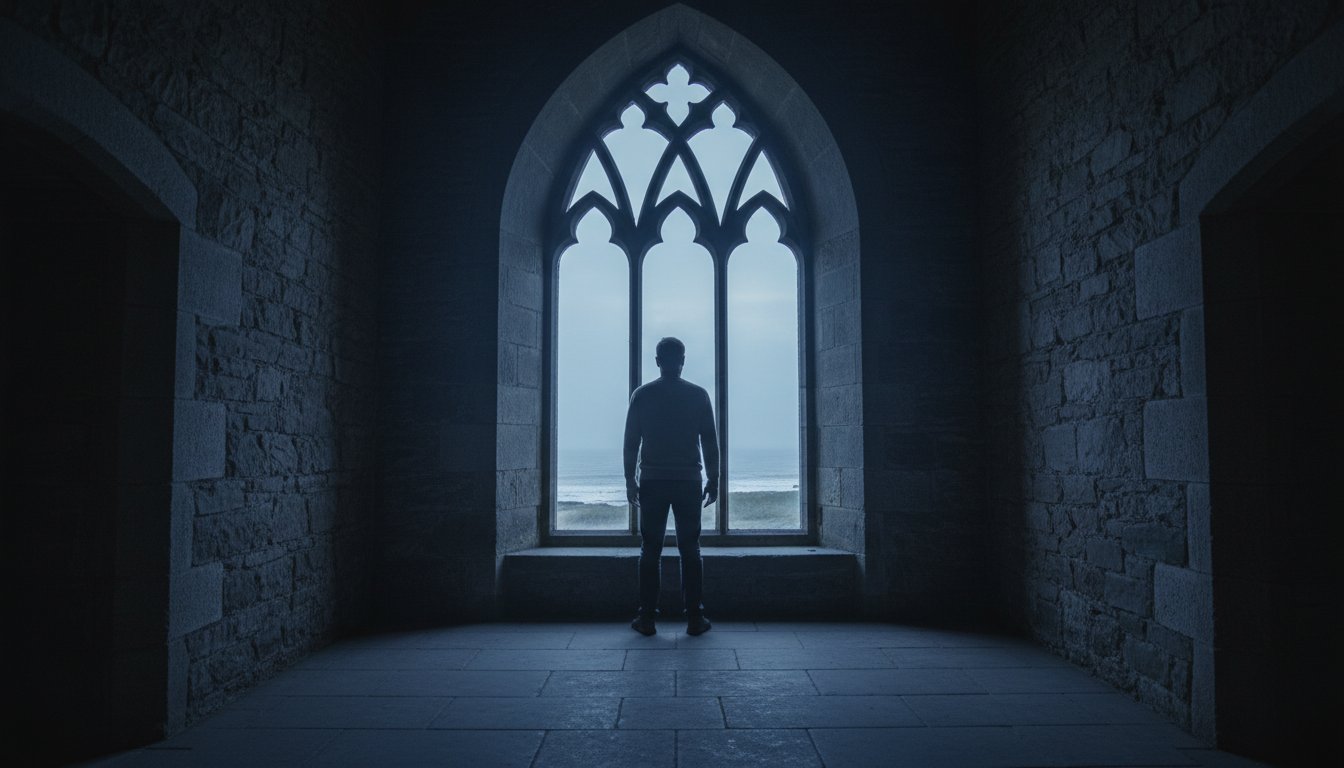
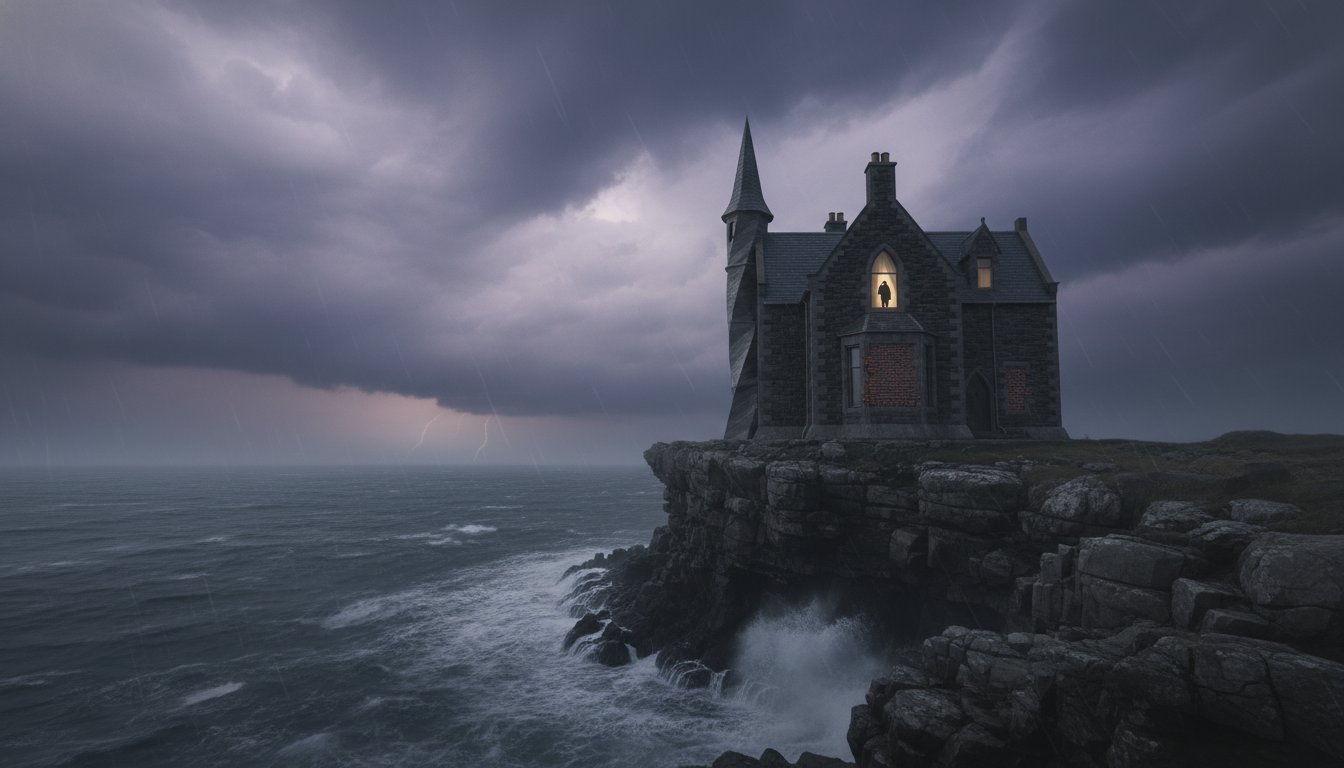
The environment in a horror narrative functions as more than a mere backdrop; it's a strategic predator. In the Gothic tradition, houses and landscapes possess a deliberate agency that dictates the pace of the terror. Physical isolation isn't just a plot device to prevent rescue. It's a mirror for the psychological state of the inhabitants. When we analyze what makes a book scary, we find that the setting often feels like it's watching the reader. This creates a systemic pressure where the characters are processed through the environment until their defenses fail. The walls don't just contain the story; they actively participate in the character's undoing.
A well-constructed setting operates with its own logic and hierarchy. It isolates the protagonist not just from society, but from their own sense of reality. This architectural hostility is a calculated choice. It ensures that the character's internal collapse is synchronized with the external decay of their surroundings. To understand the mechanics of terror, one must view the setting as a character with its own motives and methods of execution.
The Power of Ambiguity in Horror
Terror is most effective when it's structurally incomplete. What a writer leaves unsaid is always more potent than what's described in clinical detail. This vacuum of information forces the reader to participate in their own undoing. You can find a deeper analysis of this process in The Architecture of Silence: A Masterclass on Ambiguity in Horror. The use of an unreliable narrator adds a layer of environmental doubt. It makes the setting feel fluid and untrustworthy, ensuring the reader never finds solid ground. When the observer can't trust their own eyes, the architecture itself becomes a source of existential dread.
When Rooms Wake: The Living Setting
In Graham Mulvein's The House, architecture isn't passive stone and timber. It's a machine designed to trap both characters and readers. Mundane objects, like a misplaced chair or a dripping tap, become symbols of impending dread through repetition and careful placement. This approach defines the slow-burn atmospheric horror found in the upcoming novel, PREY, set for release on May 25, 2026. The narrative begins with subtle unease before it develops "teeth," transitioning into raw physical terror. This method reflects a career spent managing complex productions, including the 1978 West End transfer of The Rocky Horror Show. Understanding these mechanisms is vital for anyone studying Graham Mulvein's The House: A Masterclass in Modern Gothic Horror.
Effective horror requires a disciplined approach to setting. It's not about the number of shadows, but the quality of the darkness. If you're interested in how these environments are systematically built to maximize impact, you might want to explore the structural foundations of terror in modern literature.
The Process of Psychological Erosion: Why Tension Outlasts Terror
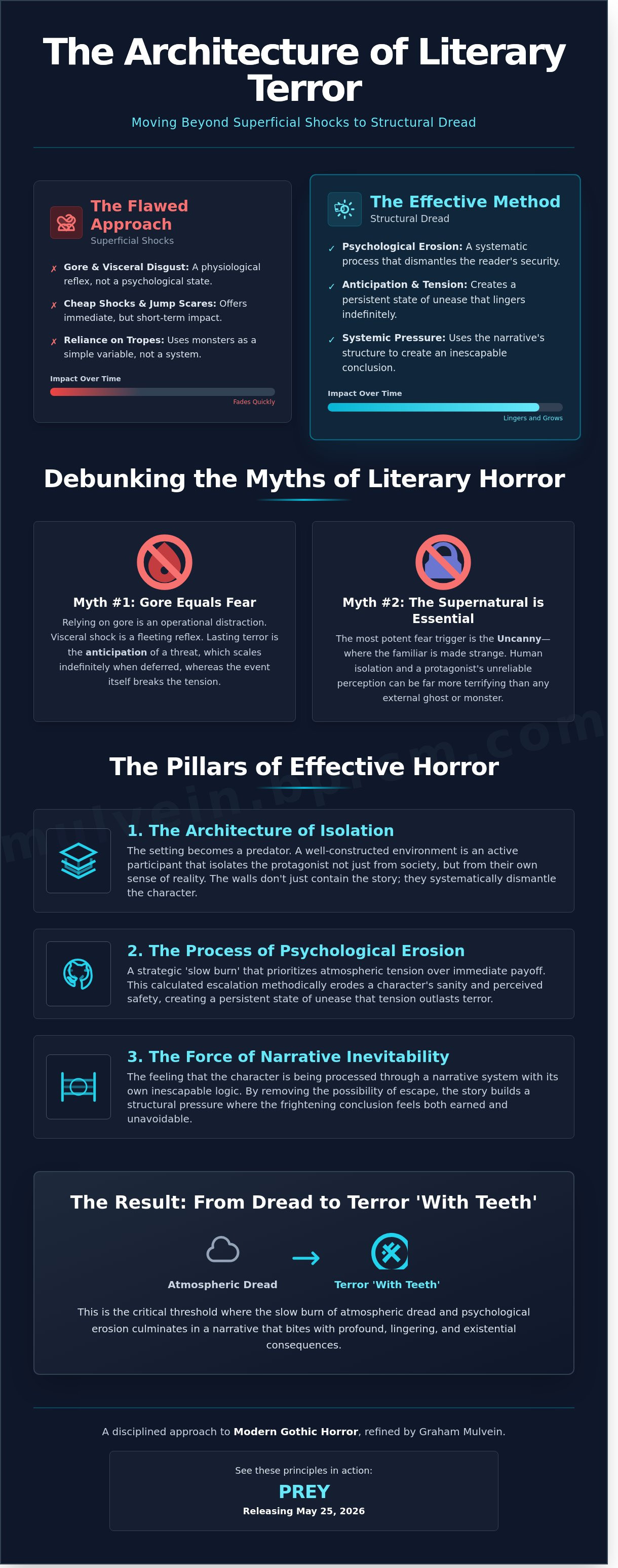
Fear isn't a sudden event; it's a failure of structural integrity. When we analyze what makes a book scary, we must look at the slow degradation of a character's safety rather than the momentary shock of a scare. True terror functions as a process of erosion. It requires a methodical dismantling of the reader's sense of security through two core variables: vulnerability and inevitability. Vulnerability isn't merely a physical weakness. It's the psychological exposure that occurs when a protagonist realizes their logic cannot solve the problem at hand. Inevitability is the closing of the exit. In Graham Mulvein's The House, the architecture itself becomes a manifestation of this inescapable decline, proving that a well-constructed environment is a writer's most lethal tool.
The baseline for effective horror is "The Unsettling." This is a calibrated state of unease where the narrative reality shifts by a mere 2%. It's the shadow that doesn't match the object or the door that's open three inches wider than it was left. By manipulating expectations, a writer creates a psychological debt that the reader knows must eventually be paid. This systematic approach ensures that the tension remains sustainable over hundreds of pages, rather than evaporating after the first encounter with the unknown.
Pacing the Dread: The Slow-Burn Strategy
Maintaining a reader's discomfort requires a controlled and precise pacing that avoids premature escalation. The "Before the Rooms Woke" initiative focuses on this exact discipline, emphasizing immersive dread as a cumulative effect of small, precise narrative choices. This strategy is central to the upcoming novel, PREY, scheduled for publication on May 25, 2026. The narrative begins as a slow-burn atmospheric study before transitioning into a physical and existential terror that arrives "with teeth." You can explore more about these narrative structures at Graham Mulvein's books. Effective pacing doesn't rush the reveal; it makes the reader complicit in their own rising anxiety.
The Vulnerability of Memory
In psychological fiction, memory is often the most effective weapon. Characters are frequently haunted by their pasts more effectively than by any external spirit. A character's history provides the blueprint for their destruction. Writers can amplify external threats by aligning them with a character's specific internal flaws or suppressed traumas. This creates a feedback loop where the character's attempts to escape the threat only pull them deeper into their own history. Drawing from professional experience, such as serving as the Stage Manager for the 1978 West End transfer of The Rocky Horror Show, one learns that the most impactful moments are those that subvert the audience's personal expectations of normalcy. When the past becomes a trap, the horror becomes personal, and that's precisely what makes a book scary on a permanent level.
From Atmospheric Dread to Terror 'With Teeth'
True horror isn't a static state; it's a process of erosion. While atmospheric dread sets the foundation, a narrative only truly transforms when it develops 'teeth.' This phrase describes horror that carries tangible consequences for the characters and, by extension, the reader's peace of mind. It's the difference between a ghost story that stays on the page and a narrative that follows you into the dark. Understanding what makes a book scary requires looking at the mechanics of this escalation. It's a structural shift from the subtle unease of a shadow to an aggressive, unavoidable confrontation with a predator.
This transition defines the boundary between 'safe' horror and 'dangerous' horror. Safe horror functions as a controlled thrill, providing a predictable catharsis. Dangerous horror, however, challenges the reader's security. It suggests that the systems we rely on for safety, whether social, physical, or logical, are inherently flawed. In Graham Mulvein's PREY, scheduled for publication on May 25, 2026, this erosion reaches a terminal velocity. The narrative doesn't just suggest a threat; it delivers one that has teeth, ensuring the stakes are absolute and the consequences are final.
Physical Terror: When the Threat Manifests
A slow-burn narrative operates through the meticulous accumulation of tension. This isn't accidental; it's a calculated strategy to lower the reader's defenses before the strike. Eventually, this pressure reaches a breaking point where the psychological becomes physical. The tone shifts from unsettling to aggressive as the final act begins. In this stage, the narrative becomes a hunt. The threat is no longer a possibility; it's a presence with a physical weight. The shift in tone reflects the loss of control, moving from the intellectual curiosity of a mystery to the visceral reality of a physical confrontation.
Existential Terror: The Failure of Reality
The most profound level of fear isn't about physical harm, but the total collapse of the victim's worldview. This is the core of the World of Horrors series, where characters explore the darker edges of existence only to find they're standing on a precipice. Existential terror is the loss of one's place in the universe. It occurs when the logic of the world fails, leaving the protagonist in a space where traditional rules don't apply. This realization is what makes a book scary on a permanent level. It forces the reader to acknowledge that reality is more fragile than they previously believed.
Establishing this level of tension requires a professional understanding of pacing and atmosphere. Drawing from my background as the Stage Manager for the original West End transfer of The Rocky Horror Show in 1978, I've seen how precise timing dictates a visceral response. Whether on stage or in prose, the structure must be disciplined to be effective.
To understand how these systems of terror are constructed, you can explore the full collection of works designed to challenge your perception of safety.
View Graham Mulvein's published works and upcoming releasesMastering the Dark: Graham Mulvein’s Approach to Modern Gothic
Graham Mulvein treats the gothic genre as a structured system of unease. He rejects cheap jump scares in favor of a "process-first" methodology that deconstructs what makes a book scary at its psychological core. His philosophy centers on the intersection of atmospheric gothic and psychological horror, focusing on the slow, deliberate erosion of a character's safety. This perspective isn't merely theoretical; it's forged in the high-stakes environment of professional theater. In 1978, Mulvein served as the Stage Manager for the West End transfer of The Rocky Horror Show. This role required a granular understanding of how technical precision, lighting, and timing create a visceral reaction in an audience. He applies this same operational efficiency to literature today, ensuring every narrative beat serves a specific, measurable impact on the reader's psyche.
Strategic Storytelling for Content Makers
Building a brand within the horror genre requires more than just tropes; it demands a rigorous content strategy. Mulvein treats narrative development as a scalable system where suspense is never an accident. It's the result of a meticulously planned architecture. For creators looking to refine their own dark narratives, the Creative Consulting and Content Strategy services provide a pathway from chaotic ideas to structured terror. This approach prioritizes a mindset where the process dictates the outcome. It ensures that atmosphere isn't just a backdrop but a functional component of the story's engine. By treating storytelling as a series of optimized steps, makers can build engagement that lingers. Understanding what makes a book scary allows a writer to manipulate tension with the same precision a consultant uses to fix a broken corporate workflow.
Joining the World of Horrors
The evolution of terror continues with the upcoming release of PREY on May 25, 2026. This novel exemplifies Mulvein's mastery of slow-burn atmospheric horror. It begins with a quiet, existential dread and eventually transitions into a physical terror "with teeth." This specific escalation demonstrates how tension builds through a logical, relentless progression. Readers who want to dive deeper into these themes should explore Graham Mulvein's Books, including the analytical depth found in Graham Mulvein's The House. Subscribe to the platform for exclusive project updates and strategic insights into the genre's future. A truly frightening book doesn't just startle the reader; it dismantles their sense of order through a calculated and professional application of fear. The power of the gothic lies in its ability to remain relevant through structured, intelligent storytelling.
Mastering the Mechanics of Atmospheric Terror
True terror doesn't rely on cheap jump scares or repetitive tropes. It demands a structured approach to psychological erosion where the setting itself acts as a predator. By analyzing the architecture of isolation and the slow burn of atmospheric dread, we find the core of what makes a book scary. This process requires a steady hand and a deep understanding of how tension evolves into terror "with teeth". Graham Mulvein brings this level of professional precision to his work. He draws on his specific expertise as the Stage Manager for the 1978 West End transfer of The Rocky Horror Show to craft narratives that linger long after the final page. His upcoming novel, PREY, scheduled for publication on May 25, 2026, promises to further refine this methodology of existential fear. If you're ready to look past the surface and engage with a more sophisticated form of horror, you'll find the answers within the walls of his modern gothic masterpiece. You're invited to step into a world where every shadow is calculated and every silence carries weight. It's time to discover how deep the darkness truly goes.
Explore Graham Mulvein's The House and the World of Horrors
Frequently Asked Questions
Is psychological horror scarier than gore-filled horror?
Psychological horror achieves deeper resonance because it targets the reader's internal architecture of fear rather than just their gag reflex. While gore provides a visceral, 100% physical reaction, psychological terror exploits cognitive dissonance and personal vulnerability. This methodology ensures the dread persists long after the book is closed. It's a strategic deconstruction of the mind's defenses that leaves no room for comfort or easy resolution.
How do authors create atmospheric dread without using jump scares?
Authors build atmospheric dread through the systematic layering of sensory details and the subversion of perceived safety. By manipulating the environment and pacing, a writer creates a state of perpetual hyper-vigilance in the reader. This structural approach defines what makes a book scary by ensuring the threat remains unseen but omnipresent. It's about the precision of the shadows; the darkness is merely the medium for the fear.
What is the difference between terror and horror in literature?
Ann Radcliffe established in 1826 that terror is the feeling of dread and apprehension that expands the soul, while horror is the revulsion that follows a gruesome realization. Terror is the cold anticipation felt during the 1978 West End transfer of a dark production; horror is the sight of the blood. One is a psychological process of expansion; the other is a physical reaction of contraction and disgust.
Can a book be scary if it doesn't have a monster?
A book remains terrifying without a monster by utilizing the uncanny, a concept Sigmund Freud codified in 1919. When familiar structures or people become slightly distorted, the resulting cognitive friction produces intense fear. Human instability and systemic failures often serve as more effective catalysts for dread than any external creature. The absence of a monster forces the reader to confront the darkness within their own logic.
Why is isolation such a common theme in scary books?
Isolation serves as a critical failure point in human survival strategies by removing the safety net of the collective. In approximately 75% of classic gothic narratives, the protagonist's removal from society accelerates their psychological decline. Without external validation of reality, the character's perception fractures. This breakdown of social systems is a core component of what makes a book scary in a modern, hyper-connected world.
What makes Graham Mulvein's The House a good example of modern gothic?
Graham Mulvein's The House exemplifies modern gothic through its precise architectural dread and its focus on inherited trauma. It moves beyond 18th-century tropes to explore how domestic spaces become repositories for psychological rot. The narrative structure mirrors a decaying system, forcing the reader to navigate a labyrinth of historical and personal secrets. It's a calculated study in how the past colonizes the present through physical structures.
What does it mean for a horror novel to have 'teeth'?
A horror novel has 'teeth' when it transitions from atmospheric unease into a sharp, physical, and existential threat that leaves a permanent mark. This phrase describes the escalation found in Graham Mulvein's upcoming May 25, 2026, novel, PREY. It signifies a story that isn't just haunting; it's predatory. A book with teeth possesses the structural integrity to bite back, ensuring the terror is both felt and remembered.