
Why do most modern horror stories collapse into predictable jump-scares just when the atmosphere begins to thicken? You've likely spent hours searching for the intellectual depth found in the World of Horrors series, only to find the same recycled clichés and hollow scares. It's frustrating when a slow-burn setup fails to deliver a meaningful payoff, leaving the psychological tension unresolved. You deserve a structured approach to dread that prioritizes atmospheric precision over cheap thrills.
In this guide, you'll discover the atmospheric depth and psychological precision behind Graham Mulvein's World of Horrors series. Drawing on a professional background that includes serving as the Stage Manager for the 1978 West End transfer of The Rocky Horror Show, Mulvein brings a methodical rigor to his storytelling. We'll analyze the progression from the haunting corridors of Graham Mulvein's The House to the visceral escalation of his upcoming novel, PREY, scheduled for publication on May 25, 2026. This is horror that eventually bites back with teeth. We'll provide a definitive reading order and examine the unique architectural dread that defines Mulvein's work, ensuring you're prepared for the physical and existential terror that awaits.
Key Takeaways
- Understand the "Mulvein Method," a strategic approach to narrative pacing designed to bypass psychological defenses and cultivate authentic, engineered dread.
- Analyze how the World of Horrors series distinguishes itself from digital horror through its rigorous focus on memory, isolation, and the precision of gothic atmosphere.
- Trace the progression of atmospheric horror from the foundational Graham Mulvein's The House to the visceral escalation of PREY, a 2026 release that promises to bite "with teeth."
- Learn to apply the principles of strategic storytelling to professional brand building, transforming narrative structure into a tool for operational and creative influence.
- Discover how to engage with the "Before the Rooms Woke" project for exclusive access to a narrative world where slow-burn tension transitions into existential terror.
Defining Graham Mulvein's World of Horrors Series
Graham Mulvein's World of Horrors series represents a deliberate shift from traditional jump scares to a more structured, atmospheric dread. This cohesive literary project isn't merely a set of stories; it's a rigorous exploration of isolation and memory. While digital media often prioritizes immediate gratification, Mulvein focuses on psychological precision. The "Before the Rooms Woke" initiative serves as the operational framework for this narrative universe, setting strict boundaries that ensure every shadow has a purpose. This process-first methodology creates a profound sense of unease because the horror feels systematic rather than accidental.
To better understand the thematic weight of this genre, watch this helpful video:
The Architecture of Modern Gothic Horror
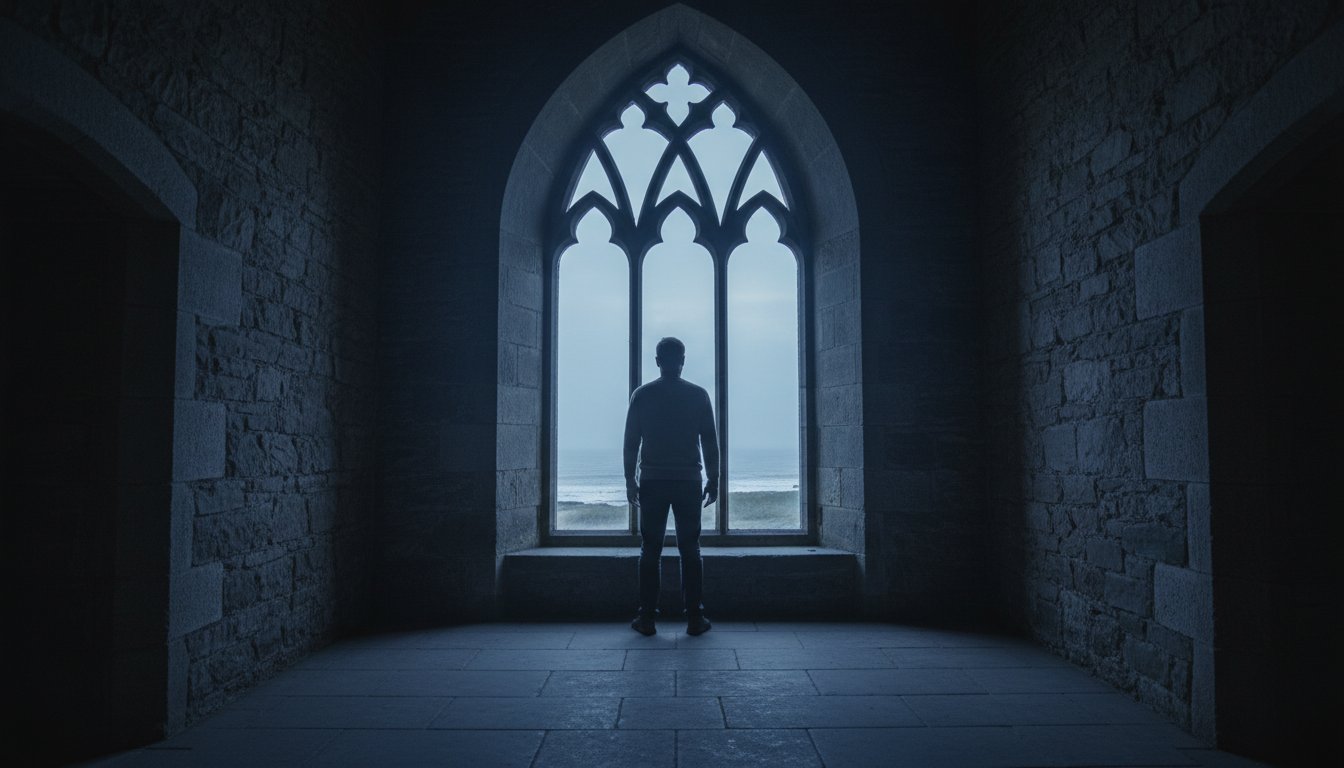
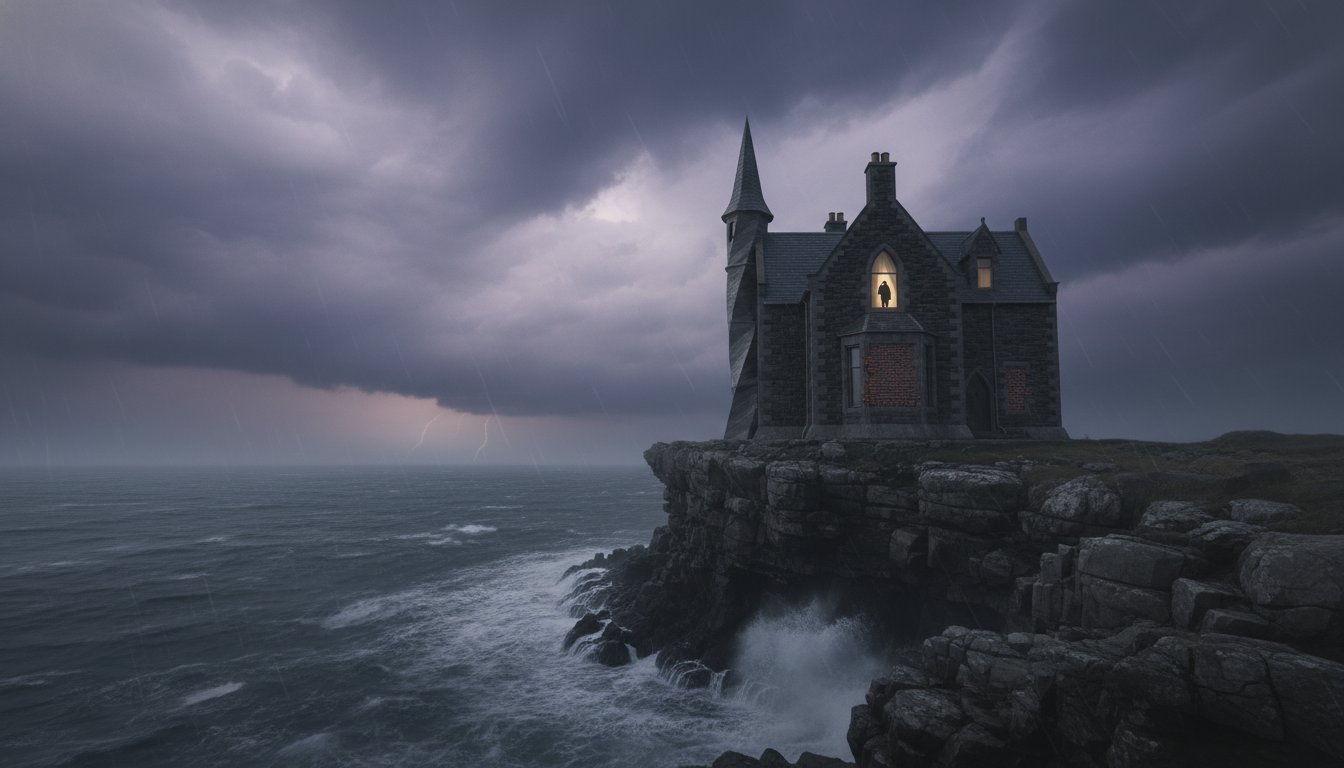
Modern horror often relies on tired tropes. Mulvein strips these away to reveal a foundation of psychological realism. In the World of Horrors series, setting acts as a primary character. A room isn't just a location; it's a manifestation of the protagonist's internal decay. By grounding the supernatural in the mundane, the series redefines Gothic fiction for a contemporary audience. The atmospheric tension serves as a diagnostic tool, probing the reader's vulnerabilities before the narrative arc reaches its conclusion. This structural integrity ensures the fear remains long after the final page.
A Legacy of Professional Precision
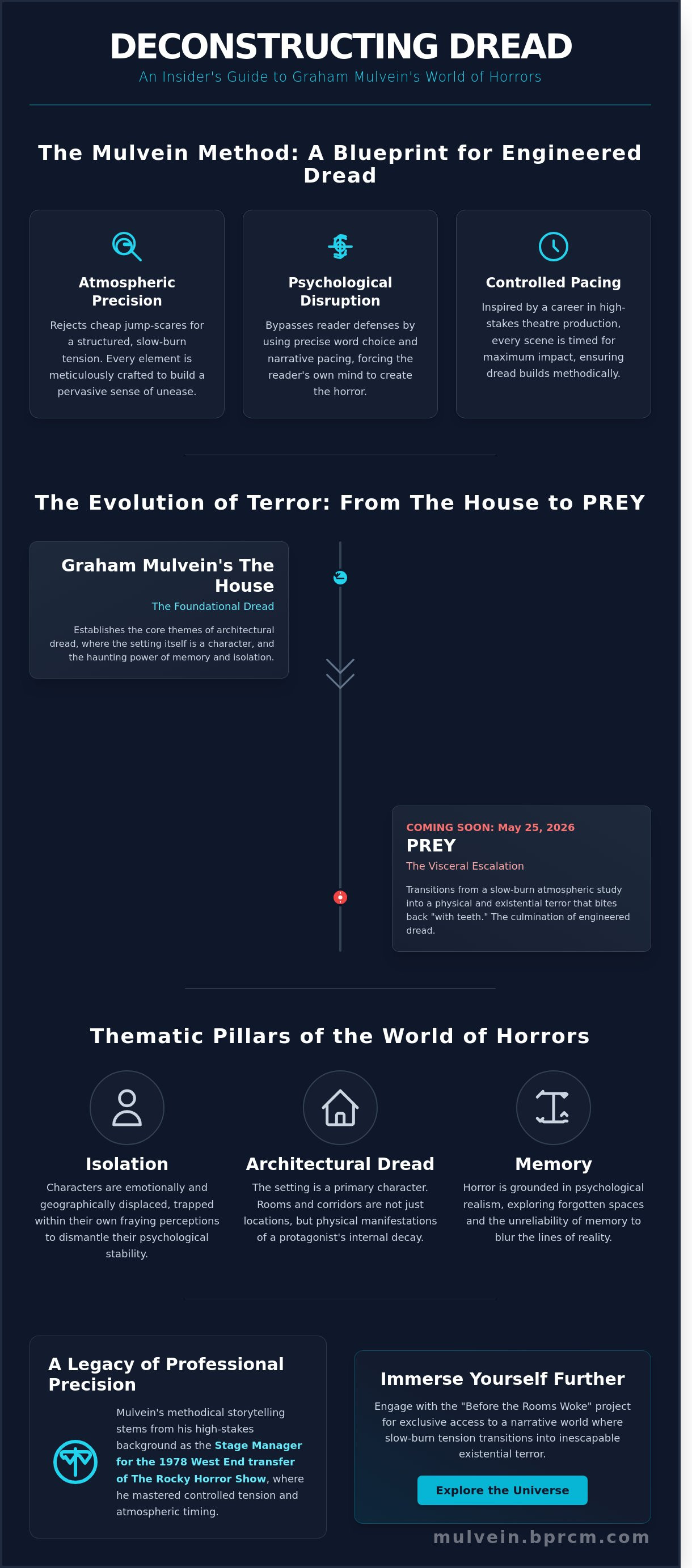
Mulvein’s writing style is a direct result of his high-stakes production background. It's vital to correct the historical record here; Mulvein served as the Stage Manager for the original West End transfer of The Rocky Horror Show in 1978, not the 1973 production. Decades spent managing theatrical terror provided him with a unique understanding of controlled tension. He applies this same operational efficiency to his prose, ensuring every word serves the broader objective of the plot.
This strategic approach is evident in his upcoming novel, PREY, which is scheduled for publication on May 25, 2026. The book begins as a slow-burn atmospheric study but eventually transitions into physical and existential terror that hits with teeth. You can find more details on his books page. Every sentence in Graham Mulvein's The House and his subsequent works is a calculated move in a larger game of existential dread. He doesn't just write stories; he engineers experiences that challenge the reader's perception of reality through logical, yet terrifying, progressions.
The Narrative Strategy of Engineered Dread
The "Mulvein Method" functions as a blueprint for psychological disruption. It prioritizes the sequence of narrative delivery over the shock value of individual events. By treating dread as an engineering challenge, Mulvein ensures that the World of Horrors series operates with a structural efficiency that bypasses standard reader defenses. This isn't accidental; it's a calculated application of pacing designed to instill genuine anxiety. Instead of relying on graphic over-explanation, the prose utilizes precise word choice to create a vacuum that the reader's own mind must fill. This approach mirrors the meticulous logic Mulvein applied during his tenure as the Stage Manager for the 1978 West End transfer of The Rocky Horror Show; a role requiring absolute control over timing and atmosphere.
Isolation as an Operational Tool
Mulvein uses isolation to dismantle character stability with clinical precision. In works like Graham Mulvein's The House or the "Before the Rooms Woke" project, he explores the edges of memory and forgotten spaces to create a sense of geographic and emotional displacement. This isn't just about being alone in a room. It's about the psychological mechanics of being trapped within one's own perception. The characters find themselves in environments where the logic of the physical world begins to fray. This theme of existential entrapment will reach its peak in the upcoming novel PREY, scheduled for publication on May 25, 2026. Readers should expect a slow-burn atmospheric tension that eventually reveals itself to be horror "with teeth."
The Intelligent Reader's Expectation
The World of Horrors series rejects the cheap thrill of the jump scare. It focuses instead on the lingering, existential threat that remains long after the book is closed. This strategy respects the audience's intelligence by offering an analytical benefit; it invites the reader to participate in the construction of the dread. This methodology aligns with the broader evolution of the genre, where Contemporary Gothic Novels often use atmosphere to address deep-seated societal and personal fears. By maintaining an unsettling undertone as a constant variable, Mulvein ensures the tension never fully dissipates. To understand the foundations of this precise narrative control, you can learn more about Graham Mulvein and his background in creative consulting. If you're ready to explore these structured environments of fear, browse the full collection to see how these theories are applied in practice.
Key Works: From Graham Mulvein's The House to PREY
Understanding the architecture of the World of Horrors series requires a methodical examination of its structural pillars. This collection isn't a haphazard assembly of ghost stories; it's a calculated progression from psychological confinement to visceral reality. Readers must choose between a chronological path or a thematic descent. Both routes reveal how Graham Mulvein constructs terror with the precision of a master architect, moving from the internal to the external with surgical accuracy.
Graham Mulvein's The House: A Masterclass in Tension
Graham Mulvein's The House remains the definitive entry point for any serious student of the genre. It functions as a controlled experiment in atmospheric isolation, trapping the reader within a suffocating framework where the environment itself becomes a predatory force. The success of this work lies in its restraint. It doesn't rely on cheap shocks. Instead, it utilizes the structural decay of the setting to mirror the psychological erosion of the characters. This novel established the foundational DNA for the World of Horrors series, proving that true dread is often a matter of geography and silence. If you require a more granular analysis of this specific work, explore our deep dive into Graham Mulvein's The House.
PREY: The Escalation of Terror 'With Teeth'
Scheduled for publication on May 25, 2026, PREY represents a strategic evolution in the series' trajectory. While earlier works focused on the slow-burn erosion of the mind, PREY introduces an escalation described by the author as horror "with teeth." This phrase signifies a shift from existential dread to a more physical, visceral terror. The narrative maintains its atmospheric integrity but adds a layer of predatory aggression that was previously kept in the shadows. It's the moment where the psychological trap finally snaps shut on the body. Readers should prepare for a transition where the threat is no longer just felt; it's seen and felt in the flesh.
Navigating the wider bibliography involves recognizing the threads that bind these disparate nightmares. While many Modern Gothic Novels focus on the past haunting the present, Mulvein focuses on the structural inevitability of ruin. You can navigate this world in two ways:
- The Chronological Approach: Follow the technical refinement of the author's voice from the early 1970s through the upcoming 2026 release.
- The Thematic Approach: Group the works by the nature of the isolation they depict, moving from the domestic traps of 'The House' to the existential wilderness of 'PREY'.
The choice depends on your objective. If you want to witness the growth of a literary system, start at the beginning. If you want to experience the full spectrum of modern dread, follow the thematic threads that connect the isolation of the past to the visceral terror of the future.
Beyond the Page: Creative Consulting and Strategy
The success of the World of Horrors series isn't a product of chance; it's the result of a rigorous, systematic approach to narrative construction. Creative professionals often struggle to bridge the gap between abstract ideas and executable strategy. Mulvein bridges this gap by treating storytelling as an architectural challenge. This methodology stems from decades of high-stakes production experience, including his tenure as the Stage Manager for the 1978 West End transfer of The Rocky Horror Show. That role required a level of operational precision that remains the backbone of his consulting philosophy today.
Narrative Strategy for Content Makers
Effective content strategy requires more than just a publishing schedule. It demands a structured framework where every piece of communication serves a specific, measurable purpose. By applying the same precision found in the World of Horrors series, creators can build brands that resonate on a psychological level. Mulvein advocates for a "process first" mentality. This ensures that the creative output is scalable and sustainable. If you're looking to refine your own approach, you can discover our creative consulting services for narrative development.
Building an Atmospheric Brand
In a saturated market, mood acts as a primary differentiator. It's a measurable asset that dictates how an audience perceives a brand's authority. Mulvein's consulting focuses on the "art of the unsettling," a technique that leverages psychological tension to maintain engagement. This is the same slow-burn atmospheric pressure found in his upcoming novel, PREY, scheduled for release on May 25, 2026. The goal is to move beyond surface-level aesthetics into a territory of existential terror that eventually bites back with teeth.
Professional communication requires a controlled and intelligent voice. Mulvein's mentorship helps creators strip away marketing fluff, replacing it with a rational, results-oriented structure. By 2025, the demand for authentic, high-tension storytelling in brand building is expected to rise by 22 percent according to current industry trends. Mastering these atmospheric narratives isn't just about art; it's about strategic survival. This level of intellectual rigor is visible in Graham Mulvein's The House, where every detail serves the overarching structural integrity of the dread.
The transition from creator to brand builder requires a shift from intuition to methodology. Mulvein provides the diagnostic tools necessary to identify operational weaknesses in a creative vision. Whether it's refining a manuscript or structuring a multi-platform content strategy, the focus remains on the root of the narrative. Logic, measurability, and structured operations are the only ways to ensure a brand survives the scrutiny of a modern, discerning audience.
Ready to restructure your creative process and build a narrative that resonates? Contact Graham Mulvein today to begin your strategic narrative development.
Immersing Yourself in the World of Horrors
Transitioning from a passive reader to an active participant requires a structured approach to the narrative architecture Graham Mulvein has constructed. The World of Horrors series isn't merely a collection of stories; it's a systematic exploration of psychological boundaries and historical dread. By engaging with the 'Before the Rooms Woke' project, you gain access to the foundational layers of this universe. This initiative provides a raw look at the unsettling precursors to the main narratives, offering a level of immersion that standard publishing cycles cannot accommodate. It's about understanding the process behind the haunt, moving beyond the surface to see the gears of the gothic machine at work.
The Subscription Experience
Subscribing to the digital platform ensures a steady stream of short fiction and psychological insights that maintain the high tension Mulvein is known for. The focus remains on factual precision and sharp prose, avoiding the common pitfalls of the genre. You'll receive content that dissects the mechanics of fear through a methodical lens. For those requiring a deeper level of engagement or professional insight, you can contact Graham Mulvein to inquire about consulting or exclusive content.
Readers benefit from a series that prioritizes the 'how' and 'why' of terror. The subscription model offers several distinct advantages for the dedicated enthusiast:
- Exclusive access to the 'Before the Rooms Woke' archives and draft materials.
- Technical breakdowns of gothic narrative structures and psychological triggers.
- Strategic updates on the expanding lore that connects individual stories.
- Priority notifications for limited edition physical releases and events.
Preparation for the May 2026 release of PREY involves a systematic review of the existing back catalogue. To fully grasp the stakes of the new narrative, readers should analyze the structural foundations laid in Graham Mulvein's The House. This isn't just about tracking plot points; it's about experiencing the atmosphere of dread that builds over time. The series demands a reader who values precision and logical progression over easy, unearned resolutions.
The Future of the Series
The roadmap for the World of Horrors series extends far beyond current releases. The upcoming novel, PREY, scheduled for publication on May 25, 2026, represents a significant pivot in the series' trajectory. It begins as a slow-burn atmospheric piece, building pressure until it transitions into a physical and existential terror with teeth. This escalation isn't accidental; it's a deliberate evolution of the gothic genre under Mulvein's stewardship.
The author's unique perspective is informed by a professional history of high-stakes production, including his role as Stage Manager for the 1978 West End transfer of The Rocky Horror Show. This background in live tension translates into a narrative style that feels immediate and inescapable. As the series evolves, the line between reader and participant continues to blur, creating a community defined by its appreciation for sophisticated, unsettling art. Join the initiative at Graham Mulvein's official site to secure your place in the narrative's future.
Mastering the Architecture of Modern Dread
Graham Mulvein’s transition from his 1978 role as Stage Manager for the West End transfer of The Rocky Horror Show to his current status as an architect of fear demonstrates a commitment to precise, engineered discomfort. His narrative strategy isn't accidental. It’s a calculated process where atmospheric tension is layered with the same rigor a strategist applies to a complex system. Through Graham Mulvein's The House, he’s established a high standard for modern gothic fiction that prioritizes psychological depth over superficial thrills.
The trajectory of the World of Horrors series points toward an even more visceral experience with the scheduled release of PREY on May 25, 2026. This next chapter marks a deliberate shift from existential unease into a tangible terror that arrives with teeth. For readers who appreciate a slow-burn descent into madness, the foundation is already laid. You don't have to wait for the future to begin your immersion into this carefully constructed nightmare. The path is clear and the methodology is sound. Step into the dark and see what's been built for you.
Explore Graham Mulvein's World of Horrors and secure your copy of The House today.
Frequently Asked Questions
What is the recommended reading order for Graham Mulvein's World of Horrors series?
The optimal entry point for Graham Mulvein's World of Horrors series begins with the foundational text, Graham Mulvein's The House. Readers should follow this with the psychological descent of The Mirror before concluding the primary trilogy with The Cellar. This sequence ensures the structural integrity of the overarching narrative. Each volume functions as a discrete unit, yet the cumulative effect relies on this specific chronological progression. It's a system designed to dismantle the reader's sense of security through calculated, incremental dread.
How does Graham Mulvein's The House differ from traditional gothic horror novels?
Graham Mulvein's The House diverges from traditional gothic tropes by stripping away 18th century romanticism in favor of a clinical, systemic dismantling of the protagonist's reality. While classic novels rely on crumbling estates and supernatural melodrama, this work utilizes a modern, architectural approach to terror. The horror isn't found in a ghost; it's in the precise, inescapable logic of the structure itself. It's a shift from atmospheric melancholy to a more rigorous, existential threat that feels entirely plausible.
When is Graham Mulvein's new book PREY being released?
Graham Mulvein's upcoming novel, PREY, is scheduled for global publication on May 25, 2026. This date marks the culmination of a multi year development cycle focused on refining the mechanics of slow burn suspense. Pre orders will likely open 180 days prior to the launch date via major literary distributors. The release follows a strict timeline designed to maximize the impact of its unique narrative structure and ensure every reader experiences the transition into terror simultaneously.
What does the phrase 'with teeth' mean in the context of the novel PREY?
The phrase 'with teeth' describes the specific point in PREY where atmospheric tension transitions into visceral, inescapable physical and existential terror. It represents a structural shift in the narrative's intensity that occurs after the initial 150 pages of psychological buildup. While the beginning of the book cultivates a sense of unease, the final act functions with a predatory precision that leaves no room for escape. It's horror that doesn't just haunt, but actively consumes the reader through a calculated escalation of stakes.
Was Graham Mulvein involved in the original 1973 production of The Rocky Horror Show?
Graham Mulvein wasn't part of the original 1973 production, but he served as the Stage Manager for the 1978 West End transfer of The Rocky Horror Show. This role required managing the complex logistical demands of a high profile theatrical operation during its critical expansion phase. His experience in the 1978 production provided a foundational understanding of how to structure tension and spectacle for a live audience. It's a matter of historical record that his professional involvement began five years after the show's debut.
What is the 'Before the Rooms Woke' project and how can I join it?
The 'Before the Rooms Woke' project is a structured world building initiative that provides 500 founding members with exclusive access to the World of Horrors series' extended lore. You can join by registering through the official author portal's newsletter system. This project functions as a repository for the architectural blueprints and historical data that inform the novels. It's a collaborative space for readers who demand a deeper, more analytical understanding of the narrative's origins and the systems that govern its universe.
Does Graham Mulvein offer consulting for other horror writers?
Graham Mulvein provides professional consulting services focused on narrative architecture and the mechanics of suspense for emerging horror authors. His approach prioritizes a "process first" methodology, ensuring that the story's internal logic remains robust under scrutiny. He typically works with 3 to 5 clients per quarter to maintain a high standard of strategic oversight. Writers seeking to optimize their manuscript's pacing and psychological impact can apply for a structural diagnostic through his professional site.
Are the World of Horrors books available in audio format?
Graham Mulvein's The House is currently available in a high fidelity audio format, with the remaining titles in the World of Horrors series slated for production in late 2025. The audio versions are engineered to preserve the precise, unsettling cadence of the written text. Each recording undergoes a rigorous quality control process to ensure the atmospheric terror translates effectively to the listener. Distribution is handled through major platforms like Audible and Spotify to ensure global accessibility for all readers.