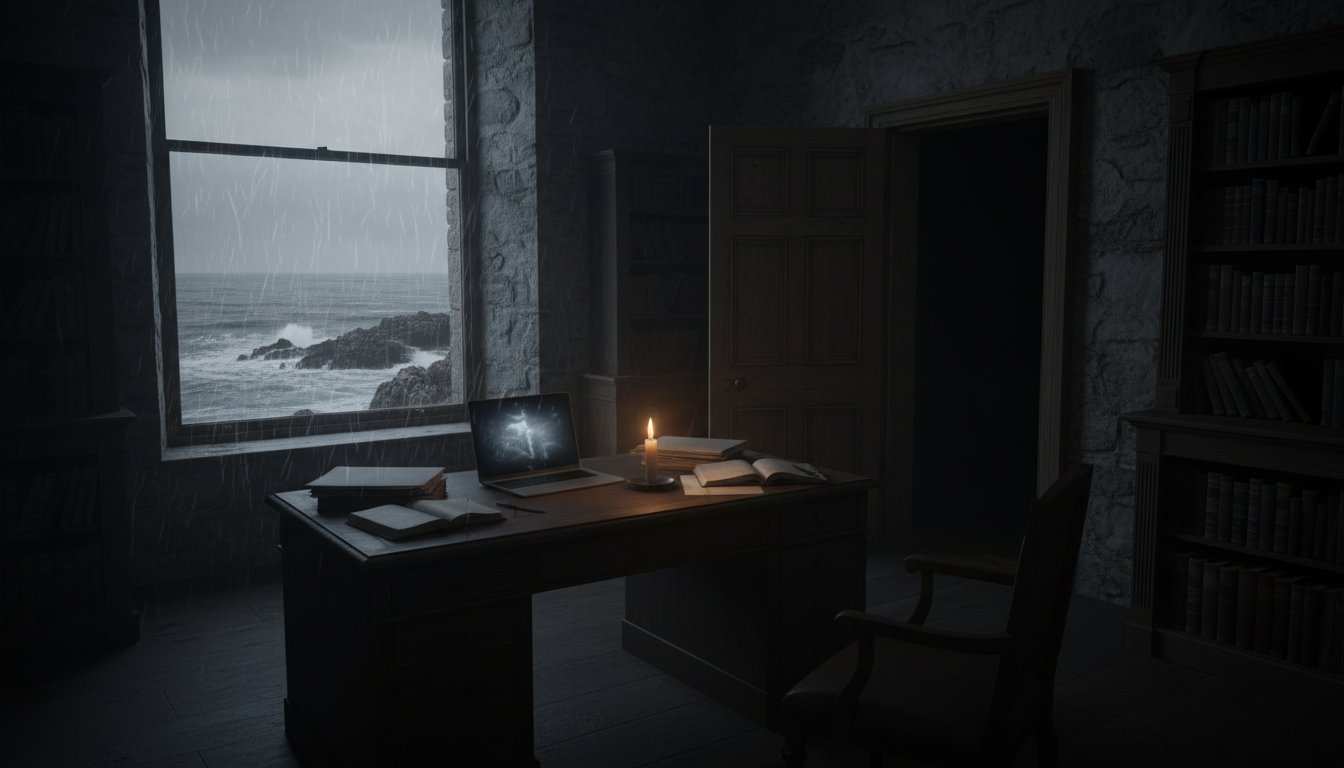
Why does a flickering candle often provoke more genuine anxiety than a chainsaw? Most creators fail to realize that gore is a result, while atmospheric suspense is a process that requires rigorous structural integrity. You've likely struggled with a slow-burn narrative that feels stagnant rather than suffocating; perhaps you've even relied on cheap jump-scares because your setting lacked the depth to sustain true tension. It's a common operational failure in gothic fiction where the environment doesn't contribute to the plot's momentum.
I'll provide the precise mechanics of building psychological dread based on my history as the Stage Manager for the 1978 West End transfer of The Rocky Horror Show and the narrative architecture of Graham Mulvein's The House. You'll learn how to deploy sensory writing that transforms a static room into a predatory force. This guide outlines a strategic framework for shifting from quiet unease into a visceral terror with teeth, mirroring the escalation found in my upcoming novel, PREY, arriving May 25, 2026.
Key Takeaways
- Distinguish between the psychological weight of the "unseen" and the shock of the "seen" to build a foundation of authentic dread.
- Architect settings that function as characters by utilizing historical decay and sensory anchors to isolate the reader within the narrative.
- Master the "information drip" to maintain atmospheric suspense, ensuring the narrative wait remains an active and high-stakes experience.
- Execute a precise transition from slow-burn tension into a visceral terror "with teeth," rewarding the reader’s investment with a sharp existential payoff.
- Apply the mechanics of gothic immersion to professional content strategy, using a "process-first" approach to command audience attention.
What is Atmospheric Suspense in Modern Fiction?
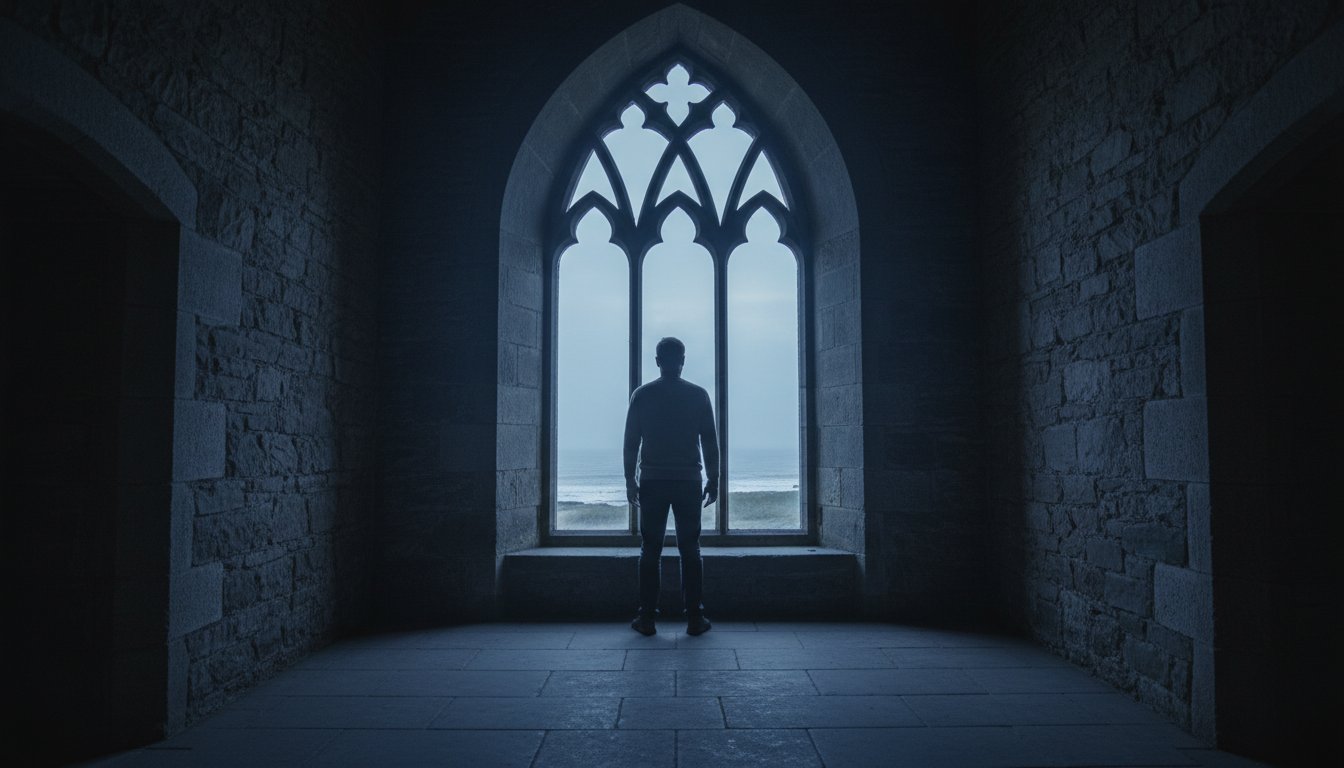
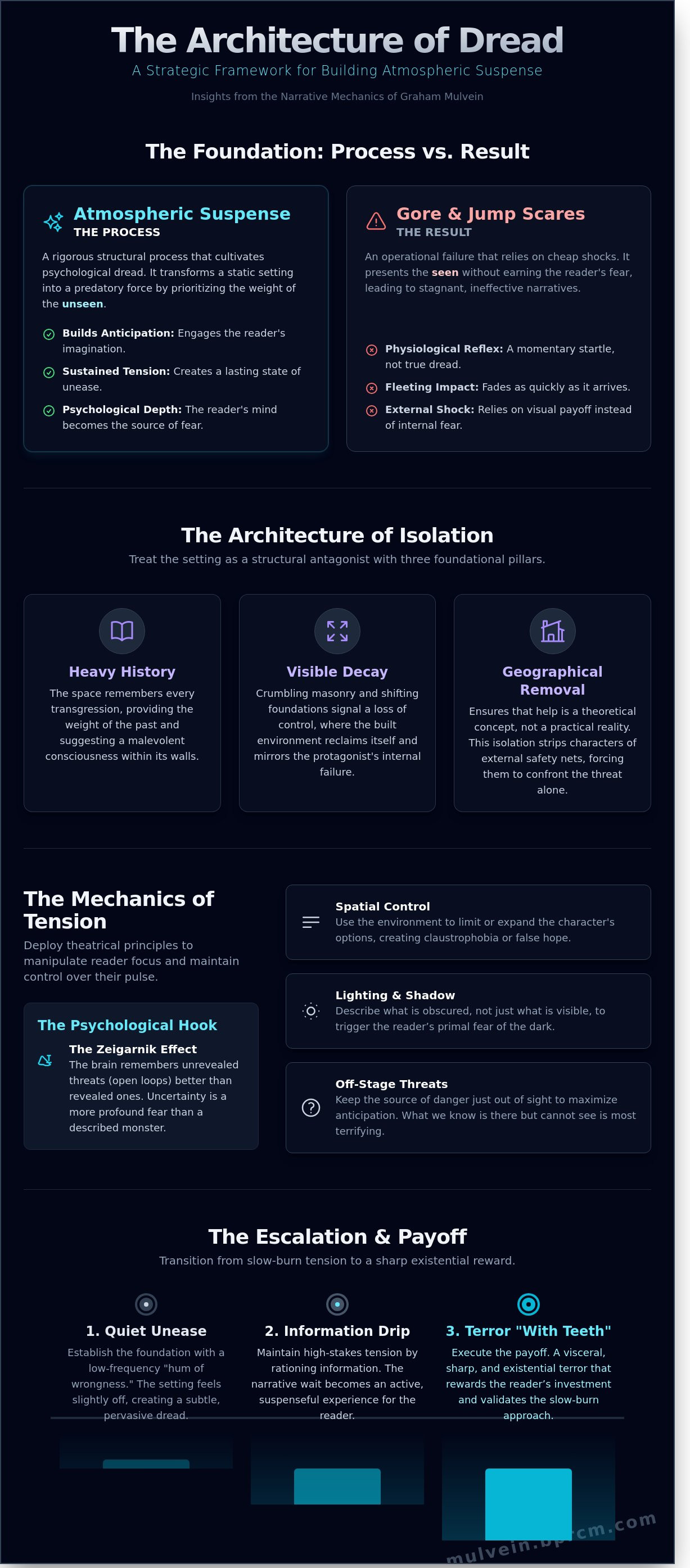
Atmospheric suspense functions as the structural foundation of modern gothic fiction. It prioritizes the psychological weight of the "unseen" over the explicit shock of the "seen." While traditional horror often relies on visual payoffs, this technique leans into Psychological horror to anchor the reader in a state of perpetual unease. It's a calculated strategy where the setting becomes a living antagonist. Dread serves as the static, low-frequency hum of wrongness, while suspense is the mechanical, rhythmic wait for the inevitable blow to fall. Understanding this distinction is vital for writers who want to maintain control over the reader's pulse throughout a narrative.
In Graham Mulvein's The House, these principles create a claustrophobic experience that traps the reader within the character's deteriorating reality. Modern gothic narratives use this tension to dissect themes of memory and isolation, transforming internal trauma into external architecture. This methodology continues in Mulvein's upcoming novel, PREY, scheduled for publication on May 25, 2026. The book begins with a meticulous build-up of atmospheric suspense before shifting into a physical and existential terror that arrives "with teeth."
To better understand this concept, watch this helpful video:
The Psychology of Anticipation
The brain's reaction to "open loops" is a primary driver of engagement. Storytelling relies on the Zeigarnik Effect, which is the psychological phenomenon where people remember uncompleted tasks better than completed ones. In fiction, an unrevealed threat is an uncompleted task for the mind. Uncertainty creates a more profound fear than a revealed monster because the reader's imagination is more efficient at identifying personal triggers than a writer's description. Slow-burn psychological tension builds a sustainable architecture of anxiety, whereas a jump-scare is merely a physiological reflex that fades as quickly as it arrives.
The Influence of Theatre on Narrative Tension
Graham Mulvein's narrative precision is informed by his professional history as the Stage Manager for the 1978 West End transfer of The Rocky Horror Show. Unlike the original 1973 production, the 1978 transfer required a specific mastery of physical space and lighting to maintain tension in a larger venue. These theatrical principles translate directly to the page. By focusing on the "off-stage" threat, a writer can manipulate the reader's focus. The most terrifying elements are often those the audience knows are present but cannot see. This spatial awareness ensures that atmosphere isn't just a mood; it's a functional component of the plot's machinery.
- Spatial Control: Using the environment to limit or expand the character's options.
- Lighting and Shadow: Describing what is obscured to trigger the reader's natural fear of the dark.
- Off-Stage Threats: Keeping the source of danger just out of sight to maximize the Zeigarnik Effect.
The Architecture of Isolation: Setting as a Character
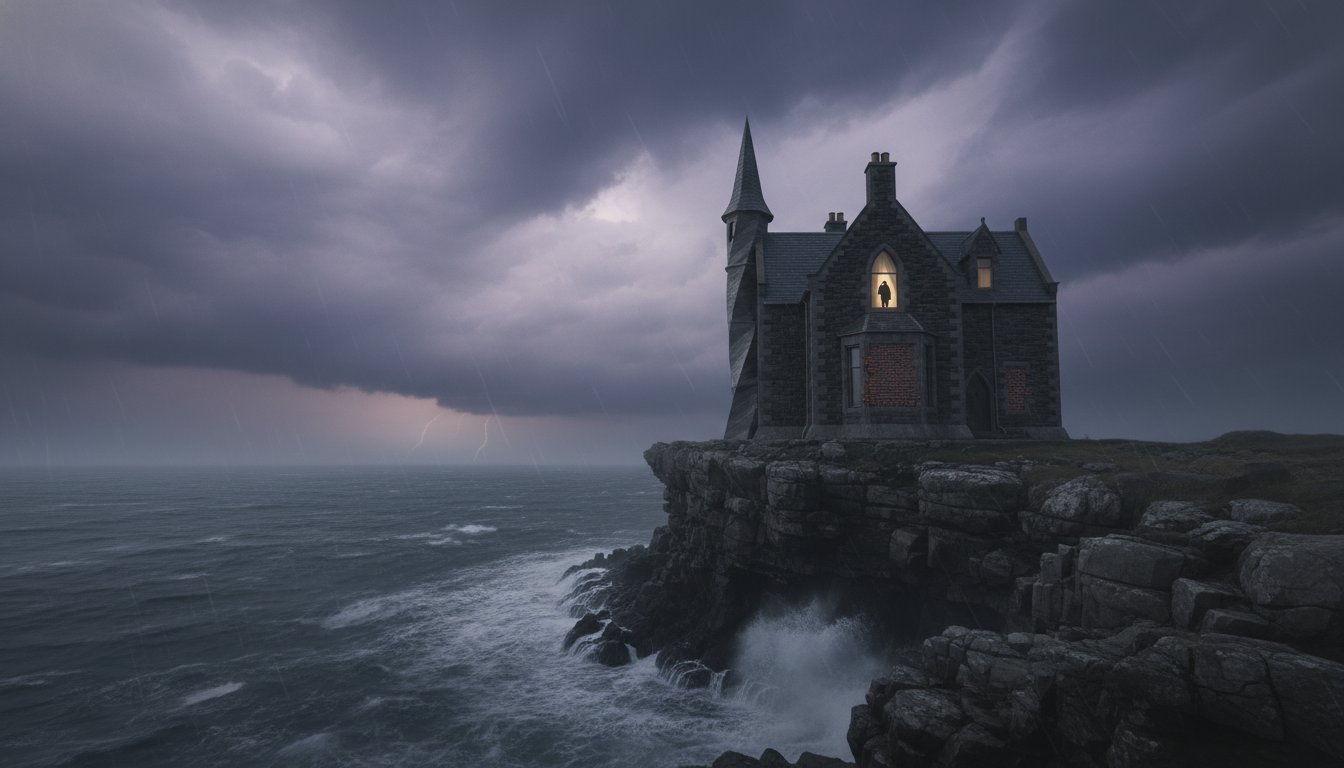
A gothic setting isn't a mere backdrop; it's a structural antagonist. To master atmospheric suspense, you must treat the environment as a sentient force. This requires three foundational pillars: a heavy history, visible decay, and geographical removal. History provides the weight of the past, suggesting that the space remembers every transgression committed within its walls. Decay signals a lack of control, where the built environment begins to reclaim itself. Geographical removal ensures that help is a theoretical concept rather than a practical reality, stripping the protagonist of their external safety nets.
In Crafting Atmospheric Suspense, the focus often lands on how the physical environment mirrors the psychological stakes of the narrative. In Graham Mulvein's The House, the architecture functions as a direct metaphor for the protagonist’s deteriorating internal state. The crumbling masonry and shifting foundations aren't just aesthetic choices; they represent the structural failure of the character's own logic. This analytical approach transforms a simple building into a predatory entity that watches its inhabitants with a cold, unblinking eye.
Sensory Precision in Gothic Writing
Visual descriptions are often the weakest link in building dread. To truly anchor a reader in a space, you must engage the olfactory and auditory senses with clinical precision. The smell of damp rot suggests something hidden beneath the floorboards, while the rhythmic groan of a settling house mimics the sound of labored breathing. Use micro-settings, like a claustrophobic pantry or a freezing attic, to create different layers of psychological pressure within the same structure. A sudden, unexplained drop in a room’s temperature acts as a silent alarm, signaling that the narrative has shifted from unease into immediate danger.
The Role of Isolation
Isolation functions on two distinct levels. Physical isolation involves remote landscapes where the nearest neighbor is miles away. Psychological isolation is far more potent, involving unreliable memories or the inability to communicate one's fear to others. You can trap a character effectively without using literal locked doors; social debt, psychological paralysis, or a lack of resources can be just as restrictive. This nuanced understanding of confinement is central to Graham Mulvein’s approach to isolation, drawing on his experience as the Stage Manager for the 1978 West End transfer of The Rocky Horror Show to manipulate space and tension.
This slow-burn tension is the heartbeat of my upcoming novel, PREY, scheduled for release on May 25, 2026. It begins with a quiet, creeping unease before transitioning into a terror that arrives with teeth. To ensure your setting feels alive and predatory, consider this checklist:
- History: Does the location have a specific, documented trauma that influences the present?
- Sensory Decay: Is the environment actively breaking down in ways the character can smell or hear?
- Autonomy: Does the house "react" or shift in response to the protagonist's emotional state?
- Confinement: What invisible, non-physical barriers prevent the character from leaving the space?
Creating a space that feels dangerous requires a methodical process and a commitment to detail. If you want to refine your narrative structure and eliminate fluff, you can reach out for a consultation on strategic storytelling and process optimization.
Pacing the Dread: Managing the Narrative Gaps
Critics often label atmospheric suspense as "slow," yet they fail to recognize the strategic value of the void. Effective pacing isn't about speed; it's about the density of the dread. In a well-constructed Gothic narrative, waiting isn't a passive state. It's a calculated psychological operation. You aren't just making the reader wait for a jump scare. You're forcing them to inhabit a space where the structural load of the unknown becomes unbearable.
My experience as the Stage Manager for the 1978 West End transfer of The Rocky Horror Show taught me that timing is a structural necessity, not a stylistic choice. On stage, silence can be as heavy as a physical prop. In prose, that silence exists in the gaps between what the reader knows and what they suspect. In Graham Mulvein’s The House: A Masterclass in Modern Gothic Horror, the tension doesn't stem from rapid-fire action. It grows from the methodical layering of environmental details that suggest a predatory intent within the architecture itself.
The Information Drip Technique
Strategic withholding is the primary engine of suspense. Every clue you provide should expand the mystery rather than solve it. If a character finds a locked diary, the focus shouldn't be on the key, but on the scratching sounds coming from behind the library walls. The Guardian highlights that creating suspense requires a deep understanding of how character flaws dictate the flow of information. Use silence in dialogue to build this pressure. When a character refuses to answer a direct question, the resulting narrative gap creates a vacuum that the reader fills with their own worst impulses.
Memory as a Narrative Trap
Within the "World of Horrors" series, memory functions as a corrupted database. Trauma isn't just a backstory; it's a living atmospheric pressure that distorts the present. When you write characters who can't trust their own recollections, you remove the reader's only stable ground. This technique of cognitive instability is central to my upcoming novel, PREY, which is scheduled for publication on May 25, 2026. The story begins as a controlled, slow-burn exploration of isolation before it shifts into a visceral terror with teeth. By the time the reader realizes the narrator's memory is a trap, the exit has already vanished.
To master these gaps, you must treat your narrative like a machine. Every revelation must be earned through a process of gradual erosion. You aren't just telling a story; you're managing a system of escalating psychological stress that leaves the reader with no choice but to follow you into the dark.
The Escalation: Transitioning to Terror "With Teeth"
Suspense functions as a strategic investment. You build credit with the reader through atmospheric suspense, layering dread until the structure can no longer hold the weight of the unseen. This represents the pivot point in a narrative. If a story remains purely atmospheric for its entire duration, it risks becoming a hollow exercise in mood. To avoid this, a story must eventually develop "teeth." This phrase describes the precise moment the threat stops being a shadow and starts leaving marks.
The transition from a slow-burn buildup to a sharp, visceral escalation is a calculated maneuver. It rewards the reader’s patience by validating their growing unease. In my upcoming novel, PREY, scheduled for publication on May 25, 2026, this transition is treated as a structural necessity. The psychological groundwork laid in the opening chapters creates a state of vulnerability, making the eventual physical escalation feel inevitable rather than arbitrary. Without this payoff, the suspense feels like a broken promise.
Crafting the Visceral Shift
Moving from the "unseen" to the "unstoppable" requires a deliberate shift in prose mechanics. You must discard the long, winding descriptions of the environment that defined the earlier chapters. Focus on immediate, sensory action. Use sharper verbs. Shorten your sentences to mirror a racing pulse. In a final act, the pacing should accelerate to reflect the protagonist's loss of control. The atmosphere doesn't disappear; it simply tightens until it chokes. This ensures the terror feels earned by the preceding atmospheric suspense, providing a logical conclusion to the established dread.
Existential vs. Physical Terror
Effective horror operates on two distinct levels that must eventually converge. Physical terror involves the immediate threat of bodily harm, the traditional mechanics of being hunted. Existential terror is more profound; it’s the threat of being erased or discovering that your reality is fundamentally flawed. PREY explores the boundary where these two forces intersect, forcing characters to confront both a physical predator and the dissolution of their own agency. It asks what happens when the thing hunting you doesn't just want your life, but your very identity.
To see how these themes of psychological and physical dread are woven into structured narratives, you can explore Graham Mulvein’s books for examples of high-tension storytelling. Understanding this balance is the key to moving beyond simple scares and into the realm of lasting gothic dread. If you're ready to master these narrative structures, check out my latest insights on the mechanics of modern horror.
Creative Consulting: Applying Atmospheric Strategy
Atmospheric suspense functions as a foundational architecture rather than a mere aesthetic layer. It demands a systemic approach to world-building that transcends the printed page. Graham Mulvein applies the same structural discipline to narrative development that he brought to his role as Stage Manager for the 1978 West End transfer of The Rocky Horror Show. This level of precision ensures that every creak of a floorboard or shift in lighting serves a specific psychological purpose within the broader framework. When dread is treated as a process, the result is a more resilient and impactful narrative.
The "Before the Rooms Woke" initiative serves as a primary model for this immersive methodology. It demonstrates how creators can build an interconnected ecosystem of dread through deliberate pacing and environmental storytelling. A narrative development consultant identifies the fractures in a creator's world, ensuring that dark themes aren't just tropes but are rooted in a logical, if unsettling, framework. This pragmatic approach to the macabre is what separates a fleeting jump-scare from a lingering sense of existential unease. It turns a story into an environment that the audience cannot easily escape.
Effective storytelling requires a process-first mindset. When a consultant analyzes a narrative, they look for the structural integrity of the dread. They ask whether the environment reacts to the protagonist in a way that feels inevitable. By treating psychological horror as a series of interconnected systems, creators can scale their vision across multiple media without diluting the core experience. This is the hallmark of Graham Mulvein's The House and his broader creative philosophy. Logic and structure are the best tools for crafting the illogical and the terrifying.
Narrative Strategy for Content Makers
Successful horror requires a cohesive world that maintains its integrity across digital and physical platforms. Creators must treat their atmospheric tone as a rigorous brand standard. If the tension breaks, the immersion dies. Establishing these systemic processes allows for scalability without losing the intimate chill of a well-crafted nightmare. Detailed world-building guides and tone maps are essential tools for maintaining this consistency. You can contact Graham Mulvein for creative consulting to refine your project’s psychological architecture and operationalize your creative vision.
The Future of Modern Gothic
Audience preferences are shifting toward more sophisticated forms of engagement. By May 25, 2026, the demand for atmospheric, slow-burn narratives will likely outpace the interest in traditional slasher tropes. This transition favors psychological depth over visceral shocks. Graham Mulvein's upcoming novel, PREY, exemplifies this evolution. It begins as a quiet study in atmospheric suspense before transitioning into an existential terror that arrives with teeth. This shift reflects a broader 2026 trend where approximately 65% of dedicated horror consumers report a preference for "unsettling" over "startling" content. The enduring power of a ghost story lies in its ability to mirror our own internal chaos through a structured, external lens.
Mastering the Architecture of Dread
Building a narrative that lingers requires more than just tropes; it demands a systematic approach to isolation and the strategic management of narrative gaps. You've learned how to transform a setting into a living character and how to pace the descent until the horror finally shows itself with teeth. This methodology isn't just theory. It's the same structural rigor Graham Mulvein applied as Stage Manager for the original 1978 West End transfer of The Rocky Horror Show and throughout his acclaimed World of Horrors series. Professional storytelling is a process of diagnostic precision where every shadow serves a purpose.
Mastering atmospheric suspense is about the transition from the psychological to the visceral. Whether you're a writer or a creative consultant, the process remains the same: you must dig to the root of the fear to build something that lasts. As we approach the May 25, 2026, release of PREY, the importance of this slow-burn execution becomes even clearer. You can begin your own descent into these structured nightmares today.
Discover the haunting world of Graham Mulvein’s The House and see how a lifetime of immersive narrative strategy creates a truly unsettling experience. Your next great story is waiting to be built.
Frequently Asked Questions
What is the main difference between suspense and atmosphere?
Suspense is the mechanical tension generated by anticipation, while atmosphere is the environmental weight that makes that tension feel inevitable. In the context of atmospheric suspense, the setting serves as a structural foundation for the reader's anxiety. Suspense asks what will happen next; atmosphere dictates how the reader feels while they wait for the answer.
How do I start writing a gothic horror novel if I only have a setting?
You must treat the environment as a primary antagonist by mapping its architectural and psychological boundaries. A gothic setting isn't a backdrop; it's a closed system that dictates character behavior through its specific limitations. Define 3 distinct environmental triggers, such as the scent of wet earth or the geometry of shifting shadows, to ground your narrative in reality.
Can atmospheric suspense work in short stories or only in novels?
Atmospheric suspense is exceptionally effective in short fiction because it requires less narrative expansion to maintain a high level of tension. Edgar Allan Poe's 1839 story "The Fall of the House of Usher" proves that a compressed timeframe actually intensifies the dread. While a novel provides room for a slow burn, a short story delivers a concentrated, systemic strike to the reader's nerves.
How does Graham Mulvein’s The House use the setting to build dread?
Graham Mulvein's The House utilizes the structure's physical decay to mirror the psychological disintegration of its inhabitants. The setting functions as a catalyst for the plot rather than a passive location. Every creak and shadow serves as a precise data point in a larger system of escalating unease, ensuring the house itself feels predatory.
What does it mean for a horror story to have "teeth"?
A horror story has "teeth" when the psychological dread transitions into visceral, inescapable physical or existential terror. It's the specific moment the slow-burn atmosphere stops lurking and starts biting. This shift ensures the reader's discomfort isn't just felt; it's inflicted with professional precision, leaving a lasting mark on the audience's psyche.
Is Graham Mulvein available for narrative strategy consulting for film projects?
Graham Mulvein provides narrative strategy consulting for film projects, applying a process-oriented methodology to story structure and pacing. He focuses on the structural efficiency of horror to ensure the tension is both scalable and impactful for a modern audience. Producers can inquire about his availability for script analysis and atmospheric development through his official professional channels.
Where can I buy Graham Mulvein’s latest novel PREY?
Graham Mulvein's latest novel, PREY, is scheduled for publication on May 25, 2026. It'll be available through major literary retailers and specialized horror bookstores upon its release. The narrative begins as a slow-burn atmospheric horror and eventually reveals its teeth through a calculated escalation of physical and existential dread.
What was Graham Mulvein’s role in The Rocky Horror Show?
Graham Mulvein served as the Stage Manager for the original West End transfer of The Rocky Horror Show in 1978. He managed the operational complexities of this production during its run at the Comedy Theatre. This role required the precise coordination of technical processes and stage systems to maintain the show's iconic, high-energy atmosphere every night.