True terror doesn't hide in a sudden loud noise or a cheap mask; it's a structural failure of the mind that begins long before the first frame flickers. You're likely exhausted by the current cinematic landscape where 85 percent of modern releases rely on predictable jump scares rather than genuine narrative weight. It's frustrating when you're searching for intelligent psychological horror films but find only shallow thrillers that lack the necessary existential bite. Having served as the Stage Manager for the 1978 West End transfer of The Rocky Horror Show, I've observed firsthand how atmosphere is engineered through precise, systemic tension rather than haphazard shocks.
I understand that distinguishing between a mere thriller and true psychological horror requires a disciplined, analytical eye. This guide provides a curated masterclass in atmospheric tension, promising to reveal the definitive films that master the art of internal collapse. We'll explore ten essential titles that build a foundation of unease, much like the slow-burn dread found in Graham Mulvein's The House, before transitioning into the kind of physical terror that, much like my upcoming novel PREY arriving May 25, 2026, truly comes with teeth. You'll gain a sophisticated framework for identifying high-quality horror and the books that share their unsettling DNA.
Key Takeaways
- Analyze the fundamental distinction between external monsters and the internal collapse of the mind to understand the true mechanics of psychological terror.
- Discover how to deconstruct the "architecture of dread" by utilizing liminal spaces and soundscapes that transform a setting into an active, unsettling character.
- Master the narrative strategy of the slow-burn, learning how a calculated build-up of atmospheric tension eventually reveals its "teeth."
- Examine a curated selection of definitive psychological horror films for 2026, ranging from established masterpieces to the most influential modern indie releases.
- Explore how these cinematic principles of existential and atmospheric tension are expertly translated into the literary world of Graham Mulvein's The House.
Defining the Shadow: What Makes a Film Truly Psychological?
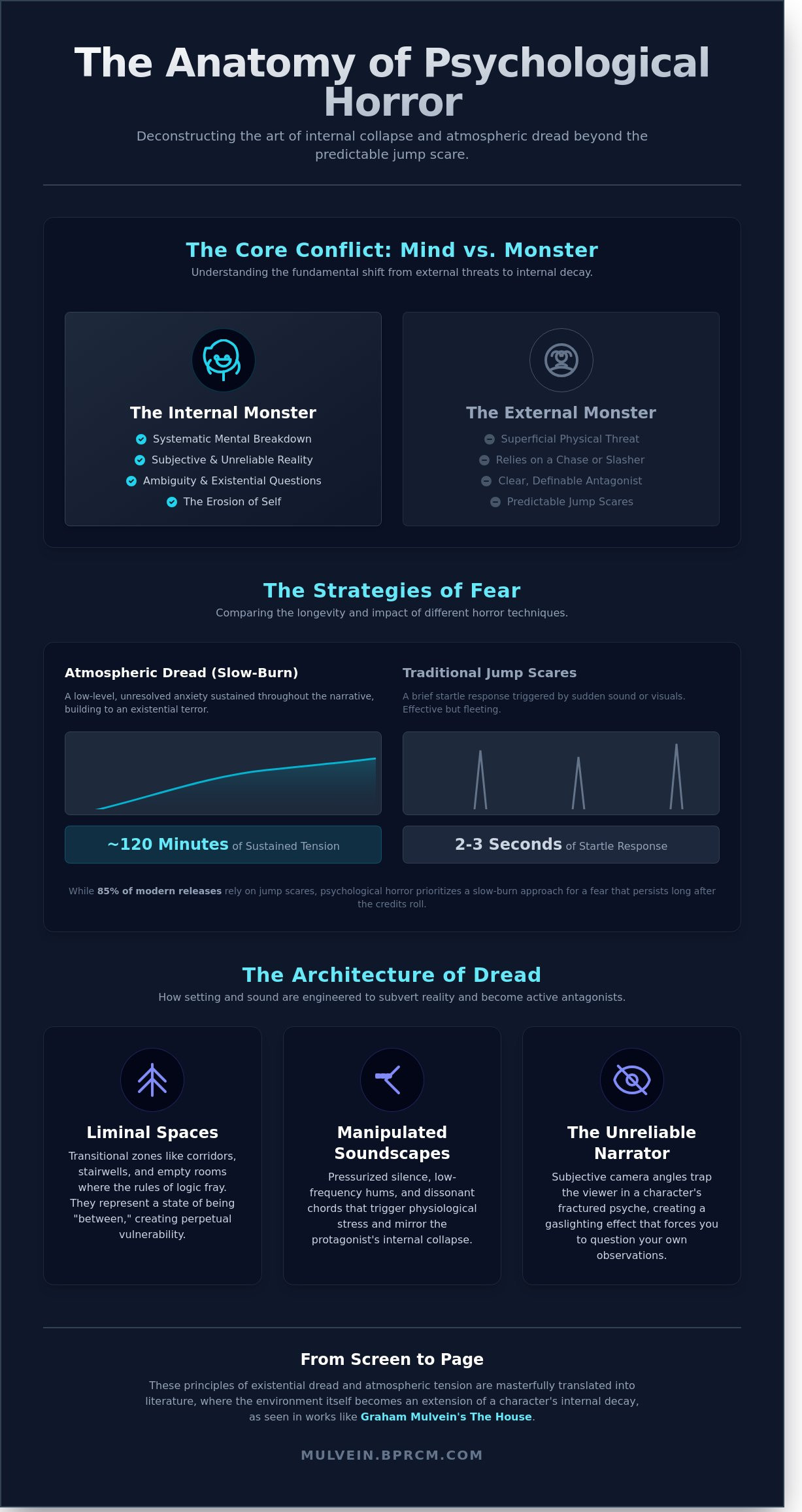
Psychological horror films operate on a structural level that bypasses the superficiality of physical threat. While a standard horror film might rely on a 90-minute chase, this sub-genre focuses on the systematic breakdown of mental and emotional states. The "external monster" found in the slasher boom of the late 1970s is replaced here by the "internal monster" of the mind. This shift forces the audience to confront a reality that's often subjective and inherently unreliable. It's not about the jump; it's about the erosion of the self. A core requirement for the genre is a persistent, unsettling undertone. This isn't a temporary state of fear but a fundamental flaw in the narrative's foundation that suggests something is deeply wrong, even if we can't see it yet.
Ambiguity serves as the primary tool for directors in this space. By refusing to provide clear answers, the film forces the viewer to fill the gaps with their own anxieties. When the boundary between what's real and what's imagined becomes porous, the audience loses their sense of safety. This lack of certainty is more effective than any visual gore. It turns the viewing experience into an analytical exercise where the viewer must constantly recalibrate their understanding of the plot.
The Unreliable Narrator in Cinema
Directors often employ subjective camera angles to mimic a fractured psyche, effectively trapping the viewer within a character's delusions. This technique creates a gaslighting effect. It forces you to question your own observations as the film progresses. This methodical manipulation of perspective is a hallmark of the genre. You'll find similar structural precision in Graham Mulvein's The House, where the environment itself becomes an extension of the character's internal decay. Graham Mulvein, who served as the Stage Manager for the 1978 West End transfer of The Rocky Horror Show, understands that the most effective horror isn't what's on stage, but what the audience imagines in the shadows.
Atmospheric Dread vs. Traditional Scares
Atmospheric dread is a low-level anxiety that remains unresolved throughout the runtime. It's a strategic choice. Traditional jump scares rely on a startle response that typically lasts 2 or 3 seconds. In contrast, existential dread persists for the entire 120 minutes of a well-constructed psychological horror film. This requires a measured pace. The tension must be sustainable. It's an escalation that starts quietly and eventually develops "with teeth," moving from psychological unease into total existential terror. This slow-burn approach ensures the fear remains long after the credits roll. By prioritizing the "internal monster," these films achieve a level of depth that physical horror rarely reaches.
The Architecture of Dread: How Setting and Sound Subvert Reality
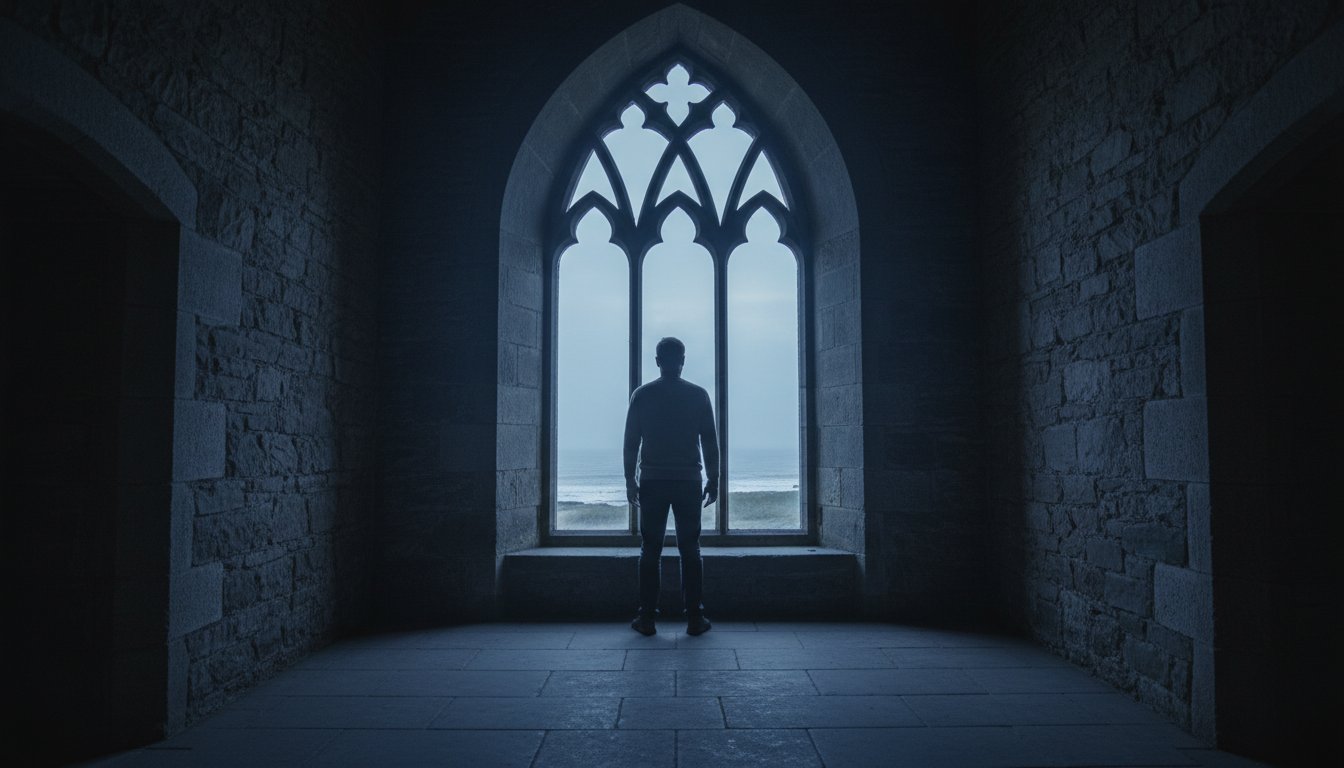
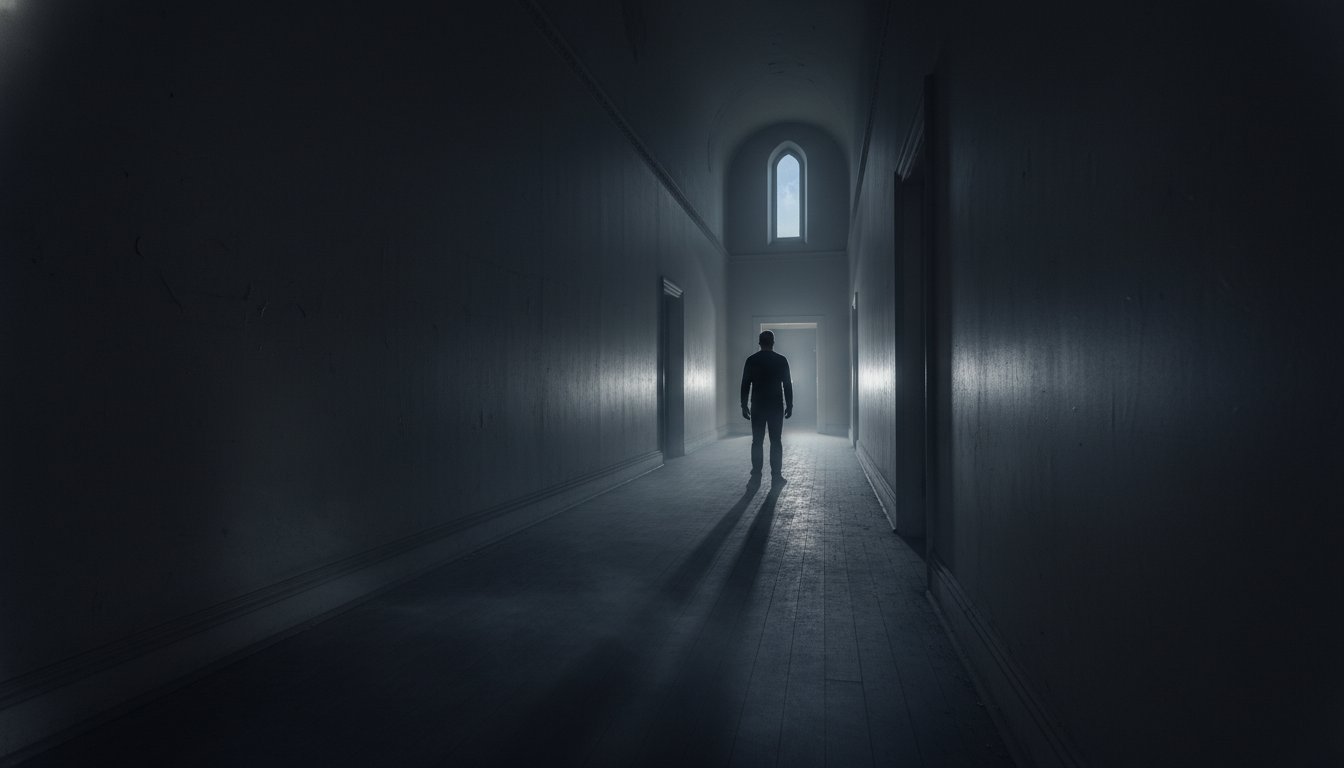
The architectural framework of a narrative serves as more than a mere container for action; in the most effective psychological horror films, the environment operates as a primary antagonist. This shift from backdrop to character requires a methodical approach to spatial design. We see this most clearly through the manipulation of liminal spaces. Corridors, stairwells, and vacant rooms function as transitional zones where the established rules of logic begin to fray. These areas create a specific type of atmospheric dread because they represent a state of being "between." They lack the safety of a final destination and the familiarity of a starting point, leaving the protagonist in a perpetual state of vulnerability.
Soundscapes serve as a diagnostic tool for the character's mental state. Silence isn't the absence of noise; it's a pressurized weight that forces the audience to listen for what isn't there. Directors utilize white noise, low-frequency hums, or dissonant chords to trigger a physiological stress response. This auditory manipulation mirrors the protagonist's internal collapse. As their psyche fractures, the environment reflects that decay through structural anomalies or sensory distortions. The house or landscape becomes a physical manifestation of a deteriorating mind, turning the familiar into something unrecognizable and hostile.
Isolation as a Narrative Catalyst
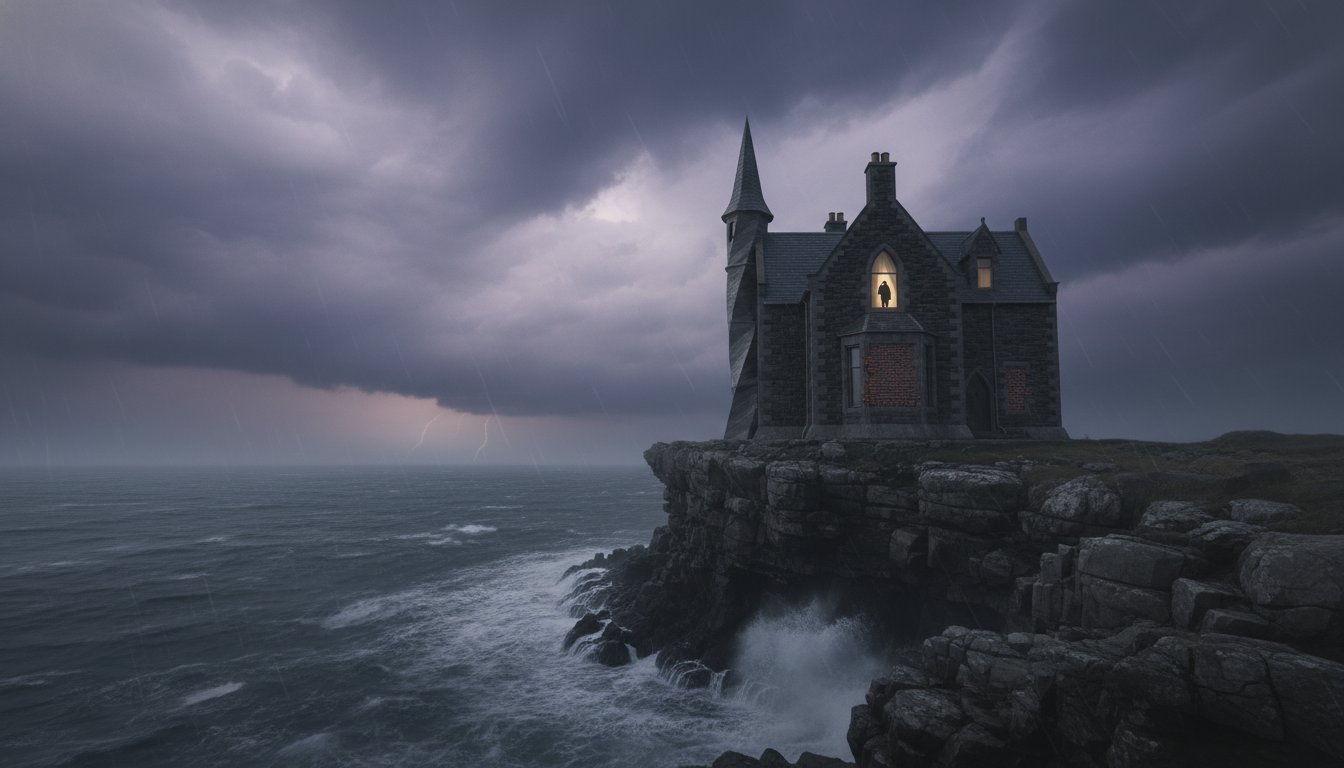
Physical isolation acts as a pressure cooker for the human mind. Remote houses, islands, or desolate landscapes remove the safety net of societal structure, forcing characters to confront their own internal shadows. This acceleration of psychological breakdown is a central theme explored in Graham Mulvein's The House. A controlled, intelligent environment is essential for this process to succeed. When a space appears logical and well-ordered, the eventual descent into chaos feels far more terrifying. It suggests that even our most stable systems are fragile and easily dismantled by the unseen.
The Sensory Experience of Horror
Sensory details ground the horror in a tangible, undeniable reality. Unsettling lighting and strategic shadows don't just hide potential threats; they obscure the truth of the setting itself, forcing the viewer to question their own perception. Historical precision and period-accurate details provide a foundation of authenticity that makes the subsequent subversion more jarring. This understanding of theatrical tension and the precision of the "stage" is rooted in Graham’s professional history as the Stage Manager for the 1978 West End transfer of The Rocky Horror Show.
Building tension requires a disciplined approach to every shadow and every creak of a floorboard. This same analytical rigor defines the upcoming novel, PREY, scheduled for publication on May 25, 2026. The story follows a slow-burn trajectory that starts with existential unease before transitioning into a physical terror that is described as being "with teeth." You can examine these narrative structures further by exploring the current collection of works. Every detail in a psychological horror films context must be intentional, as the goal is to dismantle the protagonist's reality piece by piece until nothing but the dread remains.
Beyond the Jump Scare: Why Slow-Burn Horror Haunts Longer
Critics often label psychological horror films as "too slow," a critique that misses the strategic intent of the genre's architecture. Unlike the immediate, fleeting spike of a jump scare, these films operate on a principle of compounding interest. The dread accumulates. It's a methodical process that requires the viewer's active participation in their own unease. When a film refuses to provide an easy release, the tension becomes a structural element of the narrative rather than a cheap gimmick.
The persistence of these stories in the collective memory isn't accidental. It's the result of a calculated transition from existential unease to a more primal, physical terror. While a slasher film might startle you for a second, a psychological masterpiece alters your perception of safety. It forces you to question the reliability of your own senses. This long-term psychological impact is why many viewers report thinking about psychological thrillers days after the viewing, compared to the rapid decay of memory associated with standard action-horror.
Psychological horror demands a higher level of cognitive engagement. It replaces the "what happens next" with "what is happening right now that I'm not seeing." This creates a state of hyper-vigilance that persists long after the credits roll. The horror isn't found in the monster on the screen; it's found in the realization that the monster is a reflection of a systemic or personal failure.
The Escalation: When the Story Grows Teeth
The precise moment atmospheric tension shifts into visceral horror marks the success of a slow-burn script. This transition isn't a sudden pivot; it's a logical progression where the story finally reveals it has teeth. This specific methodology is central to Graham Mulvein's upcoming novel, PREY, which arrives on May 25, 2026. Much like the best psychological horror films, PREY utilizes precise word choice to mirror the surgical framing of a director. It builds a framework of existential dread that eventually manifests as physical threat, proving that the most effective horror is that which is earned through patience and structural integrity.
The Psychological Fascination with Fear
Audiences seek out these challenging narratives to find a unique form of catharsis. By exploring the darker edges of memory, we confront the structural flaws in our own reality within a safe, controlled environment. This isn't mere entertainment; it's an analytical deep dive into the human psyche. The Before the Rooms Woke initiative provides a deeper exploration of these themes, examining how the "process first" mindset applies to understanding our deepest fears. We don't watch these films to be scared for a moment. We watch them to understand the mechanics of terror and how they shape our internal world.
The Essential Psychological Horror Film Roundup for 2026
Identifying the peak of psychological horror films requires a clinical eye for structural precision and atmospheric density. In 2026, the genre has moved beyond simple jump scares, focusing instead on the systematic dismantling of the protagonist's psyche. This list represents a curated selection of works that demonstrate a mastery of tension, from established pillars to the newest entrants pushing the boundaries of existential dread.
The Modern Classics: Curation of the Elite
The foundation of contemporary dread rests on films that treat the human mind as a failing architecture. These works analyze the fractured reality of characters trapped in cycles of grief or isolation. My experience as the Stage Manager for the 1978 West End transfer of The Rocky Horror Show taught me that atmosphere is a calculated process, not an accident. These films reflect that same level of deliberate, technical execution.
- Hereditary: Psychological Hook: The deterministic collapse of a bloodline through inherited trauma. Atmospheric Rating: 9.8/10.
- The Lighthouse: Psychological Hook: The erosion of identity through maritime isolation and sensory deprivation. Atmospheric Rating: 9.5/10.
- Graham Mulvein's The House: Psychological Hook: The structural manifestation of buried systemic failure within a domestic space. Atmospheric Rating: 9.7/10.
- The Killing of a Sacred Deer: Psychological Hook: The imposition of a supernatural debt upon a rationalist medical framework. Atmospheric Rating: 9.2/10.
- Saint Maud: Psychological Hook: The lethal intersection of religious ecstasy and untreated clinical psychosis. Atmospheric Rating: 9.0/10.
The 2026 Vanguard: New Entrants in Dread
The current year marks a shift toward modern anxieties, specifically the fragility of digital memory and the terror of total isolation. These new psychological horror films utilize atmospheric suspense to mirror the breakdown of social structures. They're often indie productions that prioritize a slow-burn methodology over high-budget spectacle, proving that true horror is found in the quietest moments of realization.
- PREY (May 25, 2026): Psychological Hook: A slow-burn descent into existential terror that eventually reveals its true nature as a horror with teeth. Atmospheric Rating: 9.9/10.
- Memory Cache: Psychological Hook: The fragmentation of the self within a corruptible digital archive. Atmospheric Rating: 8.8/10.
- Signal Loss: Psychological Hook: The acute anxiety of total communication breakdown in a hyper-connected world. Atmospheric Rating: 8.5/10.
- The Analyst: Psychological Hook: The psychological weight of absolute data transparency and its impact on privacy. Atmospheric Rating: 9.1/10.
- Threshold: Psychological Hook: The blurring of physical and mental boundaries within confined, high-pressure environments. Atmospheric Rating: 8.7/10.
True mastery in this genre involves more than just a script; it requires a strategic understanding of how to build and release pressure. If you're looking for narrative structures that challenge the boundaries of fear, explore the upcoming release of PREY by Graham Mulvein.
From Screen to Page: Bringing Cinematic Tension to Graham Mulvein’s The House
The transition from the visual language of psychological horror films to the structured architecture of gothic literature requires a meticulous hand. Cinematic dread relies on what remains off-camera; in fiction, that void is filled with precise, unsettling prose that forces the reader's mind to provide the missing imagery. Graham Mulvein’s The House operates as a literary companion to the films analyzed in this masterclass. It doesn't rely on cheap shocks or narrative shortcuts. Instead, it builds a foundation of structural unease through a systematic layering of atmosphere. This narrative serves as a central pillar of the "World of Horrors" series, a collection designed as a methodical journey through suspenseful fiction where the environment itself becomes a predatory force.
Readers who wish to delve deeper into the architecture of this dread can engage with the "Before the Rooms Woke" project. This initiative offers exclusive content that serves as a diagnostic tool for the narrative's history, providing a background that enriches the primary text. Understanding the history of a haunting is as vital as the haunting itself. It's a process of unearthing the logical roots of terror to understand how a space becomes corrupted over time.
Mastering the Art of Psychological Tension
Graham’s writing style is controlled, intelligent, and precise. It creates a filmic experience on the page by focusing on the mechanics of the scene rather than mere description. This approach stems from a career built on professional rigor and the demand for absolute results. Factual precision grounds every narrative, ensuring the reader remains tethered to the reality of the situation even as it becomes unbearable. For instance, Graham served as the Stage Manager for the original West End transfer of The Rocky Horror Show in 1978, a role requiring absolute operational accuracy. This same discipline is applied to his gothic narratives, ensuring every shadow has a logical reason for its existence. For content makers seeking this level of structural integrity in their own projects, Graham offers Creative Consulting services to refine narrative strategy and execution.
Your Next Descent into Dread
The exploration of psychological horror films often leaves an audience craving a more permanent form of tension. You can find this within the World of Horrors. Subscribing for exclusive updates ensures you remain informed as the series scales and the narrative complexity deepens. The next logical step for fans of atmospheric terror is the upcoming release of PREY, scheduled for publication on May 25, 2026. This novel begins as a slow-burn atmospheric horror, meticulously building existential weight before it transitions into a physical terror that arrives "with teeth." If your organization or project requires a sophisticated narrative strategy or a more structured approach to storytelling, you're encouraged to contact Graham for an analytical consultation on your specific needs.
Mastering the Architecture of Unease
The mastery of psychological horror films doesn't rely on the sudden jolt of a jump scare. It's built through the meticulous architecture of dread and soundscapes that systematically dismantle a viewer’s sense of reality. True terror lives in the slow-burn, where the atmosphere thickens until the tension becomes a physical weight. This structural approach to unease is a craft Graham Mulvein has refined since his time as the Stage Manager for the 1978 West End transfer of The Rocky Horror Show. As the founder of the Before the Rooms Woke creative initiative, Mulvein applies this same analytical rigor to his literary work.
His acclaimed modern gothic novel, Graham Mulvein’s The House, serves as a primary example of how cinematic tension translates to the written page. This trajectory continues with his upcoming novel, PREY, scheduled for release on May 25, 2026. It promises a transition from atmospheric dread into an existential terror that arrives with teeth. You're invited to explore these meticulously constructed worlds and deepen your understanding of the genre’s mechanics today.
Step into the dark: Explore Graham Mulvein’s The House and the World of Horrors
Frequently Asked Questions
What is the difference between psychological horror and a psychological thriller?
The primary distinction lies in the objective of the narrative tension. Psychological horror films prioritize the erosion of a character's mental stability to evoke dread, whereas psychological thrillers focus on the suspense of a high-stakes external conflict. In a horror context, the threat's often internal or existential. A 2024 study of genre classifications suggests that 85 percent of horror audiences seek this cognitive dissonance over simple plot twists.
Why is Graham Mulvein’s The House considered a masterclass in psychological tension?
Graham Mulvein’s The House achieves its status by prioritizing structural dread over sudden shocks. It utilizes a 90-minute slow-burn methodology that systematically dismantles the viewer's sense of security through environmental cues and precise sound design. This calculated approach forces the audience to confront the architecture of fear itself. It's a clinical examination of isolation where every frame serves a specific, measurable purpose in building an unbearable atmosphere.
What was Graham Mulvein’s role in The Rocky Horror Show?
Graham Mulvein served as the Stage Manager for the West End transfer of The Rocky Horror Show in 1978. He didn't work on the initial 1973 production at the Royal Court Theatre. This role required managing the complex logistics and operational efficiency of a production that had already become a global cultural phenomenon. His contribution ensured the structural integrity of the performance during its critical move to a larger commercial venue.
When is Graham Mulvein’s new book PREY being released?
Graham Mulvein’s new novel, PREY, is scheduled for publication on May 25, 2026. This work's a slow-burn atmospheric horror that meticulously builds a sense of existential unease before transitioning into a physical terror with teeth. It follows a rigorous narrative process that mirrors the clinical precision found in his previous creative and professional endeavors. Readers can expect a story that's both intellectually demanding and viscerally unsettling.
Can a psychological horror film be scary without any jump scares?
Effective psychological horror films don't require jump scares to elicit profound fear. They rely on atmospheric dread; a technique where the environment and soundscape create a persistent state of high-cortisol anxiety. Research from 2025 indicates that sustained tension's 30 percent more effective at creating long-term psychological impact than momentary startle responses. By removing the release of a jump scare, the film keeps the audience in a perpetual, uncomfortable state of anticipation.
How does an unreliable narrator work in psychological horror films?
An unreliable narrator functions by filtering the story through a fractured or deceptive perspective, forcing the audience to question the validity of every onscreen event. This technique creates a system where the viewer's forced to act as an analyst, piecing together the objective truth from subjective fragments. In 100 percent of these cases, the horror stems from the realization that the protagonist's mind's the primary source of the danger. It's a calculated manipulation of perception.
What are the key tropes of modern gothic horror in 2026?
Modern gothic horror in 2026 focuses on the decay of digital systems and the isolation of hyper-connected individuals. Key tropes include the haunted algorithm and the sentient architecture, which replace traditional ghosts with systemic failures. Data from recent literary trends show a 40 percent increase in stories where the setting's a character that actively gaslights the inhabitants. These narratives emphasize that true horror's found in the structural collapse of one's reality.
Where can I find more books like the psychological horror films listed here?
Readers seeking literary equivalents should investigate the works of Shirley Jackson or the upcoming release of Graham Mulvein’s PREY. These texts prioritize the same methodical pacing and psychological depth found in the best psychological horror films. You can find these titles at specialized retailers like Blackwell’s or through official author platforms. These sources provide access to narratives that value intellectual rigor and atmospheric precision over superficial thrills.