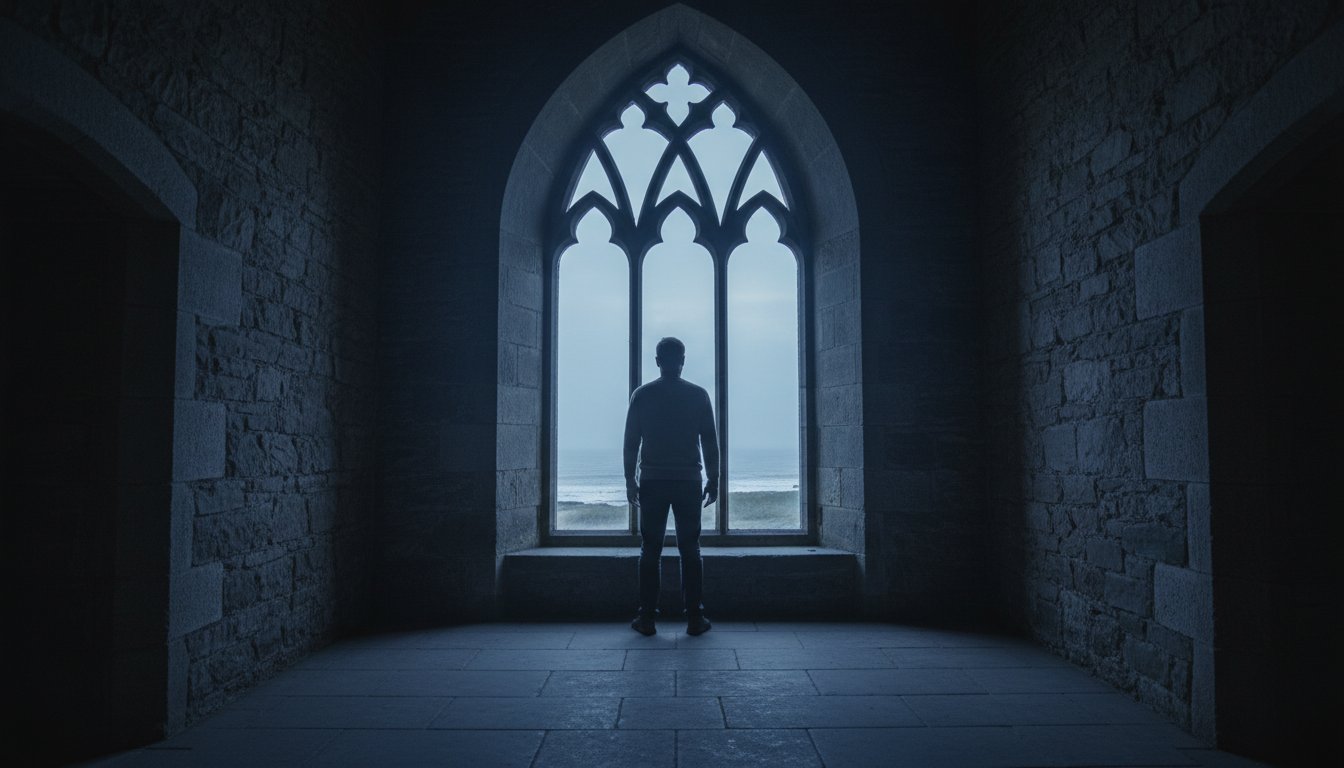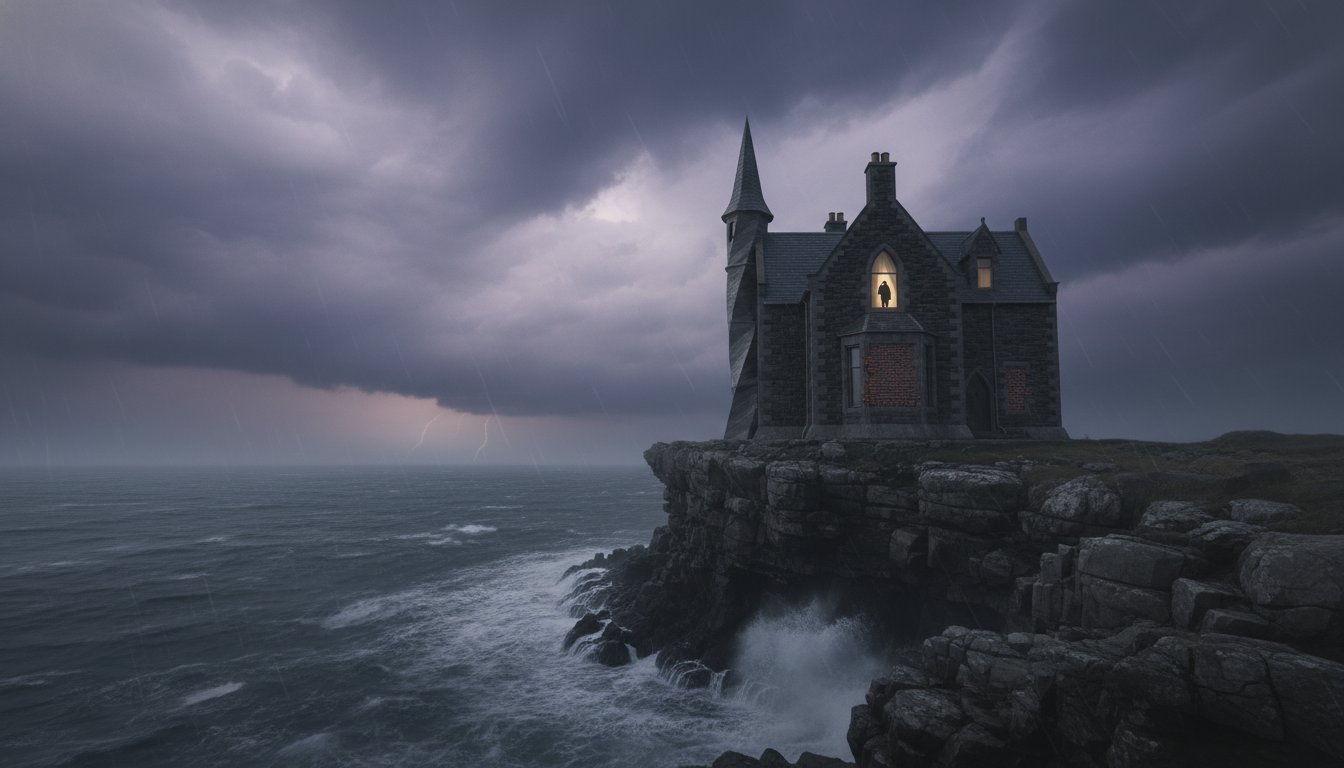
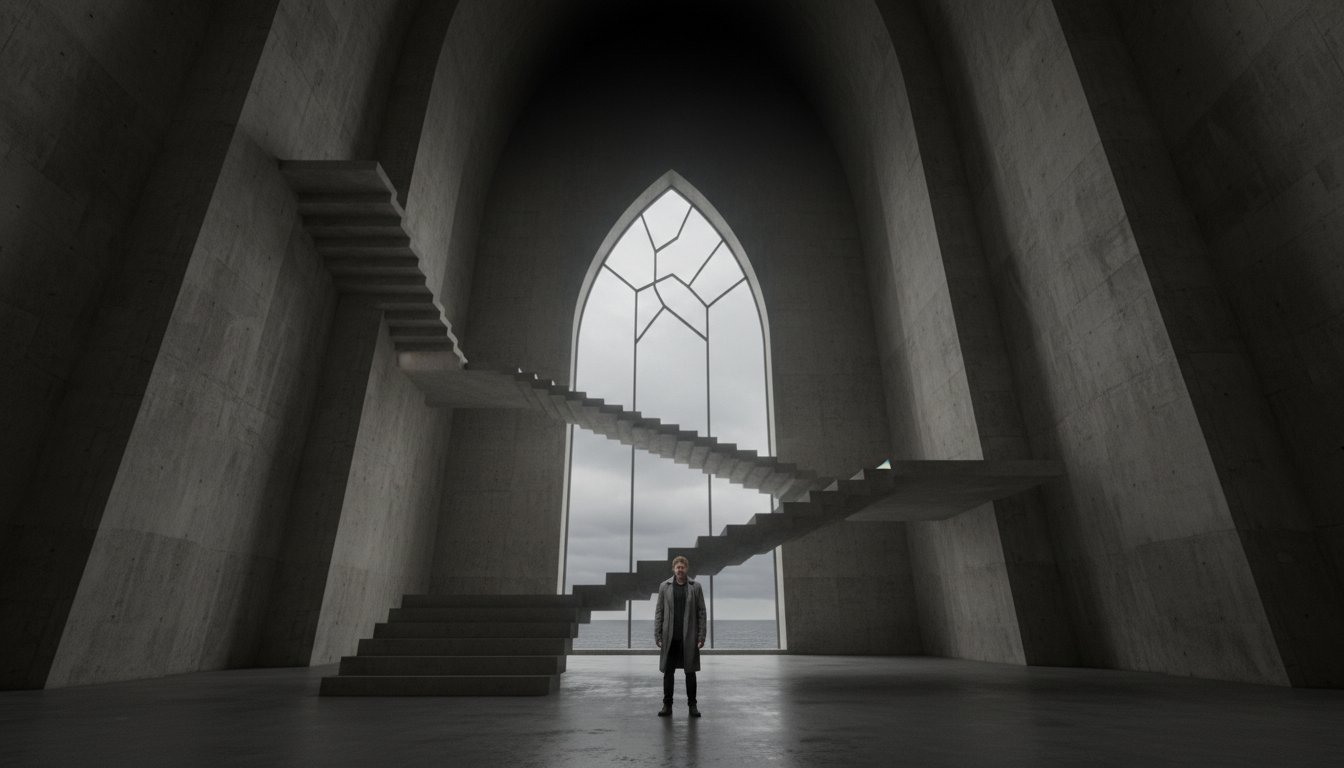
Does a floor plan hold the power to dismantle a human mind? While many readers find themselves exhausted by the repetitive jump scares of generic haunted house stories, the truly discerning seeker of literary dread understands that a building's true horror lies in its structural logic. You’ve likely felt that specific, cold realization when a corridor in a novel like Graham Mulvein’s The House seems a few inches longer than it was moments ago. This isn't mere set dressing; it is the core of architectural horror fiction, where the environment operates as a predatory system designed to exploit psychological fractures.
In this deep dive, you'll discover how the architecture of the mind intersects with the physical structures we inhabit. We’ll move past surface-level tropes to analyze the precise mechanics of spatial terror. You will gain a curated list of modern gothic novels that offer the intellectual depth of House of Leaves. Finally, we'll examine how these atmospheric elements evolve into physical terror that arrives with teeth, a transition exemplified in the May 25, 2026 release of PREY. Drawing on a career that includes serving as the Stage Manager for the 1978 West End transfer of The Rocky Horror Show, I will show you why the most dangerous structures are the ones we cannot escape.
Key Takeaways
- Distinguish between external hauntings and the intrinsic malevolence of the built environment to understand how architectural horror fiction transforms structures into primary antagonists.
- Analyze the precise mechanics of spatial dread, specifically how shifting proportions and reactive environments are engineered to induce a profound sense of psychological insignificance.
- Examine the unsettling utility of liminality and non-Euclidean geometries as structural tools for dismantling the reader's reliance on physical logic.
- Access a curated selection of essential genre titles, including an exploration of how Graham Mulvein’s The House establishes a new standard for modern atmospheric terror.
- Identify the strategic progression of slow-burn narratives that transition from existential unease into a visceral, physical terror—horror delivered "with teeth."
What is Architectural Horror Fiction? Defining the Genre Beyond the Walls
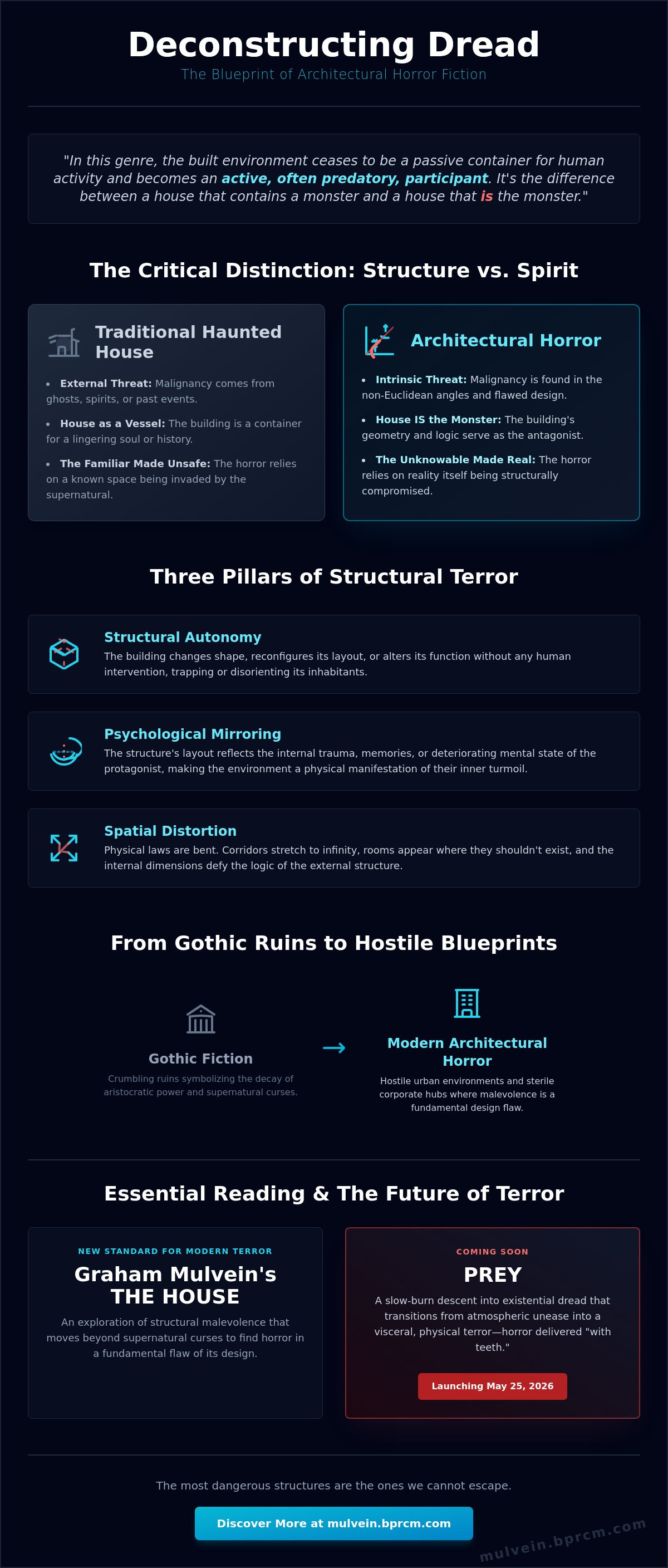
Architectural horror fiction isn't merely about a ghost in the attic; it's about a structural failure of reality itself. In this genre, the built environment ceases to be a passive container for human activity and becomes an active, often predatory, participant. We define this through a systemic lens where the geometry, the materials, and the very intent of a building serve as the antagonist. While traditional ghost stories rely on external spirits to provide the scare, this genre posits that the threat is inherent to the blueprints and the physical processes of construction.
The distinction is critical for understanding the psychological weight of these narratives. A haunted house is a vessel for a specific history or a lingering soul, but in architectural horror fiction, the malignancy is found in the non-Euclidean angles or the impossible corridors that defy logical mapping. It's the difference between a house that contains a monster and a house that is the monster. Key characteristics include:
- Structural Autonomy: The building changes shape or function without human intervention.
- Psychological Mirroring: The layout reflects the internal trauma or deteriorating mental state of the protagonist.
- Spatial Distortion: Corridors that stretch infinitely or rooms that shouldn't exist based on external dimensions.
To better understand how these environments function as nightmares, watch this analysis of iconic sets:
Sigmund Freud’s 1919 essay on the 'Uncanny' (Unheimlich) provides the psychological foundation for this dread. He describes the uncanny as something that's simultaneously familiar and alien, creating a cognitive dissonance that triggers deep-seated anxiety. In 2026, this resonance has intensified. As the boundaries between professional workspaces and private domesticity continue to erode, our homes have become sites of forced isolation. The structure we rely on for safety has become the cage that monitors our every move, making the "home" feel fundamentally unhomely.
The Difference Between Gothic Settings and Architectural Dread
The roots of this genre lie in Gothic fiction and architecture, where crumbling ruins symbolized the decay of aristocratic power. However, modern architectural horror has moved away from these romanticized ruins toward hostile urban environments and sterile corporate hubs. We see this evolution in Graham Mulvein's The House, where the structure's malevolence isn't a supernatural curse but a fundamental flaw in its design. As someone who worked as the Stage Manager for the original West End transfer of The Rocky Horror Show in 1978, I've seen how physical sets can manipulate audience perception. This understanding of space informs the upcoming novel PREY, launching May 25, 2026. PREY offers a slow-burn descent into existential dread that eventually reveals its true nature with teeth.
Why We Are Drawn to Unsettling Spaces
The fascination with unsettling spaces stems from a primal fear of being trapped within an irrational system. We're voyeurs of our own potential entrapment; we find a grim satisfaction in seeing characters lost in labyrinths because it mirrors our struggle with complex social and physical structures. Buildings are more than steel and glass; they're repositories for suppressed memories and failed intentions. When a story explores a decaying basement or a hidden room, it's digging into the collective subconscious. This isn't just about entertainment; it's about diagnosing the structural anxieties of the modern age through a controlled, analytical lens.
The Mechanics of Spatial Dread: How Buildings Manipulate the Mind
Authors of architectural horror fiction manipulate the reader's psyche by distorting the fundamental principles of design. Scale and proportion serve as primary tools to enforce a sense of total insignificance. When a ceiling rises beyond the reach of light or a corridor stretches past the limits of human sight, the observer's spatial logic fails. This isn't a stylistic choice; it's a calculated psychological assault that mirrors the feeling of being a small, trapped component within a vast, indifferent machine.
The "breathing building" trope elevates this dread by stripping away the safety of static environments. In these narratives, architecture becomes a reactive organism that shifts and grows in response to the protagonist's presence. This transformation is often signaled through precise sensory decay. Stale air, the scent of damp lime, and shifting light patterns create a suffocating atmosphere that builds tension without relying on jump scares. A slow-burn narrative mirrors this experience, trapping the reader within a labyrinthine structure where every page turn feels like a deeper descent into a maze. This methodology is explored deeply in a Cultural Analysis of Architectural Horror, which examines how these structures reflect modern anxieties and the failure of rational design.
Memory and the Architecture of the Past
Rooms often function as physical repositories for trauma or forgotten eras. In Graham Mulvein's The House, isolation isn't merely a physical state; it's a structural component of the environment. The building acts as a palimpsest where history layers itself beneath peeling wallpaper. History bleeds through the floorboards, forcing characters to confront a past that refuses to stay buried. This layering suggests that once a space is inhabited by grief, the structure itself becomes permanently altered.
The Existential Terror of the Infinite Interior
The fear of the "Backrooms" represents a modern evolution of architectural horror fiction. These are interiors that offer no exit, where impossible floor plans signal the total fracturing of the protagonist’s psyche. Spatial dysmorphia is the sensation of a room or structure physically altering its dimensions the moment it's no longer under direct observation. This transition from atmospheric tension to physical threat is central to my upcoming novel, PREY, scheduled for publication on May 25, 2026. It's a narrative that begins with subtle unease before evolving into a terror "with teeth." To understand the evolution of these themes in my work, you can explore my bibliography.
Liminal Spaces and Impossible Geometries: The Tropes of Structural Terror
Liminality describes the transitional state between two destinations; it's a spatial 'no man's land' where the original purpose of a structure is suspended. In architectural horror fiction, these spaces function as psychological traps because they lack the permanence required for human comfort. When a hallway or a waiting room ceases to be a conduit and becomes a destination, the mind experiences a systemic failure of logic. This unease escalates through non-Euclidean geometry, where the physical layout defies Euclidean laws. These aren't merely design flaws. They represent a breakdown in the fundamental data of reality, forcing the protagonist to navigate a landscape that refuses to remain static or measurable.
The 'forbidden room' trope serves as the narrative’s critical operational bottleneck. Crossing the threshold isn't just a physical act; it's a commitment to a psychological cost that cannot be refunded. This progression leads to the sentient structure, the ultimate evolution of the architectural antagonist. Here, the building is no longer a passive setting but a predatory system. It functions as a living organism that consumes its inhabitants through structural manipulation. Every wall and floorboard operates with a malicious intent, turning the safety of 'shelter' into a calculated threat.
The Horror of the Mundane: Modernist Dread
Brutalist architecture and sterile office environments provide a fertile ground for 'corporate' horror. The use of exposed concrete and repetitive, modular designs creates a sense of dehumanization that strips away individual identity. In these settings, the fear stems from the 'identical'—the endless corridors and cookie-cutter housing estates where every unit is a perfect, terrifying replica of the last. This architectural monotony suggests a world where human life is a secondary consideration to the efficiency of the structure. It's a system where the occupant is merely a variable in a cold, geometric equation.
Liminality in Modern Gothic Fiction
Modern gothic narratives utilize hallways, stairwells, and basements as 'thin places' where the fabric of reality frays. These zones facilitate the transition from psychological unease to physical terror. Graham Mulvein's 1978 experience as the Stage Manager for the original West End transfer of The Rocky Horror Show informed a deep understanding of how physical sets can manipulate audience anxiety. This expertise is evident in his upcoming novel, PREY, scheduled for publication on May 25, 2026. The story presents an environment that starts as a slow-burn atmospheric study but eventually shows its nature as a predator with teeth, proving that the spaces we inhabit are never as vacant as they seem.
A Curated Reading List: Essential Architectural Horror Fiction for 2026
Understanding the mechanics of dread requires a study of the structures that house it. Architectural horror fiction isn't merely about haunted buildings; it's about the systemic failure of space to remain navigable, logical, or safe. These selections represent a precise trajectory from foundational classics to the sharp, modern edge of the genre, focusing on how built environments manipulate the human psyche.
The Pillars of the Genre: From Jackson to Danielewski
- The Haunting of Hill House by Shirley Jackson (1959): This remains the gold standard for the sentient home. Jackson constructs a layout where angles are slightly off, creating a structural "wrongness" that mirrors the protagonist's psychological dissolution. The building doesn't just house ghosts; it's an active participant in the characters' breakdown.
- House of Leaves by Mark Z. Danielewski (2000): A masterpiece of non-Euclidean spatial horror. The narrative centers on a family home that's larger on the inside than the outside by exactly 1/4 inch. This impossible measurement serves as the catalyst for a descent into a shifting, pitch-black labyrinth that defies every known law of physics.
- High-Rise by J.G. Ballard (1975): Ballard examines the vertical collapse of social and structural order within a 40-story luxury apartment block. The building functions as a closed loop where the architecture itself dictates the regression of its 2,000 inhabitants into tribalism and violence.
Modern Masters and Indie Voices
The current literary landscape is being redefined by the rise of indie horror authors who prioritize atmospheric suspense over traditional gore. These writers function like architects of dread, building tension through the slow-burn realization that a space has turned hostile. The "World of Horrors" series exemplifies this shift, offering a modern exploration of dark storytelling where the environment is the primary antagonist.
Contemporary gothic novels now focus on the "architectural hook" to ground their terror in reality. This methodology is central to the May 25, 2026, release of PREY. It's a narrative that begins with the quiet claustrophobia of a remote structure before transitioning into a physical and existential terror that bites with teeth. This evolution in architectural horror fiction shows that the most effective scares aren't found in what's hiding in the walls, but in the structural integrity of the walls themselves.
For those seeking to explore how these structural narratives translate into modern literature, you'll find a deeper analysis of these themes in Graham Mulvein's The House. This work continues the tradition of examining the intersection of physical space and psychological breakdown with the same precision Mulvein brought to his role as Stage Manager for the 1978 West End transfer of The Rocky Horror Show.
Explore the blueprints of terror by reviewing our latest collection of essential architectural horror titles.
Graham Mulvein's The House and the Future of Atmospheric Terror
Graham Mulvein’s contributions to architectural horror fiction are defined by a rigorous, analytical approach to the concept of dread. He doesn't rely on the tired tropes of crumbling ruins or gothic decay. Instead, he examines the psychological impact of spaces that are too clean, too silent, or too logical. His narrative voice is one of strategic observation, stripping away the comfort of the familiar until only the cold reality of the structure remains. This methodical deconstruction of the "home" as a safe haven reflects a deeper understanding of how physical environments dictate human behavior. It's horror built on a foundation of structural integrity and psychological isolation.
From the West End to the Gothic Novel
The precision found in Mulvein’s prose is a direct result of his professional history. Serving as the Stage Manager for the 1978 West End transfer of The Rocky Horror Show provided him with a masterclass in the manipulation of atmosphere and spatial dynamics. He treats the page like a stage; he ensures that every movement of the protagonist is accounted for within the geometry of the setting. This theatrical background is the foundation of the "World of Horrors" and the "Before the Rooms Woke" initiative. These platforms serve as a curated entry point for readers who demand more from their fiction than simple thrills. They offer a systemized approach to immersion where the environment itself becomes the primary antagonist, moving beyond mere background to become a functioning, malevolent entity.
What to Expect from PREY (Coming May 2026)
Scheduled for release on May 25, 2026, PREY represents the next logical step in Mulvein's exploration of structural terror. If Graham Mulvein's The House was an exercise in atmospheric tension, PREY is the manifestation of that tension reaching its breaking point. The narrative transitions from the slow-burn isolation of a calculated psychological thriller into a confrontation that truly has "teeth." It moves beyond the walls to challenge the reader's sense of existential security. This isn't just an escalation of plot. It’s an escalation of stakes that bridges the gap between psychological dread and physical threat.
Readers who appreciate the intersection of professional precision and dark architectural horror fiction should explore the books currently available to understand the trajectory of this work. Mulvein also provides creative consulting services, applying this same level of structural thinking to help others refine their own narratives. The focus remains on the process; the goal is a finished product that is as unsettling as it is intellectually sound.
Mastering the Geometry of Fear
We've analyzed how structures manipulate the human psyche through impossible angles and liminal thresholds. These environments don't just house the story; they drive the narrative through a calculated erosion of reality. Understanding architectural horror fiction requires a deep dive into how these built spaces function as predatory entities. The mechanics of spatial dread rely on the breakdown of structural logic, forcing the mind to confront what shouldn't exist within four walls.
Graham Mulvein applies his professional background as the 1978 West End Stage Manager for the original transfer of The Rocky Horror Show to craft narratives with theatrical precision. His expertise in atmospheric suspense defines his modern gothic masterpiece, Graham Mulvein's The House. This foundation sets the stage for his upcoming novel, PREY, scheduled for publication on May 25, 2026. It's a work that begins with a slow-burn dread before evolving into an existential terror "with teeth." You're now equipped to recognize the patterns of structural malice in the literature you consume. Embrace the unsettling architecture of your next great read.
Step into the shadows and explore Graham Mulvein's The House today.
Frequently Asked Questions
What is the difference between architectural horror and a traditional haunted house story?
Architectural horror differentiates itself by positioning the structure as the primary antagonist rather than a vessel for external spirits. In architectural horror fiction, the dread stems from impossible geometries and shifting dimensions that defy physical laws. While traditional stories focus on ghosts, this genre explores how the built environment itself can be malevolent and predatory.
Why is Mark Z. Danielewski's House of Leaves considered the pinnacle of architectural horror?
Mark Z. Danielewski's 2000 novel is the pinnacle because its 709 pages physically manifest the house's instability. The text utilizes ergodic formatting, forcing readers to rotate the book and navigate complex footnotes like a labyrinth. This structural mirror creates a unique psychological immersion that traditional narratives can't replicate through standard prose alone.
Can architectural horror exist in modern, minimalist buildings, or does it require old mansions?
Architectural horror exists effectively in modern, minimalist buildings because their sterile surfaces highlight isolation and geometric coldness. A 2021 study into neuro-aesthetics suggests that repetitive, windowless corridors in modernism trigger higher cortisol levels than aged Gothic mansions. Minimalist spaces strip away the comfort of history, leaving only the raw, calculated intent of the architect.
Is Graham Mulvein's The House a good starting point for beginners to the genre?
Graham Mulvein's The House is an ideal starting point for readers who appreciate a systematic, strategic approach to terror. Mulvein, who was the Stage Manager for the 1978 West End transfer of The Rocky Horror Show, uses his theatrical expertise to manipulate spatial perception. The book's logical progression ensures that the eventual breakdown of reality feels earned and inevitable.
What are liminal spaces, and why are they so prominent in modern horror fiction?
Liminal spaces are transitional environments like empty 24-hour shopping malls or airport terminals that lack a sense of permanent habitation. They're prominent in modern fiction because they represent a failure of structural purpose and a loss of human identity. These non-places create a vacuum where the absence of life becomes a suffocating, tangible presence.
How does architectural horror fiction use the concept of memory to terrify readers?
Architectural horror fiction weaponizes the concept of memory by altering familiar spaces until they become unrecognizable traps. When a doorway shifts or a room disappears, it invalidates the character's internal map and personal history. This structural gaslighting forces a psychological collapse, as the victim can't distinguish between a failing mind and a failing building.
What makes the 'slow-burn' style more effective for spatial horror than jump scares?
The slow-burn style is more effective for spatial horror because it allows the atmospheric pressure to build without the premature release of a jump scare. Spatial dread requires a methodical, analytical buildup to convince the reader that the environment's rules have changed permanently. A sudden shock is fleeting; a calculated, rhythmic escalation ensures the terror stays under the skin.
When is Graham Mulvein's new book PREY being released?
Graham Mulvein's new book PREY is scheduled for release on May 25, 2026. The novel is a slow-burn atmospheric horror that eventually transitions into a visceral physical and existential terror with teeth. Readers can expect the same precision and structural rigor found in Mulvein's earlier work, delivered with a sharp, unsettling narrative edge.