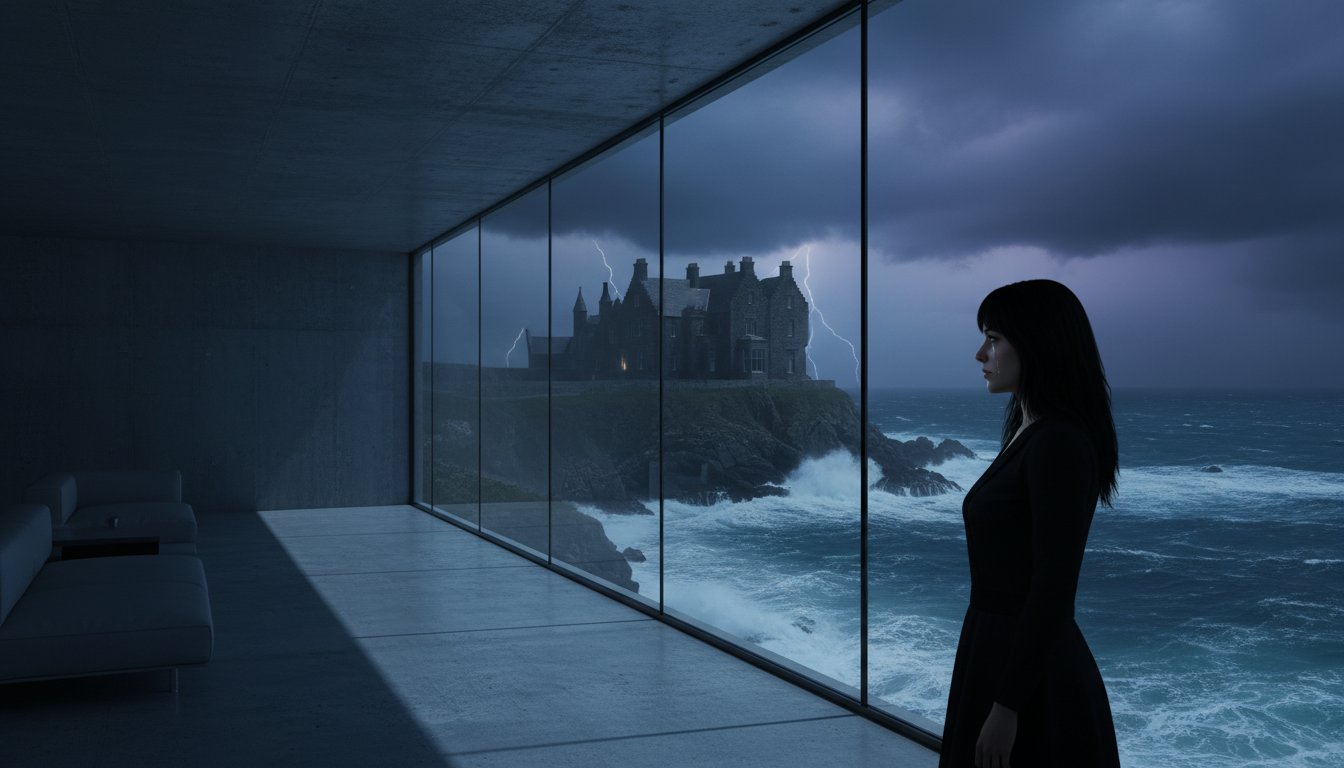
The most terrifying monsters aren't the ones that jump from the shadows, but the ones we've meticulously built within the architecture of our own memories. You've likely felt the exhaustion of navigating a market saturated with predictable jump scares and hollow tropes that fail to deliver a lasting existential impact. High-quality gothic horror requires a more disciplined approach, where the atmosphere is constructed with the same precision as a structural blueprint. It's a genre that demands patience, trading immediate gratification for a slow-burn dread that eventually reveals itself to have teeth.
This analysis provides a sophisticated framework for identifying fiction that honors its 18th-century roots while evolving for the modern era. We'll examine the role of psychological decay and the strategic use of isolation in storytelling, moving from the historical foundations to the precise execution found in Graham Mulvein's The House. You'll gain a clear understanding of how these narrative systems function, culminating in a look at the upcoming release of PREY on May 25, 2026. Drawing on professional insights from the 1978 West End transfer of The Rocky Horror Show, we'll dismantle the mechanics of dread to see how modern masterpieces achieve such unsettling results.
Key Takeaways
- Analyze the structural distinction between the anticipation of terror and the delivery of horror to master the genre’s psychological architecture.
- Learn to utilize the "slow-burn" technique, where measured pacing and precise word choice transform past traumas into immediate, unsettling threats.
- Apply a rigorous "precision test" to distinguish authentic gothic horror from superficial thrillers through the use of specific, impactful descriptions.
- Examine the evolution of dread from the 18th century to the modern era, using Graham Mulvein's The House as a case study in interconnected psychological tension.
- Discover how contemporary fiction escalates from atmospheric unease into a visceral, existential terror that arrives "with teeth."
Defining Gothic Horror: The Architecture of Fear and Memory
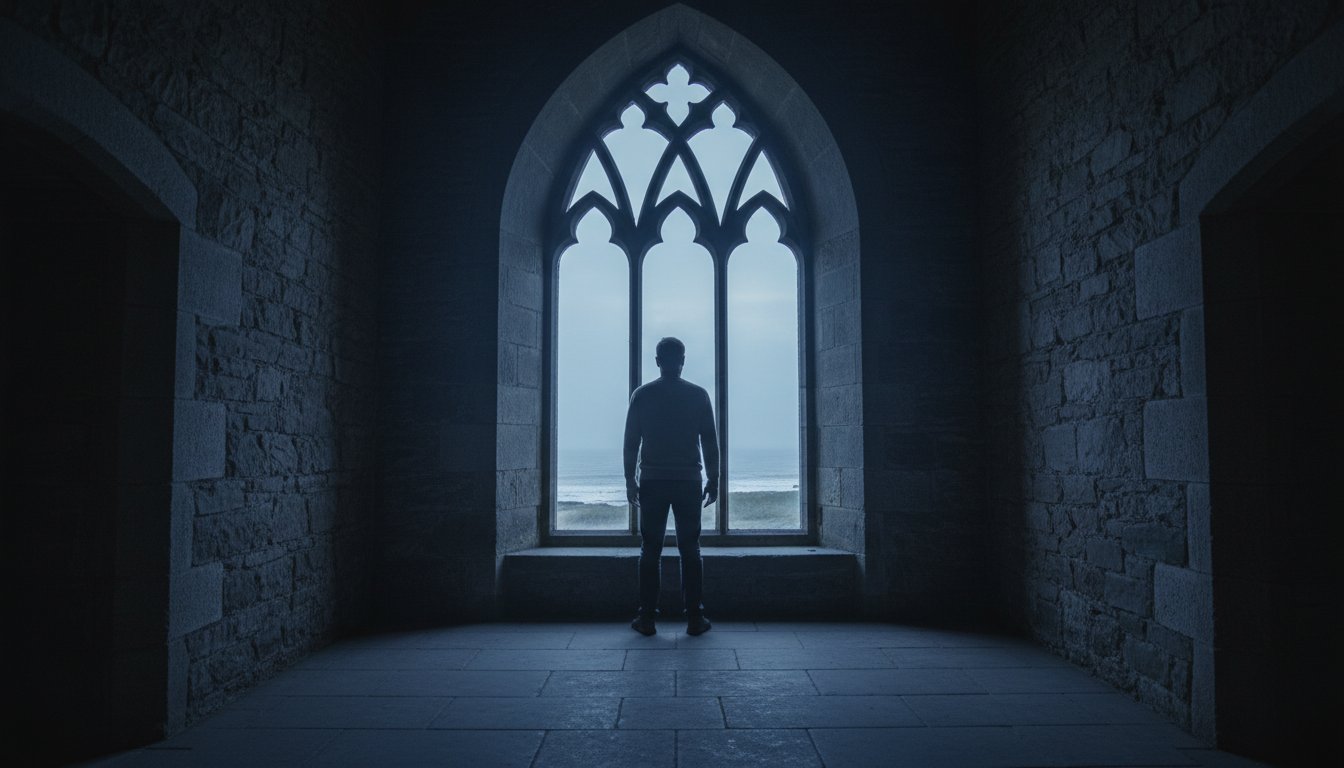
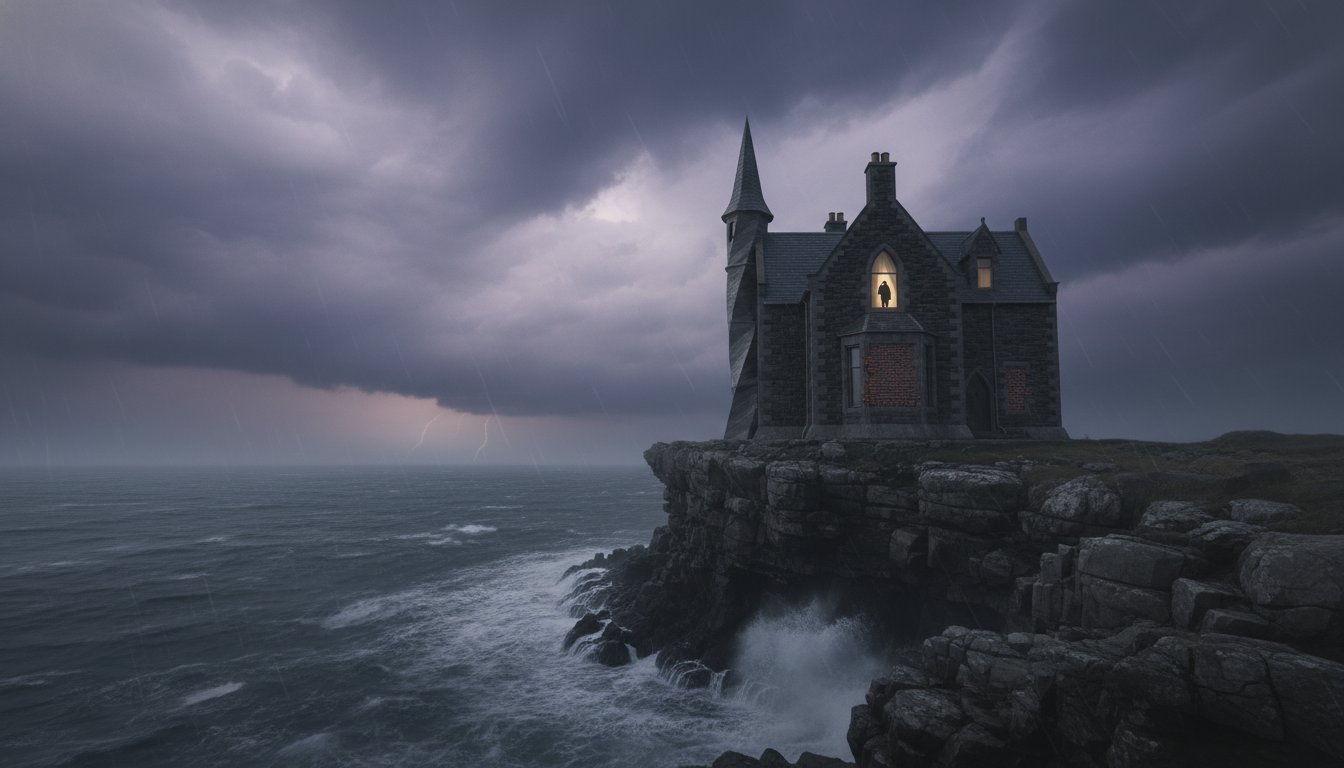
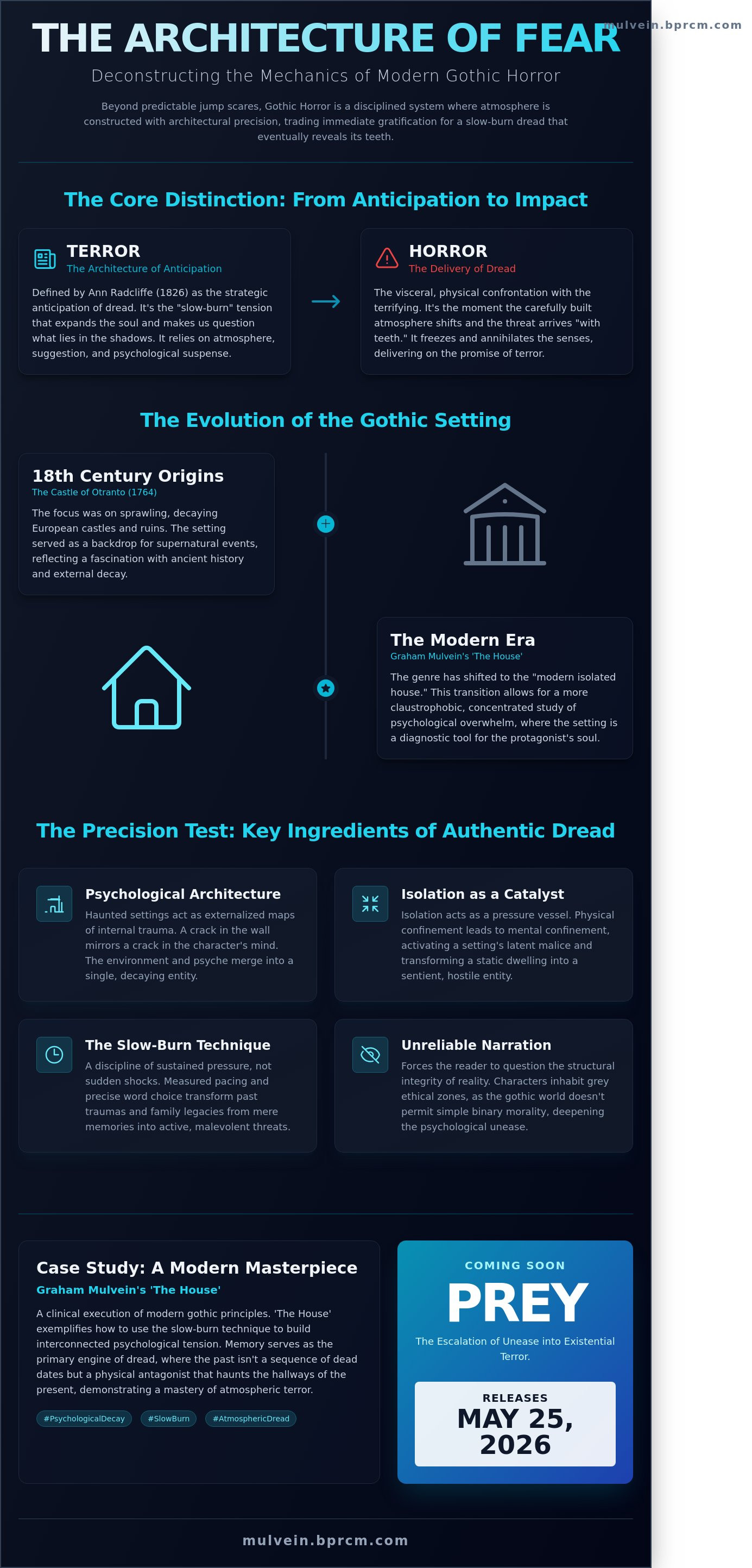
Gothic horror isn't a mere collection of tropes; it's a rigorous aesthetic system where environment and psyche merge into a single, decaying entity. It demands a strategic investigation into why structures fail, both physically and mentally. While the genre's foundations were laid in 1764 with the publication of The Castle of Otranto, the modern iteration has shifted its focus. We've moved away from the sprawling ruins of European castles toward the "modern isolated house." This transition allows for a more concentrated study of psychological overwhelm. By Defining Gothic Horror through the lens of architectural and mental decline, we see that the setting is never just a backdrop; it's a diagnostic tool for the protagonist's soul.
To analyze the specific mechanics of building tension within these claustrophobic spaces, watch this technical breakdown:
The genre relies on a precise distinction between terror and horror. Ann Radcliffe defined these terms in 1826, noting that terror is the strategic anticipation of dread that expands the soul. It's the slow-burn tension found in Graham Mulvein's The House. Horror, conversely, is the visceral delivery of that dread. It's the moment the atmosphere shifts into something "with teeth," a transition that will be central to the upcoming novel PREY, scheduled for publication on May 25, 2026. In this framework, memory serves as the primary engine. The past isn't a sequence of dead dates; it's a physical antagonist that haunts the hallways of the present.
The Essential Hallmarks of the Gothic Aesthetic
Haunted settings act as externalized maps of internal trauma. When a wall cracks in a gothic narrative, it's a sign of a process failure in the character's mind. This instability is often filtered through an unreliable narrator, a device that forces the reader to question the structural integrity of reality itself. Characters inhabit grey ethical zones because the gothic world doesn't permit binary morality. This nuanced approach to dread was a hallmark of the 1978 West End transfer of The Rocky Horror Show, where Graham Mulvein served as Stage Manager, ensuring the production's unsettling atmosphere remained consistent night after night.
Isolation as a Narrative Catalyst
Isolation functions as a pressure vessel. Physical confinement in a remote location inevitably leads to mental confinement; the walls of the house eventually become the boundaries of the character's psyche. The "Before the Rooms Woke" concept explores the dormant history of a setting, suggesting that the architecture is merely waiting for a human presence to activate its latent malice. Isolation functions as the predatory mechanism that transforms a static dwelling into a sentient, hostile entity. This transformation ensures that the protagonist's struggle is not just against a ghost, but against the very space they inhabit.
The Anatomy of Dread: Tropes and Psychological Tension
The effectiveness of gothic horror relies on a systematic dismantling of the reader's rational defenses. It isn't a genre of sudden shocks; it's a discipline of sustained pressure. This "slow-burn" technique requires a narrative strategy where word choice and pace are calibrated to create a sense of inevitable decay. In Graham Mulvein's The House, the tension isn't merely a byproduct of the plot but a structural requirement. By focusing on the measured accumulation of unease, authors can transform a simple setting into a pressure cooker of psychological distress. This process involves the intrusion of the past, where trauma and family legacies aren't just memories; they function as active, malevolent threats that refuse to remain buried.
The landscape in these narratives often transcends its role as a backdrop to become an antagonist with its own intent. Whether it's a crumbling estate or a desolate moor, the environment reflects the internal fractures of the characters. When the physical world begins to mirror a character's mental dissolution, the threat shifts from the external to the existential. This transition challenges the reader's sense of self, suggesting that the most terrifying monsters are the ones we carry within our own histories. This approach moves beyond simple physical danger to deliver a terror that feels inescapable because it's rooted in the protagonist's own identity.
Mastering Atmospheric Suspense
Atmospheric suspense is built through sensory precision. It's the sound of a floorboard settling after a character has stopped moving, or the metallic smell of old pipes in a basement. Silence is never empty; it's an unsettling undertone that signals something is watching from the periphery. Pacing the reveal is essential. The most effective monsters lose their power when fully illuminated, so keeping them in the shadows maintains the psychological grip. Writers seeking to refine these mechanics often benefit from professional creative consulting to ensure their atmospheric brand remains sharp and consistent. This level of technical oversight is what separates a generic ghost story from a masterclass in dread.
The Female Gothic and Modern Interpretations
The origins of the genre are deeply tied to the domestic sphere and the persecution of women, as noted in this brief history of gothic horror. Traditionally, the "damsel" was a victim of architectural and patriarchal traps. However, as we approach 2026, authors are subverting these tropes to create complex leads who possess agency despite their haunting circumstances. These modern characters don't just flee the house; they dismantle its secrets. This evolution is explored further in our sibling article, The Rise of Indie Horror Authors: Architects of Modern Dread in 2026. The upcoming novel PREY, scheduled for release on May 25, 2026, exemplifies this shift, offering a slow-burn experience that eventually reveals a terror "with teeth."
From Otranto to 2026: The Evolution of Modern Gothic Fiction
Horace Walpole’s 1764 publication of The Castle of Otranto established the foundational architecture of the genre. This initial framework relied on externalized threats and medieval aesthetics, yet it set the stage for a more sophisticated exploration of internal decay. By the 19th century, Mary Shelley and Bram Stoker refined these structures during the Victorian peak. They utilized the friction between rapid scientific advancement and traditional religious dogma to deepen the dread. These authors didn't just write stories; they engineered psychological systems where the environment mirrored the character's moral collapse. This evolution moved the gothic horror tradition away from mere ghost stories toward a rigorous, systemic examination of the human psyche.
The 20th-century transition marked a shift toward atmospheric precision. Cult classics and theatrical influences began to prioritize the "unseen" over the "shown." This period replaced the sprawling castles of the past with more intimate, claustrophobic settings. The focus became the process of the haunting rather than the ghost itself. By the time we reach the modern landscape of 2026, the genre has shed its reliance on gratuitous gore. Instead, it favors a clinical, psychological precision that forces the reader to question their own perception of reality.
The Theatrical Connection to Atmospheric Horror
The transition to modern atmospheric horror owes much to the technical rigors of the stage. Graham Mulvein’s professional history as the Stage Manager for the 1978 West End transfer of The Rocky Horror Show illustrates this vital connection. Theatre demands a precise manipulation of lighting, soundscapes, and physical space to maintain live tension. These mechanical processes inform the "controlled" voice found in high-end literature. While a stage production is confined to specific "Rooms," the printed page allows an author to expand that claustrophobia into the expansive, sentient "House." This structural discipline ensures that every creak and shadow serves a strategic purpose in the narrative flow.
Contemporary Masters of the Genre
Modern authors prioritize atmospheric tension over simple jump scares. This methodology requires absolute factual accuracy and historical grounding to build a believable world of horrors. You can explore the Graham Mulvein about page to see how a background in professional stage management and strategic thinking shapes this narrative approach. His work, including the perspective found in Graham Mulvein's The House, emphasizes a slow-burn build that feels both inevitable and earned. His upcoming novel, PREY, scheduled for release on May 25, 2026, exemplifies this shift. It functions as a calculated atmospheric piece that eventually transitions into a visceral existential terror; it's gothic horror "with teeth." This transition from psychological dread to physical threat is not accidental; it's a result of meticulous process management applied to storytelling.
Identifying Atmospheric Excellence: A Reader’s Guide to Quality Horror
Distinguishing between a standard thriller and a true work of gothic horror requires an analytical eye for structural intent. A thriller typically focuses on the 'what' and the 'when,' prioritizing external threats and rapid pacing to maintain engagement. In contrast, Gothic fiction prioritizes the 'why' and the 'where.' It treats the setting as a sentient participant in the narrative. To identify quality, apply the precision test. You should look for specific, impactful descriptions rather than vague generalizations. If an author describes a room as simply "scary," they've failed the test. High-caliber writing uses calculated details to construct a reality that's both recognizable and fundamentally wrong.
The effectiveness of a story depends on whether it earns its escalation. Many modern works rely on unearned shocks that provide a temporary jolt but lack long-term resonance. A superior narrative utilizes a slow-burn methodology, layering psychological pressure until the atmosphere develops "teeth." This phrase signifies the moment when atmospheric dread transitions into physical and existential terror. It's the difference between a cold breeze and a predatory strike. Every scare must be a logical consequence of the established tension; it shouldn't feel like a desperate attempt to keep the reader's attention.
What to Look for in a Modern Gothic Novel
Examine the prose first. Is the voice intelligent and slightly unsettling? The writing should feel controlled, as if the narrator knows exactly how much information to withhold. Look for depth in characterization. Protagonists in the best gothic horror aren't just victims; they're individuals grappling with grief, loss, or isolation. These emotional anchors ensure the horror feels earned. Finally, gauge the 'haunting' factor. If the narrative's logic or imagery persists in your mind 48 hours after finishing the book, the author has succeeded in creating a lasting psychological imprint.
Building Your Gothic Library
A robust collection balances historical foundations with modern indie perspectives. Independent authors often deliver a level of uncompromising dread that mainstream publishers avoid. This is where you find the most authentic explorations of human fragility. For those seeking examples of this professional standard, you can discover Graham Mulvein's books to see how modern gothic excellence is executed. His background, including his role as Stage Manager for the 1978 West End transfer of The Rocky Horror Show, informs a deep understanding of theatricality and tension. This expertise is evident in his upcoming novel, PREY, scheduled for publication on May 25, 2026. Writers like Mulvein prioritize the "process-first" approach to storytelling, ensuring the dread eventually bites.
Refine your understanding of psychological tension by exploring the structure of Graham Mulvein's The House today.
Graham Mulvein's The House and the Escalation of PREY
Graham Mulvein's contribution to modern gothic horror operates through a lens of clinical precision. His work doesn't rely on cheap jump scares or frantic pacing. Instead, it utilizes a systematic deconstruction of the protagonist's psyche. This methodology is rooted in a deep understanding of atmospheric control, likely sharpened during Mulvein's tenure as the Stage Manager for the 1978 West End transfer of The Rocky Horror Show. In his "World of Horrors" series, dread isn't a fleeting emotion; it's a structural component of the environment. Every memory and shadowed corner serves as a node in an interconnected network of terror that challenges the reader's sense of reality.
The House: A Masterclass in Isolation
In Graham Mulvein's The House: A Masterclass in Modern Gothic Horror, the setting functions as a predatory entity. The narrative voice maintains a controlled, unsettling undertone that refuses to offer the reader comfort. It's a study in how physical boundaries become psychological traps. Mulvein treats the house as a machine designed to harvest isolation. By removing external variables, he forces a confrontation with the unsettling undertone that defines his precise narrative style. This isn't accidental; it's a deliberate application of genre mechanics to achieve maximum psychological impact.
The "World of Horrors" series functions as a broader strategic framework. It builds a universe where dread is the primary currency. Mulvein explores how memory can be weaponized against the self, creating a feedback loop of anxiety that mirrors real-world psychological stressors. This structured approach ensures that the horror remains grounded in a recognizable, albeit terrifying, logic.
PREY: When Atmospheric Horror Reveals Its Teeth
The trajectory of Mulvein's work leads directly to the highly anticipated release of PREY on May 25, 2026. While his previous titles established a foundation of slow-burn tension, PREY represents a significant evolution in his literary process. This upcoming novel transitions from the quiet dread of the gothic horror tradition into a visceral form of terror that finally reveals itself "with teeth." It's an escalation from the abstract to the existential. Readers can expect a narrative that maintains its intellectual rigor while delivering a physical impact that's both sharp and unforgiving. To track the development of this project and access exclusive updates, visit the official website for the latest insights into Mulvein’s expanding universe of dread.
Transcending the Architecture of Modern Dread
Mastering the mechanics of gothic horror requires more than just crumbling estates and shadows; it demands a rigorous understanding of how psychological dread integrates with physical space. The genre's evolution from the 18th century to the present day shows that atmospheric excellence isn't accidental. It's the result of structural precision and a calculated escalation of tension that mirrors the complexity of a well-oiled machine. You've seen how memory and fear serve as the foundation for narratives that endure through the decades.
Graham Mulvein applies this systematic approach with the authority of a seasoned professional. His tenure as the Stage Manager for the 1978 West End transfer of The Rocky Horror Show offered him a unique perspective on the orchestration of live terror. This expertise defines Graham Mulvein's The House, a work recognized as a modern gothic masterpiece. His next project, PREY, arriving on May 25, 2026, builds on this legacy. It's a slow-burn experience that eventually strikes with teeth. You can explore these narratives and access exclusive content through the 'Before the Rooms Woke' initiative today.
Step into the World of Horrors and discover Graham Mulvein's The House
The threshold is open for those ready to confront the logic of their own fears.
Frequently Asked Questions
What is the main difference between gothic horror and regular horror?
Gothic horror distinguishes itself by focusing on the intersection of ancestral trauma, decaying environments, and psychological dread. While regular horror often prioritizes immediate physical threats or shock, the gothic tradition emphasizes a 3-part structure of isolation, past secrets, and a slow-burn atmosphere. It's a strategic narrative choice that values the lingering weight of history over the fleeting impact of a sudden scare.
Is gothic horror always about haunted houses?
No, gothic horror isn't confined to physical structures; it centers on the "haunted" psyche or social landscape. While Horace Walpole's 1764 novel established the architectural trope, modern works like Graham Mulvein's The House use domestic spaces to explore internal decay. The setting serves as a vessel for the character's mental state, meaning a corporate office or a digital space can function as a gothic site.
What are some classic examples of gothic horror every fan should read?
Every serious reader should study Mary Shelley's Frankenstein (1818), Bram Stoker's Dracula (1897), and Shirley Jackson's The Haunting of Hill House (1959). These 3 texts define the genre's evolution from Romanticism to psychological realism. They provide the foundational blueprints for how atmosphere and setting interact to create a sense of inevitable doom that remains relevant in modern fiction today.
How does modern gothic horror differ from the 18th-century originals?
Modern gothic horror replaces external monsters with internal psychological fractures and contemporary societal anxieties. 18th-century originals focused on supernatural threats in ruined abbeys, but today's terror is existential. This evolution often results in a narrative that transitions into a physical reality "with teeth," as seen in the upcoming novel PREY, scheduled for publication on May 25, 2026.
Why is atmosphere more important than jump scares in gothic fiction?
Atmosphere builds a sustainable psychological tension that jump scares can't maintain over a long duration. A jump scare lasts 2 seconds, but a well-crafted atmosphere lingers for the entire 300-page narrative. This strategic approach ensures the reader remains in a state of constant, measured unease. It's about the process of building dread rather than delivering a single, momentary peak of adrenaline.
Can a gothic horror story have a contemporary setting?
Yes, gothic horror successfully adapts to 21st-century environments like urban apartments or high-tech laboratories. The core requirement isn't a medieval castle but a sense of isolation and the "unhomely" feeling. Graham Mulvein's 1978 experience as Stage Manager for the West End transfer of The Rocky Horror Show proved that even modern, unconventional settings can effectively house traditional gothic archetypes and themes.
What role does the 'unreliable narrator' play in gothic novels?
The unreliable narrator serves as the primary mechanism for destabilizing the reader's sense of objective reality. By filtering events through a perspective compromised by trauma or obsession, the author forces the audience to question every detail. This creates the psychological dread essential to the genre. It's a precise tool used to mirror the protagonist's internal chaos within the structure of the story itself.
How can I start writing my own gothic horror story?
Start by identifying a specific "ghost" from the past, such as a family secret or a historical debt, and map its influence on a modern protagonist. Focus on a slow-burn progression that prioritizes mood over action. Ensure your narrative culminates in a visceral confrontation that's truly "with teeth" to satisfy the contemporary reader's expectation for both atmospheric depth and existential terror.