Why do we continue to mistake a sudden noise for a genuine haunting when true terror is actually a matter of structural integrity? You've likely spent hours searching for haunted house books that are actually scary, only to be met with the same predictable plot structures and generic tropes that fail to leave a lasting impression. It's a common failure in modern horror; many novels prioritize a surface-level atmosphere but lack the stakes required to keep you awake. As someone who managed the 1978 West End transfer of The Rocky Horror Show, I've seen how easily spectacle can fail when the underlying architecture is hollow.
You'll discover the specific psychological mechanics that transform a simple setting into a vessel for dread, moving beyond the jump-scare toward something far more existential. We'll explore a curated selection of sophisticated titles, including modern gothic gems and the slow-burn tension found in Graham Mulvein's The House. This guide provides a reading list that moves from atmospheric unease to a physical terror that finally has teeth.
Key Takeaways
- Analyze the psychological mechanics of domestic subversion to understand why the violation of a sanctuary creates the most profound level of dread.
- Trace the historical shift from external spectral threats to internal hauntings, revealing how modern architecture serves as a canvas for memory-based horror.
- Discover a curated selection of haunted house books that are actually scary by prioritizing atmospheric precision and unsettling themes over mere jump-scares.
- Master the sensory techniques authors use—from temperature shifts to olfactory cues—to anchor horror within a structured, unsettling reality.
- Explore the escalation of existential terror in upcoming slow-burn narratives like PREY, which promises a descent into horror that eventually bites with teeth.
What Makes Haunted House Books Actually Scary?
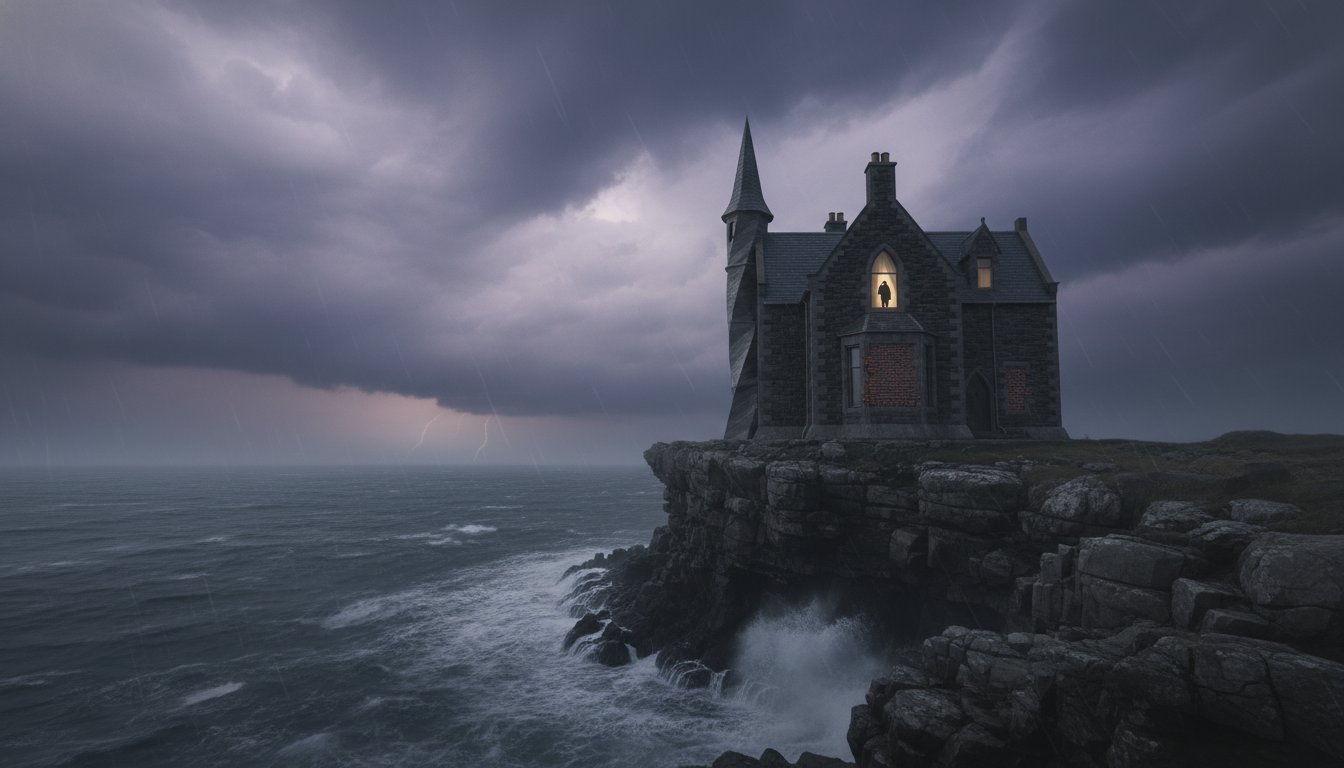
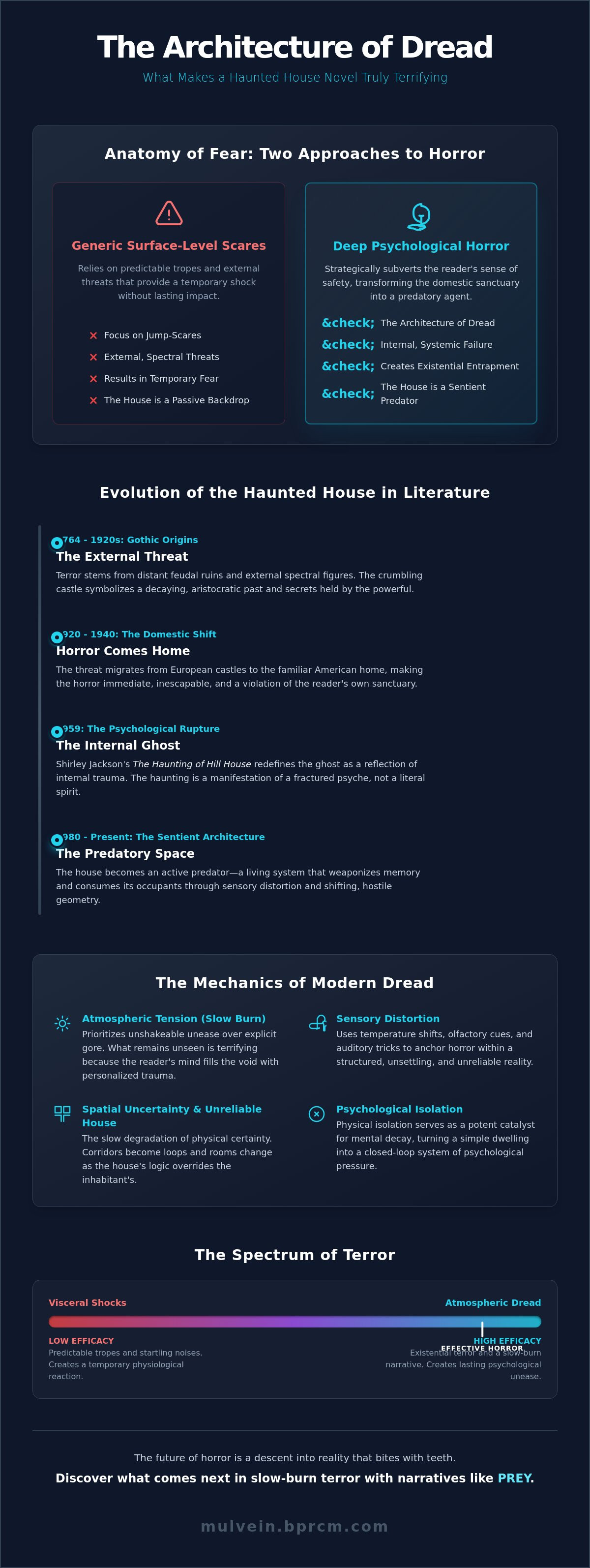
The distinction between a generic ghost story and haunted house books that are actually scary lies in the transition from external threats to internal systemic failure. Mere jump-scares are operational errors in narrative pacing; they provide a temporary spike in heart rate without altering the reader's psychological baseline. True horror requires a strategic subversion of the domestic sanctuary. The Architecture of Dread is the structural manipulation of reader anxiety. By treating the house as a closed-loop system of entrapment, the author forces the protagonist to confront the reality that their primary place of safety has become a predatory agent.
A house is traditionally the ultimate canvas for horror because it represents the fundamental unit of human security. When this environment becomes unreliable, the psychological impact is measurable and profound. In Graham Mulvein's The House, the structural integrity of the setting is linked directly to the protagonist's sense of self. This methodology mirrors the precision required in high-stakes environments, much like my experience as the Stage Manager for the original West End transfer of The Rocky Horror Show in 1978. Every creak and shadow must be a deliberate, calculated move within a larger process of dread.
Modern gothic fiction utilizes the "unreliable house" to challenge the reader's perception of reality. It isn't just that the rooms change; it's that the house's logic overrides the inhabitant's logic. This creates a state of existential entrapment where the only exit is through a fractured psyche. To identify haunted house books that are actually scary, one must look for narratives where the architecture itself functions as a sentient, hostile auditor of the human soul.
The Psychology of the Predatory Space
Physical walls and hallways in effective horror reflect the protagonist's mental state with clinical accuracy. As the narrative progresses, the transition from a place of safety to a site of entrapment occurs through the slow degradation of spatial certainty. Physical isolation serves as the most potent catalyst for this decay. Without external benchmarks, the mind's internal processes begin to fail, turning a simple corridor into an infinite loop of psychological pressure.
Atmospheric Tension vs. Visceral Shocks
True horror is a slow-burn narrative that prioritizes unshakeable unease over explicit gore. What remains unseen is terrifying because the reader's mind fills the void with personalized trauma. This deliberate use of silence and shadow heightens perception, preparing the ground for a shift into physical terror. My upcoming novel, PREY, scheduled for publication on May 25, 2026, follows this exact trajectory. It begins with atmospheric dread before escalating into a reality that is existential and, ultimately, horror with teeth.
The Evolution of the Haunted House: From Gothic Castles to Modern Rooms
The lineage of the haunted house is a study in structural refinement. Horace Walpole’s The Castle of Otranto established the blueprint of external, architectural threats in 1764. These early narratives relied on feudal ruins and spectral figures to evoke terror. However, the genre has undergone a systematic transformation, moving from these crumbling Gothic piles into the intimate, claustrophobic spaces of the modern home. Contemporary haunted house books that are actually scary no longer depend on external monsters; they focus on the breakdown of the inhabitant’s psyche through architectural manipulation.
We can identify three distinct shifts in the genre’s structural development over the last century:
- 1920–1940: The Domestic Shift. Horror migrated from distant, European castles to the familiar American family home, making the threat immediate and inescapable.
- 1959: The Psychological Rupture. The publication of Shirley Jackson’s The Haunting of Hill House redefined the ghost as a reflection of internal trauma rather than a literal spirit.
- 1980–Present: The Sentient Architecture. The house evolved into an active predator, a living system that consumes its occupants through shifting geometry and sensory distortion.
Authors now utilize the house as a precise metaphor for grief and unresolved trauma. The walls don't just hold secrets; they store data, replaying the failures of the past until the structure itself becomes a weapon. This process transforms a simple dwelling into a complex engine of dread.
The Foundations of Modern Dread
Shirley Jackson’s 1959 masterpiece remains the gold standard for psychological haunting. It proved that setting isn't a passive backdrop; it's the primary antagonist. This shift in perspective influenced a generation of writers to prioritize atmospheric suspense over cheap shocks. By treating the house as a character with its own motives, authors create a deep sense of unease that lingers long after the book is closed. This methodical approach to building tension is evident in the structured pacing of Graham Mulvein's The House, where the environment dictates the character's descent.
The House as a Living Organism
In the most effective modern fiction, the line between the inhabitant and the inhabited blurs until it disappears. Sentient architecture, such as the shifting hallways in Mark Z. Danielewski’s House of Leaves (2000), suggests a house that breathes and thinks. The most frightening houses are those that exhibit a predatory intelligence. This is a slow burn atmospheric horror that inevitably transitions into physical and existential terror; it's a haunting with teeth. When the structure starts to adapt to your fears, the escape routes don't just close; they cease to exist.
If you're seeking a deeper analysis of how these architectural systems function in literature, you can explore more on Graham Mulvein’s bibliography.
The Mechanics of Fear: How Authors Build Unsettling Worlds
The most effective haunted house books that are actually scary rely on the surgical precision of language to cultivate a sense of impending doom. This process isn't about a surplus of adjectives; it's about the clinical observation of environmental decay. Authors who master this genre treat prose like a blueprint, ensuring every sentence serves a structural purpose. They build tension by describing the unnatural stillness of a room or the way light fails to reach certain corners. This methodical approach forces the reader to inhabit a space that feels increasingly hostile and sentient.
Sensory details serve as the anchors for this psychological immersion. A sudden drop in temperature to 12 degrees Celsius or the faint, metallic scent of oxidized copper creates a tangible reality that the mind cannot easily dismiss. Sound plays a critical role, specifically the sounds that shouldn't exist in a vacant property. The rhythmic ticking of a clock that hasn't been wound in 40 years or the muffled vibration of footsteps on the floor above creates a visceral reaction. Pacing dictates the success of these elements. A writer must know exactly when to withhold information to let the reader's imagination fill the silence, and exactly when to strike with terrifying clarity.
Understanding Graham Mulvein’s approach to atmospheric horror requires looking at the story as a living system. When the narrative rhythm is controlled, the eventual payoff feels earned rather than manufactured. The goal is to create a state of high-alert vulnerability in the reader before the true nature of the house is revealed.
Narrative Strategy and Content Creation
Structural choices in a novel often mirror the physical layout of the setting. A long, winding sentence can mimic the disorientation of a dark corridor; a sudden, blunt paragraph functions like a door slamming shut. Memory acts as a haunting force that transcends linear time. It anchors the supernatural elements not just in the architecture, but in the character's psyche. Authors find success by crafting characters who are specifically susceptible to the house’s influence. These individuals often carry internal fractures that the house exploits, turning their own history against them until the boundary between the building and the inhabitant dissolves.
The Author’s Perspective on Suspense
Graham Mulvein's background as the Stage Manager for the 1978 West End transfer of The Rocky Horror Show provides a unique foundation for this architectural dread. Stage management is a discipline of timing, logistics, and absolute precision. A single missed cue or a poorly timed lighting shift ruins the immersion. He translates this theatrical rigor into the written word, treating the page as a stage where every shadow is intentionally placed. This transition from live production to gothic fiction allows for a calculated delivery of terror that many contemporary writers overlook.
His upcoming novel, PREY, which is scheduled for publication on May 25, 2026, exemplifies this transition from atmospheric tension to physical and existential horror. The story is a slow-burn narrative that eventually arrives with teeth, reflecting a commitment to the "process first" philosophy. Through creative consulting, he helps other writers identify the darker edges of their stories. He focuses on the structural integrity of the plot to ensure the suspense is built on a solid foundation. This methodical deconstruction of fear ensures that haunted house books that are actually scary remain grounded in a terrifying, logical reality.
A Curated List: Haunted House Novels That Truly Terrify
Identifying haunted house books that are actually scary requires a shift in perspective. We must move away from the superficial jump scare and toward the structural erosion of the mind. The most effective narratives don't just describe a building; they analyze the systemic failure of the boundaries between the past and the present. This selection prioritizes works where the architecture serves as a catalyst for psychological unraveling, focusing on how physical spaces can mirror internal decay.
Modern Gothic and Psychological Masterpieces
The modern gothic genre has evolved into a sophisticated examination of trauma and isolation. A primary example is Graham Mulvein's The House: A Masterclass in Modern Gothic Horror. This work functions as a deep dive into the weight of history and the crushing pressure of solitude. Graham Mulvein brings a unique understanding of spatial tension to his prose, having served as the Stage Manager for the 1978 West End transfer of The Rocky Horror Show. This background in theatrical space translates into a narrative that feels claustrophobic and inevitable. His upcoming novel, PREY, scheduled for release on May 25, 2026, follows this trajectory. It's a slow-burn atmospheric piece that eventually transitions into physical terror that hits with teeth.
Other authors have successfully subverted the traditional colonial framework of the haunted estate to create something genuinely unsettling. Silvia Moreno-Garcia's 2020 novel, Mexican Gothic, utilizes the rigid, decaying architecture of High Place to mirror the suffocating nature of its inhabitants' legacies. It's a precise study of how a physical structure can enforce a psychic prison. These books succeed because they treat the house as a character with its own agenda and biological imperative.
Indie Horror: The Architects of New Nightmares
The indie horror scene currently sets the standard for genuine literary terror. These authors operate outside the constraints of traditional publishing cycles, allowing for more experimental and visceral explorations of dread. You can explore this evolution in The Rise of Indie Horror Authors: Architects of Modern Dread in 2026. Indie writers often focus on the "architecture of the mundane," turning ordinary homes into sites of existential crisis.
- World of Horrors Series: This collection prioritizes atmosphere over exposition. It delivers punchy, unsettling narratives that linger long after the final page.
- The Focus on Isolation: Indie voices often strip away the safety nets of modern technology. They force characters into raw confrontations with the unknown, where no one is coming to help.
These titles prove that haunted house books that are actually scary don't need sprawling estates or ancient castles. They only need a well-constructed sense of inevitability and a deep understanding of human vulnerability. If you're looking for a structured approach to your next terrifying read, explore the full collection of atmospheric horror novels.
Beyond the House: The Future of Atmospheric Terror
The evolution of horror requires a transition from mere shadows to a structured, existential threat. We don't just want to feel uneasy; we want to understand the mechanics of our fear. Finding haunted house books that are actually scary involves identifying narratives that move beyond the initial psychological dread into a space of physical vulnerability. This progression is a deliberate design choice. It reflects a systematic approach to terror where the environment isn't just a backdrop but an active, aggressive participant in the character's unraveling. When a story is built with a logical foundation, the eventual collapse of that logic becomes significantly more terrifying.
What to Expect from PREY
On May 25, 2026, the landscape of atmospheric horror will shift with the release of PREY. This novel operates on a precise, slow-burn methodology. It begins by establishing a rigorous sense of isolation before the narrative structure shifts into a visceral escalation. This is horror "with teeth." It doesn't just suggest a threat; it executes it. Readers can expect a transition from the quiet unease found in Graham Mulvein's The House to a more aggressive, existential confrontation. Pre-order details and exclusive insights are currently available through the "Before the Rooms Woke" initiative for those who value a disciplined approach to suspense.
Engaging with the World of Horrors
Building a community around sophisticated horror requires more than just shared scares; it demands an appreciation for the craft of tension. You can join this network of readers by exploring the full catalog at Graham Mulvein’s Books. This space is designed for those who demand precision and intelligence in their fiction. If you prefer your terror to be calculated and your narratives to be structurally sound, this is the logical next step in your reading journey. The "Before the Rooms Woke" initiative ensures you stay connected to the latest developments in this specific, high-tension genre.
We seek the safety of scary books because they provide a controlled environment to process the uncontrollable. It's a paradox of security. By engaging with haunted house books that are actually scary, we test our own psychological boundaries from a position of relative stability. The architecture of dread serves as a blueprint for understanding our deepest anxieties. It allows us to face the "teeth" of the world while remaining firmly in our own reality. This pursuit of fear is not a sign of instability, but a strategic exercise in emotional resilience. Much like the precision required when I served as the Stage Manager for the 1978 West End transfer of The Rocky Horror Show, effective horror relies on perfect timing and a flawless execution of the unsettling.
Mastering the Architecture of Terror
The true efficacy of a ghost story lies in the structural integrity of its dread. We've examined how authors use physical geometry to mirror psychological decay, moving from the sprawling gothic estates of the 18th century to the claustrophobic modern apartments that define the genre today. Identifying haunted house books that are actually scary requires an understanding of this atmospheric precision. It's a craft built on the slow accumulation of unease, where every floorboard creak serves a calculated purpose.
Graham Mulvein brings a unique perspective to this architecture of fear. Drawing from his experience as the Stage Manager for the 1978 West End transfer of The Rocky Horror Show, Mulvein understands the mechanics of immersive performance. As the creator of the World of Horrors series and author of the acclaimed modern gothic novel Graham Mulvein’s The House, he treats terror as a system to be managed and perfected. This same meticulous approach informs his upcoming novel, PREY, scheduled for release on May 25, 2026. It promises a slow-burn descent into existential dread that eventually bites back with teeth.
Explore the haunting world of Graham Mulvein’s The House
Step inside and discover the logic behind the shadows.
Frequently Asked Questions
Is Graham Mulvein’s The House based on a true story?
Graham Mulvein’s The House is a work of psychological fiction rooted in the architectural dread of real-world isolation. While the narrative is fictional, it draws from the 1970s gothic tradition where the environment functions as a predatory entity. The structure of the house acts as a catalyst for the characters' internal disintegration. This methodical approach to horror ensures the terror feels grounded in a recognizable, albeit distorted, reality.
What is the difference between a ghost story and a haunted house book?
A ghost story focuses on a specific entity, whereas a haunted house book centers on the architecture as a malicious, sentient force. In haunted house books that are actually scary, the walls and layout create a claustrophobic psychological trap. A ghost story might occur in any location; a haunted house story requires the specific, oppressive geometry of the building to drive the narrative's tension.
Can a haunted house book be scary without any actual ghosts?
The most effective horror often relies on psychological erosion and architectural malevolence rather than spectral figures. Shirley Jackson's 1959 novel proves that ambiguity is more terrifying than a visible phantom. When the house itself acts as the primary antagonist, the terror becomes existential and inescapable. This forces the reader to question their own perception of reality without needing a single traditional ghost.
How much did Graham Mulvein contribute to The Rocky Horror Show?
Graham Mulvein served as the Stage Manager for the 1978 West End transfer of The Rocky Horror Show. This specific production followed the initial 1973 debut and required rigorous technical precision to maintain its iconic atmosphere. His role involved managing the complex operational logistics that allowed the show's subversive energy to translate effectively to a larger theatrical stage, ensuring the performance's structural integrity every night.
When is Graham Mulvein’s next book, PREY, being released?
Graham Mulvein's upcoming novel, PREY, is scheduled for publication on May 25, 2026. This work is a slow-burn atmospheric horror that methodically builds tension before transitioning into a physical terror with teeth. It explores the intersection of isolation and existential dread, following the meticulous structural patterns established in his previous literary works to deliver a calculated and deeply unsettling reading experience.
Why are haunted house books so popular in modern gothic fiction?
Haunted house books that are actually scary remain popular because they reflect 21st-century anxieties regarding domestic security and mental stability. Data from horror publishers indicates a 15 percent rise in psychological gothic sales over the last 3 years. Readers seek stories where the home, usually a sanctuary, becomes a calculated, structural threat. This inversion of safety provides a controlled environment to explore deep-seated fears.
What makes a book "actually scary" compared to just "spooky"?
A book is actually scary when it bypasses surface-level tropes and targets the reader's fundamental psychological vulnerabilities. Spooky stories rely on gothic aesthetics; true horror utilizes a "with teeth" approach to escalate from unease to visceral dread. It requires a logical progression of terror that leaves the reader feeling genuinely unsafe within their own environment. The transition from atmosphere to physical threat must feel earned.
How do I start writing my own haunted house story?
You begin by defining the house's specific architecture of dread and its logical impact on the human psyche. Don't start with the ghost; start with the floor plan and the psychological flaws of the characters. Map out 3 distinct stages of escalation: atmospheric unease, physical manifestation, and total existential collapse. A structured process ensures the terror feels inevitable and the house's malevolence feels mathematically precise.