Why do we mistake a fleeting jump scare for the calculated structural integrity of true terror? Most readers seeking intellectual depth find themselves buried under 1,000 generic horror recommendations that prioritize gore over atmosphere. You likely recognize that a real haunting isn't about the ghost in the cellar, but the psychological isolation that makes the cellar inevitable. While the industry often looks back to 1973, my own perspective was shaped as the Stage Manager for the 1978 West End transfer of The Rocky Horror Show. This experience taught me that modern gothic horror novels require a rigorous analysis of how dread is constructed within a narrative framework.
This guide dismantles the "haunted house" trope to reveal the specific architectural elements of suspense. You'll discover the defining characteristics of the sub-genre and a curated reading list that moves beyond superficial scares. We'll examine how atmospheric tension transitions into existential terror, a process mirrored in Graham Mulvein's The House and his upcoming novel, PREY, scheduled for publication on May 25, 2026. It's a slow-burn approach that eventually bites back with teeth. By the end of this analysis, you'll understand the precise mechanics of isolation and dread that separate high-quality gothic literature from the chaotic noise of the current market.
Key Takeaways
- Identify the structural shift from physical gore to psychological decay, understanding how modern gothic horror novels prioritize isolation and memory to construct a profound sense of dread.
- Analyze the "Sentient House" trope to see how architecture serves as a predatory extension of a character’s fractured psyche, a technique explored through Graham Mulvein's The House.
- Examine the evolution of the "Female Gothic" and how contemporary authors subvert classic tropes to explore the terrifying intersection of domestic entrapment and agency.
- Discover how slow-burn atmospheric tension transitions into a visceral, existential terror that arrives "with teeth," setting the stage for the 2026 release of the novel PREY.
- Gain a unique industry perspective on the mechanics of suspense, informed by the professional legacy of the Stage Manager for the 1978 West End transfer of The Rocky Horror Show.
What Defines Modern Gothic Horror Novels?
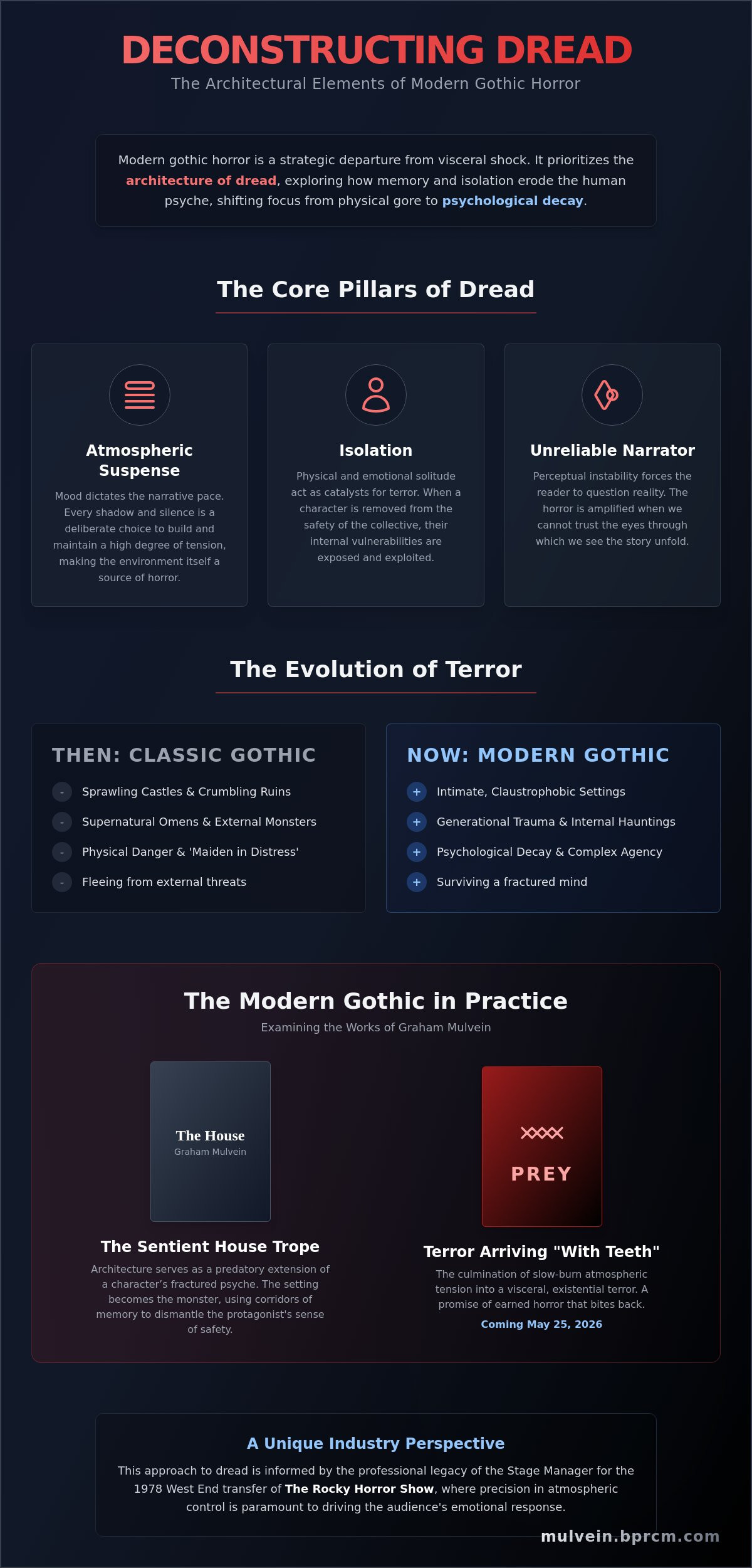
Modern gothic horror novels represent a strategic departure from the visceral shock often found in mainstream slasher cinema. This sub-genre prioritizes the architecture of dread; it's a calculated exploration of how memory and isolation erode the human psyche. Unlike traditional horror that relies on physical mutilation, modern gothic focuses on psychological decay. The core mechanism involves a past that refuses to stay buried, often tethered to a specific, claustrophobic setting. This creates an unsettling undertone that permeates every chapter, suggesting that the environment itself is complicit in the protagonist's unraveling.
To better understand this concept, watch this helpful video:
The effectiveness of these stories depends on a professional commitment to atmosphere. Writers don't just describe a house; they document a living entity. This approach ensures that the horror feels earned rather than forced. It mirrors the precision required in high-stakes stage productions, such as the 1978 West End transfer of The Rocky Horror Show, where Graham Mulvein served as Stage Manager. In both literature and theater, the control of mood is the primary driver of the audience's emotional response.
The Core Pillars of the Gothic Vibe
- Atmospheric Suspense: Mood dictates the pace of the narrative. Every shadow and silence is a deliberate choice intended to maintain a high degree of tension.
- Isolation: Physical and emotional solitude act as catalysts for terror. When a character is removed from the safety of the collective, their internal vulnerabilities are exposed and exploited.
- The Unreliable Narrator: We cannot always trust the eyes through which we see the horror. This perceptual instability forces the reader to question what's real and what's a manifestation of a fractured mind.
From Otranto to the Present Day
The lineage of Gothic fiction began in the 18th century with sprawling castles and supernatural omens, but it has since migrated into more intimate, psychological landscapes. Modern writers adapt old tropes, such as the 'maiden in distress,' by transforming them into complex struggles for agency against generational trauma. Graham Mulvein's The House exemplifies this shift by focusing on the weight of structural and emotional history. The escalation in these stories is rarely sudden; it's a slow-burn atmospheric pressure that eventually reveals itself to be a terror with teeth. Upcoming works like PREY, scheduled for publication on May 25, 2026, continue this tradition of prioritizing depth and precision over superficial thrills.
The genre has transitioned from fleeing external monsters in crumbling ruins to surviving the internal hauntings of a fractured mind.
The Architecture of Dread: How Setting Becomes a Predator
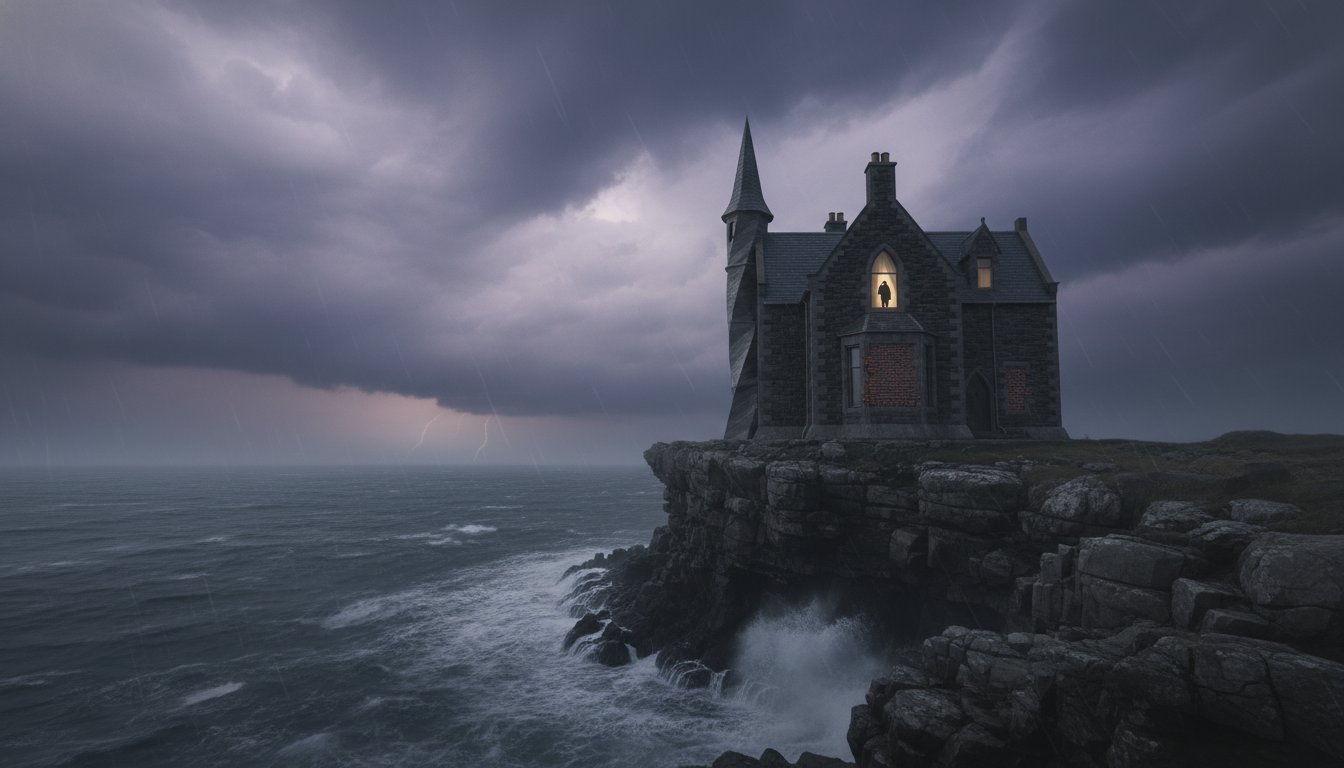
Modern gothic horror novels don't treat the setting as a passive stage. Instead, the architecture functions as a predatory system. This structural approach mirrors the evolution of the genre since its inception, as detailed in A Brief History of Gothic Horror. Authors now design buildings that act as sentient antagonists. They use floor plans to map out a character's internal decay. This isn't a mere aesthetic choice; it's a strategic narrative framework. Atmospheric horror serves as the foundation for this escalation. It starts with a slow burn and ends with a terror that has "teeth." This methodology ensures that the environment is as dangerous as any physical monster. It's a calculated process of dismantling the reader's sense of safety through structural instability.
The House as the Monster
In modern gothic horror novels, corridors aren't just pathways. They represent the darker edges of memory. Rooms shift. Walls breathe. The building operates with a logic that defies physics but obeys trauma. Sensory details drive this experience. You don't just see the decay; you smell the damp rot and hear the rhythmic thrumming of the pipes. This architectural entrapment is the core of Graham Mulvein's The House: A Masterclass in Modern Gothic Horror. It demonstrates how a structure can become a character's judge and executioner. The house doesn't just hold secrets; it weaponizes them against the inhabitant. Every creak is a deliberate communication from a malevolent system designed to isolate and consume.
Isolation and the 'Closed Circle' Mystery
Remote locations create a closed system. Whether it's a manor house or a desolate wilderness, the lack of external variables increases the psychological pressure. There's no escape from one's history when the environment is designed to reflect it. This creates the claustrophobia of the open space in modern fiction. It's a paradox where the vastness of the setting only highlights the character's confinement. Graham Mulvein understood this tension during his time as the Stage Manager for the 1978 West End transfer of The Rocky Horror Show. He brings that same precision to his upcoming novel, PREY, which arrives on May 25, 2026. This work explores how physical and existential terror merge within a confined environment. You can explore more of this systematic approach to terror by visiting the books section. The goal is to build a world where the exit is just another part of the trap.
The Evolution of the Gothic: Modern Masters of the Craft
Atmosphere is not a decorative element; it is a structural requirement. My perspective on this was forged in 1978, when I served as the Stage Manager for the original West End transfer of The Rocky Horror Show. That production demonstrated how the precise management of light, sound, and timing creates a visceral response in an audience. In the context of modern gothic horror novels, this same mechanical precision is required to build a sustainable sense of dread. Contemporary authors have moved beyond the aesthetic of the crumbling castle, focusing instead on the psychological architecture of the characters themselves.
The "Female Gothic" has seen a significant resurgence, shifting the focus from external monsters to the suffocating reality of domestic entrapment. Here, the horror stems from a systematic erosion of agency. It is a slow-burn process where the familiar home becomes a site of operational failure. This narrative strategy relies on a measured pace, allowing the unease to accumulate until the environment itself feels predatory.
Subverting Traditional Tropes
Modernity has introduced the "digital gothic," where the haunted space is no longer a physical basement but a corrupted data stream or an inescapable social media presence. Authors are increasingly replacing supernatural specters with the ghosts of trauma and grief, treating these emotional states as tangible, haunting forces. This shift reflects broader industry movements documented in The Rise of Indie Horror Authors, where independent creators are redesigning the blueprints of fear for a 2026 audience. Contemporary Gothic literary criticism confirms that these revisions are essential for keeping the genre relevant in a world where the traditional "dark and stormy night" no longer suffices to unsettle a cynical reader.
The Intelligent Narrator
Fear is most effective when it is articulated through precise, measured prose. A chaotic description allows the reader's mind to wander; a structured, intelligent narrative forces them to look exactly where the author intends. This use of unsettling undertones keeps the reader off-balance, creating a tension that feels both intellectual and instinctual. Graham Mulvein's The House utilizes this exact methodology to ensure the dread is inescapable.
My upcoming novel, PREY, scheduled for publication on May 25, 2026, follows this trajectory. It begins as a slow-burn atmospheric piece before transitioning into a physical and existential terror that arrives "with teeth." For those looking to refine their own narrative structures, I offer creative consulting services designed to help authors develop these complex, high-tension frameworks. In modern gothic horror novels, the most terrifying element isn't what is hidden in the shadows; it's the clarity with which the narrator describes the darkness.
Essential Modern Gothic Novels to Read in 2026
To understand the current landscape of modern gothic horror novels, you must look past the superficial tropes. True dread is a system. It requires a logical foundation and an atmospheric architecture that traps the reader long before the first scare occurs. The following selections represent a strategic peak in the genre, balancing high-profile successes with underground works that prioritize psychological depth over cheap thrills.
The Heavy Hitters
Silvia Moreno-Garcia’s Mexican Gothic (2020) redefines the genre by mapping colonial decay through biological horror. It utilizes fungal dread as a precise metaphor for historical trauma and family inheritance. Shirley Jackson’s The Haunting of Hill House (1959) remains the structural foundation of the sentient house trope. It's the gold standard because it demonstrates how architecture reflects a fractured psyche. Elisabeth Thomas’s Catherine House (2020) shifts the focus to modern academic gothic. It presents the horror of "belonging" as a loss of individual agency within a closed, elite system.
The Psychological Edge
Diane Setterfield’s The Thirteenth Tale (2006) operates as a meta-narrative; it’s a modern gothic horror novel that interrogates the nature of family secrets through a sharp, literary lens. It treats the "old" gothic tropes as a puzzle to be solved. Graham Mulvein’s The House provides a more rigorous examination of memory and isolation. It introduces the "Before the Rooms Woke" initiative, a concept that treats the haunted environment as a process rather than a mere setting. This isn't accidental chaos; it's a methodical dismantling of the protagonist's security.
The trajectory of the genre continues to evolve with the upcoming release of Prey on May 25, 2026. This title promises a calculated transition from slow-burn psychological tension into an existential terror that functions with a visceral intensity. It's a story designed "with teeth," moving from atmospheric dread into a confrontation with the physical realities of fear. This shift reflects a broader trend in the genre: the move from the unseen ghost to the undeniable, inescapable threat.
For those seeking a deeper understanding of these structural narratives, explore the full collection of Graham Mulvein's atmospheric horror novels to see how the architecture of dread is built.
The Future of Terror: Transitioning 'With Teeth'
The evolution of modern gothic horror novels reflects a broader strategic shift in how we process fear. We've moved beyond the classic ghost story into a space where the dread is both psychological and physical. This transition defines the 2020s. Existential terror now permeates our fiction, mirroring a world where the structures we rely on feel increasingly fragile. Terror is no longer a localized phenomenon; it's a systemic failure. This brings us to the next benchmark in the genre. On May 25, 2026, the publication of PREY will signal a new standard for narrative escalation. It represents a deliberate departure from the safe boundaries of traditional suspense.
Escalating the Dread
To describe a story as being 'with teeth' is to acknowledge its bite. It's a refusal to remain in the shadows. In modern gothic horror novels, this means the threat must eventually manifest with physical consequences. PREY achieves this through a calculated transition. It begins with a slow-burn atmosphere, establishing a sense of wrongness through architectural precision. Factual accuracy is vital here. When the world-building is rooted in tangible reality, the eventual horror feels earned. This approach stems from a career spent managing the mechanics of tension. Having served as the Stage Manager for the 1978 West End transfer of The Rocky Horror Show, Graham Mulvein understands that timing is a process. The horror in PREY isn't random; it's a structured descent into visceral reality.
Join the World of Horrors
The architecture of dread extends beyond the page. Readers seeking a deeper immersion into these themes should engage with the 'World of Horrors' series. This initiative provides a framework for ongoing exploration of the macabre. By subscribing at mulvein.bprcm.com, you gain access to exclusive content and updates on the 'Before the Rooms Woke' project. This immersive creative initiative explores the origins of the dread found in Graham Mulvein's The House and his upcoming works. Don't wait for the terror to find you. Take the logical step to secure your place in this expanding narrative universe. Explore Graham Mulvein's books and creative projects to witness the future of the genre firsthand.
Navigating the Structural Evolution of Dread
The landscape of modern gothic horror novels has shifted from mere ghost stories into a sophisticated architecture where the setting functions as a predator. We've analyzed how the genre's masters use structural tension to dismantle the reader's sense of safety. This isn't accidental; it's a calculated narrative strategy. As we look toward the release of Graham Mulvein's PREY on May 25, 2026, the genre's trajectory points toward a slow burn that eventually reveals itself "with teeth." It's a transition from existential unease to a sharp, physical terror that leaves no room for escape.
Graham Mulvein applies this same rigorous precision to his storytelling. Drawing on his experience as the Stage Manager for the original 1978 West End transfer of The Rocky Horror Show, he constructs narratives with the authority of a seasoned creative consultant. His work doesn't just suggest fear; it builds it from the foundation up. You can examine this methodical approach to atmospheric horror in his acclaimed novel, Graham Mulvein's The House. It's time to step inside and experience a structure designed specifically for your undoing.
Discover the atmospheric world of Graham Mulvein's The House
Prepare yourself for a journey into the heart of a perfectly constructed nightmare.
Frequently Asked Questions
What is the difference between classic and modern gothic horror?
Modern gothic fiction focuses on internalized trauma and systemic decay rather than the 18th-century focus on ancestral curses. While classic works like Mary Shelley's Frankenstein (1818) emphasize the sublime, modern iterations prioritize psychological fragility. They replace the remote monastery with the sterile apartment or the suburban house. This shift proves that the architecture of dread isn't confined to the past; it adapts to our current structures.
Is modern gothic horror the same as psychological thriller?
Modern gothic horror isn't the same as a psychological thriller, though they share a focus on the mind's instability. A thriller relies on the mechanics of a mystery, whereas gothic fiction requires an atmospheric sense of place. In gothic narratives, the environment reflects the internal rot of the protagonist. This creates a feedback loop of existential dread that a standard thriller lacks, making the setting a primary antagonist.
What are the common tropes found in modern gothic novels?
Common tropes in modern gothic horror novels include the poisoned domestic space, the persistence of the past, and the unreliable narrator. These stories often feature 1 or 2 central characters struggling against a legacy of trauma. Instead of literal ghosts, the haunting manifests as inherited mental illness or structural decay. This creates a precise, surgical exploration of how history refuses to stay buried in the present day.
Why is the setting so important in gothic fiction?
The setting functions as the primary engine of the narrative's tension, acting as a physical manifestation of the character's psyche. In gothic fiction, the house or landscape isn't just a backdrop; it's a predatory force that isolates and consumes. This structural necessity ensures that the dread isn't a temporary event but a permanent condition of the environment. Without this oppressive atmosphere, the story ceases to be gothic.
Can a gothic novel be set in a modern city?
Gothic novels frequently inhabit modern urban landscapes, replacing the ruined abbey with the high-rise or the abandoned subway system. Urban gothic utilizes the anonymity of 8 million people to create a different kind of isolation. The architecture of dread thrives in the brutalist concrete and the claustrophobic density of the city. These settings prove that modern gothic horror novels can find terror in the heart of 21st-century civilization.
What makes a horror novel 'slow-burn'?
A horror novel is considered slow-burn when it prioritizes the gradual accumulation of unease over immediate, visceral shocks. It builds tension through 300 pages of atmospheric pressure before the final eruption. This method requires a controlled, precise narrative pace that rewards the reader's patience. The horror isn't a sudden jump; it's a rising tide that eventually drowns the characters in a calculated, inevitable fashion.
Who are the best modern gothic horror authors to start with?
Readers should begin with authors like Silvia Moreno-Garcia, particularly her 2020 novel Mexican Gothic, or the works of Shirley Jackson. For those seeking a deeper, more analytical approach to the genre, Graham Mulvein's The House offers a masterclass in atmospheric tension. These authors understand that true horror comes from the intersection of a broken mind and a hostile environment. They deliver this through a professional and sharp narrative perspective.
When is Graham Mulvein's next novel, PREY, being released?
Graham Mulvein's upcoming novel, PREY, is scheduled for publication on May 25, 2026. It's a slow-burn atmospheric horror that transitions into physical and existential terror with teeth. Mulvein brings a controlled precision to his writing, a trait developed during his time as the Stage Manager for the 1978 West End transfer of The Rocky Horror Show. This release marks a significant milestone for fans of sophisticated, unsettling narratives.