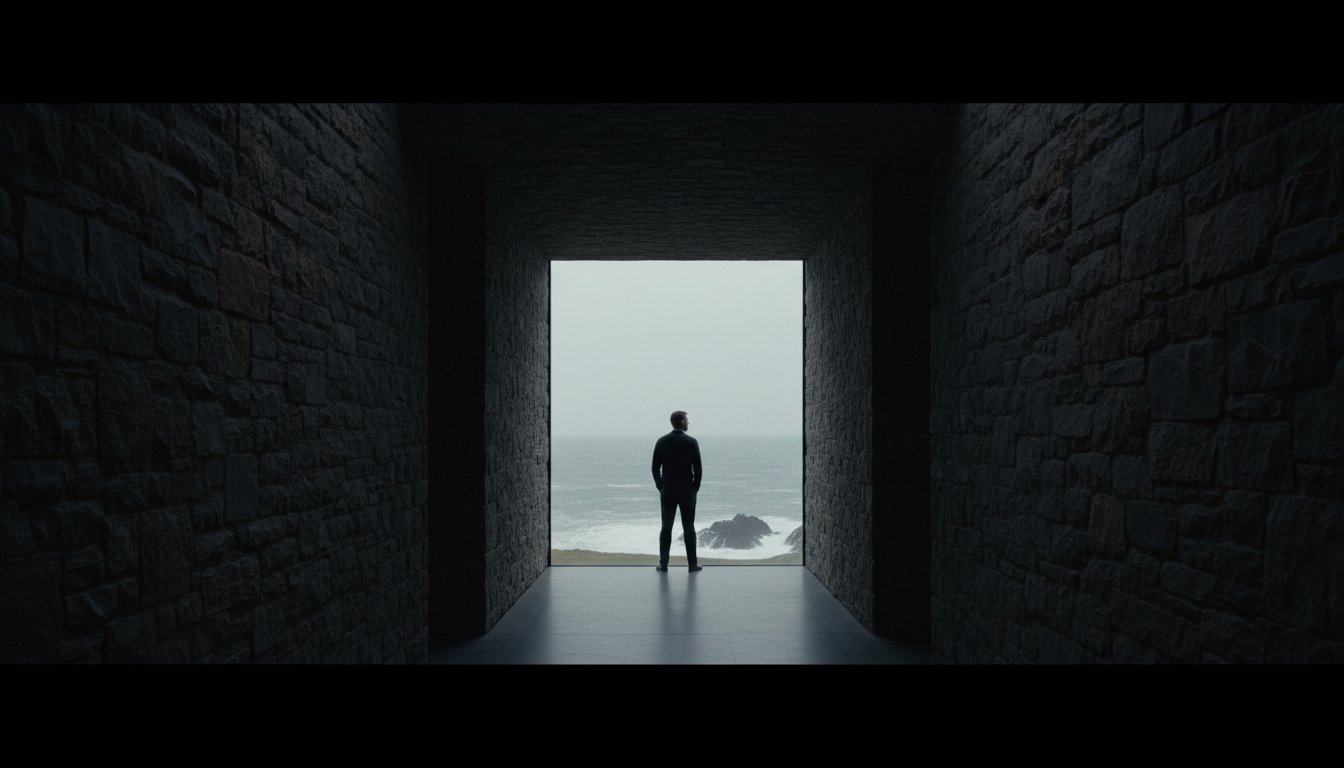
Why do some stories vanish the moment you close the book, while others seem to rearrange the shadows in your hallway? Most readers have grown weary of the 90 percent of horror that relies on cheap gore or predictable jumps; they're searching for unsettling fiction that stays with you long after the lights go out. You've likely felt that frustration when a promising plot dissolves into a generic slasher finale, losing the atmospheric immersion that kept you reading in the first place.
This article explores the precise psychological architecture required to build a narrative that transcends the page. We'll examine the mechanics of prose that create a slow burn before transitioning into a terror that truly has teeth. By analyzing the structural rigor found in Graham Mulvein's The House and drawing on his experience as the Stage Manager for the 1978 West End transfer of The Rocky Horror Show, you'll discover a decision-making framework for identifying truly atmospheric fiction. We'll also preview the methodology behind his upcoming novel PREY, scheduled for publication on May 25, 2026, to understand how a story becomes an existential haunting.
Key Takeaways
- Analyze the structural mechanics of the "uncanny" to distinguish between fleeting scares and the deep-seated psychological impact of modern gothic narratives.
- Discover how to manipulate reader perception through the architecture of dread, using sensory deprivation and atmospheric precision to elevate settings into active characters.
- Examine the role of memory and the unreliable self as narrative engines that create a profound sense of isolation and inescapable haunting.
- Identify the strategic progression from a slow-burn atmosphere to existential terror "with teeth," a defining characteristic of unsettling fiction that stays with you.
- Apply a methodical framework to navigate the "World of Horrors," allowing you to move beyond mainstream tropes to find your next deeply atmospheric obsession.
Defining the Unsettling: Why Some Stories Refuse to Leave
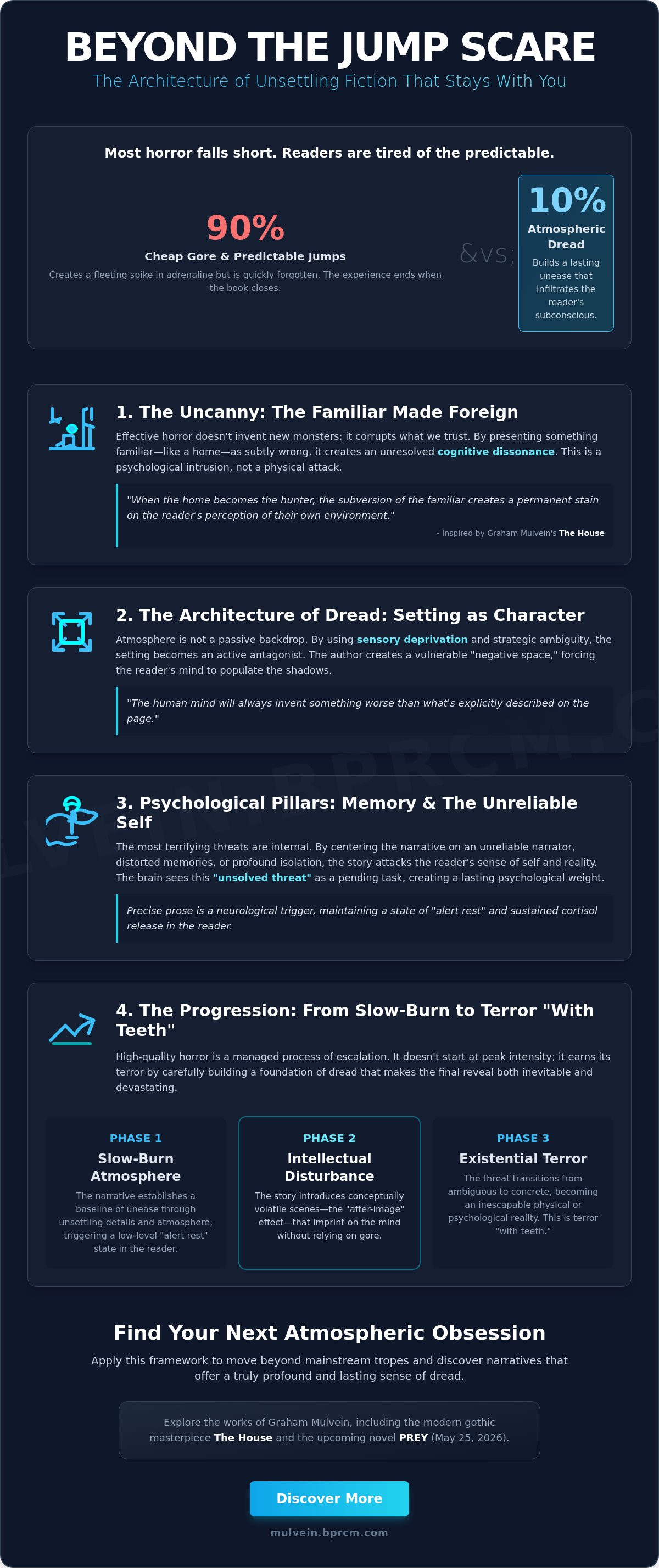
Fear often functions as a binary state; you are either safe or you are in immediate danger. However, the most effective narratives avoid the simplicity of the jump scare in favor of a more systemic erosion of comfort. While a "scary" moment creates an immediate, fleeting spike in adrenaline, unsettling fiction that stays with you operates through a process of slow-burn infiltration. It targets the structural integrity of the reader's worldview. Unsettling fiction is a psychological intrusion into the reader's sense of safety. By bypassing the logical brain, these stories trigger a primal unease that refuses to dissipate once the book is closed. This methodology is central to psychological horror, where the threat is often internal or existential rather than purely physical.
In modern gothic fiction, the "uncanny" serves as the primary mechanism for this disturbance. It involves the presentation of something familiar that has been subtly, incorrectly altered. This creates a cognitive dissonance that the brain cannot easily resolve. When a narrative reconfigures the domestic space into something predatory, it exploits a fundamental vulnerability. Graham Mulvein's The House utilizes this exact strategy, turning the architecture of the home against its inhabitants. It's a technique refined through decades of understanding atmospheric tension, much like the precision required when Graham Mulvein served as the Stage Manager for the original West End transfer of The Rocky Horror Show in 1978.
To better understand this concept, watch this helpful video:
The Anatomy of Lingering Dread
The "after-image" effect occurs when a scene is so conceptually volatile that it remains imprinted on the mind long after the stimulus is removed. This isn't achieved through visceral gore, which often triggers a defensive "shut-off" response. Instead, it relies on intellectual disturbance. When the home becomes the hunter, the subversion of the familiar creates a permanent stain on the reader's perception of their own environment. This is the hallmark of unsettling fiction that stays with you; it changes how you view your own hallway at night.
The Biological Response to Atmospheric Prose
Precise word choice isn't just an aesthetic preference; it's a neurological trigger. Specific, cold descriptions can maintain a state of "alert rest" in the reader, leading to a low-level, sustained cortisol release. The brain prioritizes unresolved narrative tension in memory because it views the "unsolved" threat as a pending task. This creates a lasting psychological weight. In the upcoming novel PREY, scheduled for publication on May 25, 2026, this atmospheric tension eventually transitions into a physical and existential terror with teeth. By maintaining a measured pace, the narrative ensures that the dread is not just felt, but integrated into the reader's subconscious. High-quality horror is a managed process of escalation.
The Architecture of Dread: Building Tension Through Atmosphere
Atmosphere isn't a passive backdrop; it's a structural necessity. To create unsettling fiction that stays with you, a writer must treat the setting as a living entity. This goes beyond the cliché of a creaking floorboard. It involves a systematic manipulation of the reader's perception through sensory deprivation or strategic overload. By removing a character's ability to trust their eyes or ears, the author forces the reader to inhabit a space of total vulnerability. This "negative space" is where the most profound terror resides, because the human mind will always invent something worse than what's explicitly described on the page.
Mastering the Gothic Setting
In Graham Mulvein’s The House, the environment serves as a blueprint for psychological decay. This is the foundation of unsettling fiction that stays with you; the architecture mirrors the crumbling psyche of its inhabitants. Mulvein, the Stage Manager for the 1978 West End transfer of The Rocky Horror Show, understands how physical space dictates emotional response. He uses isolated environments to heighten psychological stakes, ensuring every hallway feels like a terminal diagnosis. This historical weight creates a sense of inescapable doom that modern, sterile settings often lack.
Precise Language and Controlled Pace
Effective dread relies on what's left off the page. The Art of Writing Quiet Horror reveals that the "unsaid" is a writer's most potent tool for building anxiety. Controlled and intelligent writing uses rhythmic prose to lull readers into a false sense of security before a calculated escalation. In Mulvein's upcoming novel PREY, launching May 25, 2026, the slow-burn atmosphere eventually reveals a terror "with teeth." This methodical pacing ensures the horror feels earned rather than manufactured. You can explore more about these narrative structures in the complete collection of Mulvein’s work.
Building a narrative that lingers requires more than just shocks; it requires a commitment to the following principles:
- Structural Integrity: The setting must follow its own internal, often claustrophobic, logic.
- Sensory Control: Limit the reader’s information to increase their reliance on imagination.
- Historical Anchoring: Use the past to make the present feel inevitable and heavy.
Memory and Isolation: The Psychological Pillars of Haunting Fiction
Dread is not a product of sudden shocks; it's a consequence of structural decay within the narrative arc. Memory functions as a monster that cannot be outrun because its primary residence is the protagonist's own mind. When the narrator cannot trust their own past, the reader loses their only anchor to reality. This erosion of the self creates a specific type of unsettling fiction that stays with you, long after the final page is turned. The horror lies in the realization that the threat is internal and, therefore, inescapable.
Isolation serves as the primary catalyst for this psychological decomposition. It's a sterile environment where the mind, deprived of external validation, begins to feed on itself. Stories centered on being trapped resonate with modern anxieties because they mirror the claustrophobia of contemporary life. Whether it's a literal locked room or a metaphorical digital cage, the sensation of being stuck is a universal fear. According to the science of fright, our brains are hardwired to treat social or physical entrapment as a high-stakes survival threat.
The Weight of the Past
Modern indie horror authors frequently utilize memory as a weaponized trope. They understand that revisiting a place that should have remained closed is a forensic audit of trauma. Nostalgia is often subverted; what was once a sanctuary becomes a site of structural rot. In Graham Mulvein's The House, the architecture of the building is inextricably linked to the protagonist's suppressed history. My experience as the Stage Manager for the 1978 West End transfer of The Rocky Horror Show reinforced the idea that the environment must be a living participant in the horror. When the past refuses to stay buried, it creates a lingering tension that defines unsettling fiction that stays with you.
The Terror of the Unseen
The human imagination is capable of generating horrors far more potent than any descriptive prose. Ambiguity is a strategic tool in professional storytelling. By refusing to define the monster, the author forces the reader to fill the vacuum with their own specific phobias. This ensures the story remains personalized and persistent. Characters who linger in the periphery of the reader's vision are more effective than those standing in the spotlight. My upcoming novel, PREY, which arrives on May 25, 2026, follows this methodology. It's a slow-burn atmospheric piece that transitions from existential unease into a physical terror with teeth. It demonstrates that the most effective way to haunt a reader is to leave the most terrifying details to their own subconscious.
From Slow-Burn to Existential Terror: Fiction With Teeth
The slow-burn is not a lack of pace; it's a strategic narrative investment. It functions through structural precision, building pressure until the weight becomes unbearable for the reader. This method ensures the audience is fully integrated into the setting before the narrative gears shift. Effective unsettling fiction that stays with you relies on this deliberate accumulation of dread. It's the difference between a fleeting jump scare and a permanent psychological shift that alters your perception of safety.
The Mechanics of the Escalation
Maintaining tension over 300 or more pages requires a system of escalating stakes where every chapter functions as a tightening of the screw. Writers must balance atmospheric dread with the eventual realization of physical danger to avoid reader fatigue. The point of no return occurs when the protagonist's logical exits are systematically removed, leaving them vulnerable to the encroaching threat. This isn't a random occurrence; it's the result of rigorous plot architecture. Success depends on several key factors:
- The incremental loss of environmental and social safety nets.
- The erosion of the protagonist's rational world through unexplained phenomena.
- The introduction of an inescapable, high-stakes physical threat that demands action.
The transition from psychological unease to physical threat must feel earned. If the shift happens too early, the atmosphere evaporates; if it happens too late, the reader loses interest. This is why unsettling fiction that stays with you often utilizes a process-driven approach to narrative structure, ensuring the dread acts as a foundation for the final impact.
PREY: A Study in Existential Escalation
Graham Mulvein's PREY, scheduled for publication on May 25, 2026, serves as a masterclass in this transition. The narrative begins with a cold, analytical unease that slowly strips away the reader's sense of security. In Graham Mulvein’s upcoming novel PREY, the escalation moves from the silent rustle of the woods to a crushing realization that the predator isn't just watching, but has already won. By the final act, the story develops teeth, moving from a quiet psychological study into a visceral, existential nightmare.
This specific type of horror is essential for the modern reader who demands more than surface-level thrills. We no longer find satisfaction in simple monsters; we require stories that challenge our understanding of reality and our place within it. This approach mirrors the complexity of modern existence, where threats are often systemic and inescapable. You can explore these narrative structures further in Graham Mulvein's books, where the process of dread is handled with clinical precision.
Navigating the Shadows: Finding Your Next Atmospheric Obsession
Identifying unsettling fiction that stays with you requires a shift from passive consumption to a more analytical methodology. Readers often find themselves trapped in the repetitive cycles of mainstream publishing; these outlets frequently prioritize broad marketability over the surgical precision required for genuine dread. To find stories that linger, you must seek out works built on structural logic and psychological depth rather than superficial shocks. This involves looking toward independent creators and specialized imprints that understand the mechanics of the "World of Horrors." A disciplined approach to selection ensures that the time you invest in a narrative yields a significant emotional and intellectual return.
The Graham Mulvein Collection
Graham Mulvein’s work operates with the calculated efficiency of a well-oiled machine. His professional history as the Stage Manager for the 1978 West End transfer of The Rocky Horror Show informs a unique understanding of pacing and spatial tension. You can explore the full range of Graham Mulvein’s books to see this architectural approach in action. The "Before the Rooms Woke" project serves as a prime example of immersive storytelling, where the environment itself becomes a predatory force. For those seeking a definitive entry point, Graham Mulvein's The House remains a mandatory study in modern gothic suspense. It doesn't just describe a setting; it constructs a trap for the reader's psyche through rigorous atmospheric development.
Joining the World of Horrors
Engagement with this brand of fiction shouldn't end at the final page. Subscribing to exclusive content allows you to observe the creative process behind the terror. This transparency reveals how atmospheric dread is engineered, providing a deeper appreciation for the craft. Staying connected ensures you receive updates on the upcoming novel, PREY, scheduled for release on May 25, 2026. This specific work is designed as a slow-burn experience that eventually reveals its true nature: a physical and existential terror with teeth. It's a calculated escalation that ensures the narrative remains unsettling fiction that stays with you long after the final chapter concludes.
The discerning reader values systems and consistency. By following an author who prioritizes process and structural integrity, you gain access to a higher tier of suspense. Don't settle for the predictable patterns of mass-produced horror. Instead, focus on narratives that are built to withstand scrutiny and deliver a lasting, visceral impact. Your next obsession is waiting in the structured shadows of the Mulvein collection. Take the next step in your literary journey by seeking out stories that respect your intelligence and your appetite for the unknown.
Mastering the Architecture of Lasting Dread
Effective horror isn't a product of chance; it's the result of rigorous narrative process and atmospheric control. We've seen how the pillars of isolation and environmental tension create a foundation for stories that transcend simple entertainment. When these elements are managed with precision, the result is unsettling fiction that stays with you, evolving from a slow-burn mystery into existential terror with teeth. This structured approach ensures the dread isn't just felt, but sustained through a logical psychological progression that refuses to release the reader.
Graham Mulvein applies this same level of professional discipline to his work, drawing on his technical experience as the Stage Manager for the 1978 West End transfer of The Rocky Horror Show. This background in high-stakes production informs the immersive nature of Graham Mulvein's The House and the expansive World of Horrors series. His next project, PREY, is scheduled for release on May 25, 2026, and represents a further refinement of these haunting mechanics. Explore the unsettling world of Graham Mulvein’s books to see how strategic storytelling transforms the genre. Your journey into the dark has only just begun.
Frequently Asked Questions
What is the difference between psychological horror and gothic fiction?
Psychological horror centers on the internal disintegration of the mind, whereas gothic fiction derives its power from the external environment and ancestral decay. While a psychological thriller might explore a character's 48 hour descent into paranoia, gothic works utilize architectural isolation and the weight of the past to create dread. Both genres aim to produce unsettling fiction that stays with you by subverting the reader's sense of safety through these 2 distinct structural mechanisms.
Why do I enjoy reading books that make me feel unsettled?
Readers gravitate toward unsettling narratives because they offer a safe environment to process 3 core biological responses: fear, disgust, and awe. This benign masochism allows the brain to trigger a dopamine release without facing actual physical harm. It's a calculated intellectual exercise. You're testing your own psychological boundaries against a structured, fictional threat that lingers long after you close the book and return to your reality.
How can I tell if a book is a "slow-burn" horror?
You'll recognize slow-burn horror by its 3 stage structure: establishing a mundane reality, introducing subtle anomalies, and finally escalating into overt terror. These stories don't rely on jump scares in the first 50 pages of the text. Instead, they build a foundation of unease. If the narrative focuses more on the tightening of a psychological knot than on immediate bloodletting, it's a slow-burn experience designed for maximum retention.
Are there specific tropes common in unsettling fiction?
Unsettling fiction frequently utilizes 4 primary tropes: the uncanny valley, forced isolation, ancestral trauma, and the unreliable narrator. These elements work together to create unsettling fiction that stays with you by attacking the reader's trust in their own perception. When a familiar setting becomes even 1 percent "off," the human brain enters a state of hyper-vigilance. This structural manipulation is what ensures the dread remains effective across various subgenres.
What makes Graham Mulvein’s The House a modern gothic masterpiece?
Graham Mulvein's The House stands out because it applies a systematic approach to gothic isolation and psychological pressure. It doesn't just describe a building; it treats the structure as a living, predatory entity. Drawing on Mulvein's background as the Stage Manager for the 1978 West End transfer of The Rocky Horror Show, the book demonstrates a professional's understanding of space and tension. The result is a precise, high tension masterpiece.
When is Graham Mulvein’s new book PREY being released?
Mark your calendar for May 25, 2026, which is the official global release date for Graham Mulvein's PREY. This novel represents a strategic evolution in his writing style. It begins as a slow-burn atmospheric horror before transitioning into a visceral experience. The narrative is specifically engineered to escalate from psychological unease into a state of absolute physical and existential terror. It's a story designed to leave a mark.
What does "fiction with teeth" actually mean?
"Fiction with teeth" describes a narrative that isn't content with mere suggestion; it eventually bites the reader through 2 distinct phases of escalation. While many stories provide a comfortable chill, this specific type of horror transitions into something dangerous and unavoidable. It means the book has the bite to follow through on its threats. In PREY, this manifests as a shift from quiet dread to a sharp, physical reality.
How do I find more atmospheric horror authors?
Finding atmospheric horror requires looking for authors who prioritize "place" as a character and utilize a measured, precise prose style. Start your search by analyzing 3 specific metrics: prose density, pacing reviews, and the author's use of sensory detail. You can also track award finalists from the Bram Stoker Awards' "Superior Achievement in a Novel" category over the last 5 years. This systematic approach ensures you find high quality narratives.